Originally published in 2017. Updated for 2026.

Real Estate Marketing • Trends & Strategy

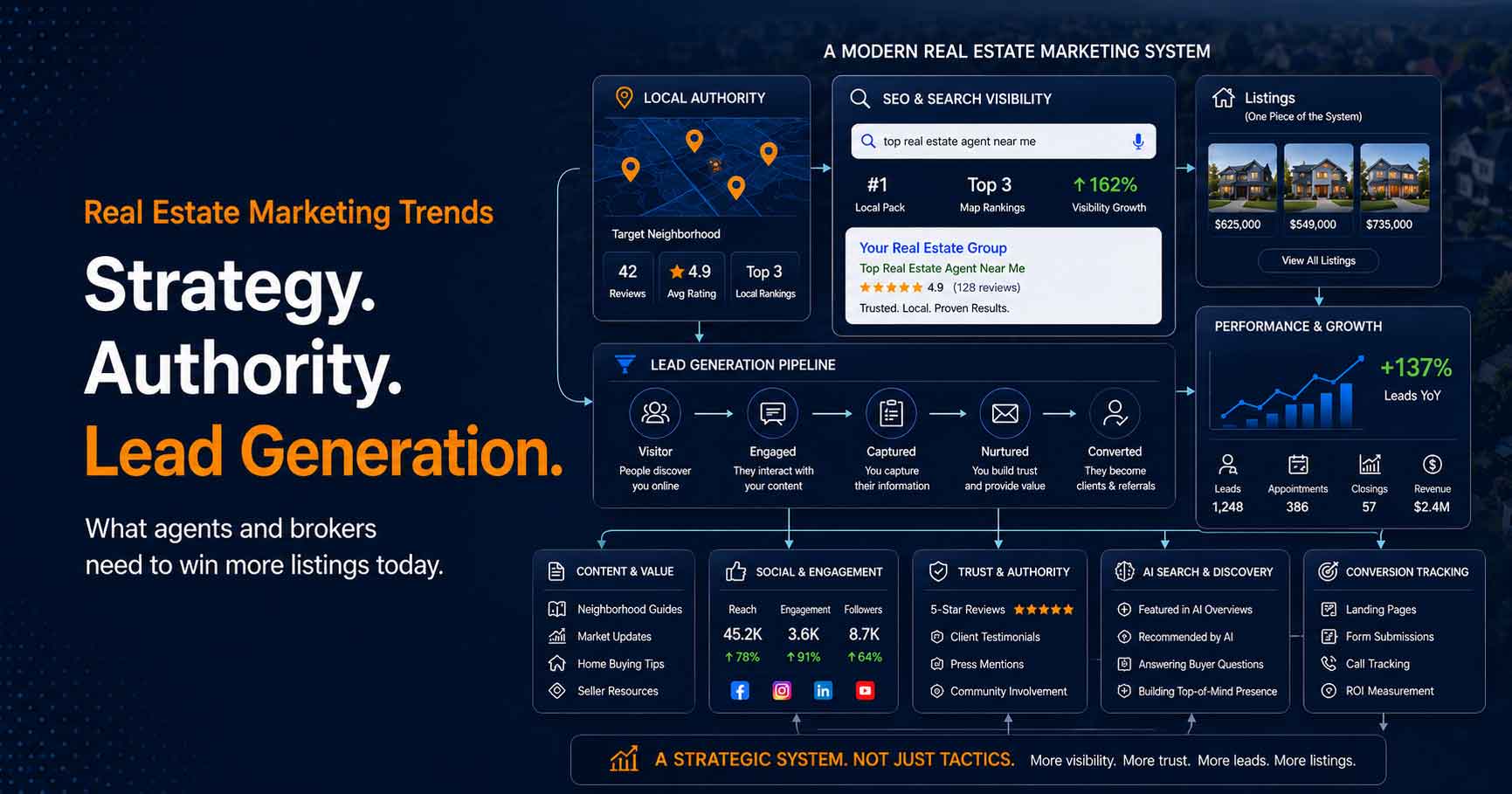
Real estate marketing trends have shifted. Listings alone no longer differentiate agents, brokers, or teams. Today, the strongest real estate marketing is built around positioning, local authority, lead generation, and measurable growth.

AI TL;DR:

  • Listings are no longer enough to stand out in real estate marketing.
  • Agents and brokers need stronger positioning, local authority, and trust-building content.
  • Real estate SEO, Google visibility, and neighborhood-focused content are becoming more important.
  • Lead generation needs follow-up, tracking, and conversion systems — not just form fills.
  • The agents who win are the ones who build a marketing system, not random marketing activity.

Real estate marketing used to revolve around exposure. Get the listing in front of more people, promote the property, run a few ads, and wait for inquiries.

That approach is no longer enough.

Buyers and sellers can now find listings almost anywhere. They can search portals, compare homes, review neighborhoods, study pricing trends, and research agents before they ever make contact.

The challenge is no longer simply getting seen. The challenge is being trusted, remembered, and chosen.

That is why modern real estate marketing must move beyond listing promotion. Agents and brokers need clear positioning, stronger local authority, better website messaging, smarter SEO, and a lead generation system that turns attention into conversations.

For a deeper look at how Webociti helps agents and brokers build these systems, explore our real estate marketing services.

1. Listings Are No Longer the Advantage

One of the biggest real estate marketing trends is the shift away from listings as the primary differentiator.

Listings still matter, but they are no longer enough to separate one agent or brokerage from another. Buyers and sellers can access inventory through portals, search engines, apps, and local real estate websites.

What buyers and sellers need now is guidance. Sellers want to know how to price correctly, prepare the home, avoid costly mistakes, and choose the right strategy. Buyers want neighborhood insight, negotiation confidence, and clarity in a competitive market.

That is why the best real estate marketing now positions agents as trusted advisors, not just listing promoters. Read more in our related article: Real Estate Marketing Strategy: Strategy Beats Listings.

2. Local Authority Matters More Than Broad Visibility

Real estate is local. Buyers and sellers want to work with someone who understands their neighborhoods, pricing patterns, school zones, market shifts, and local buyer behavior.

Broad visibility can help, but local authority is what creates trust. Agents who publish useful local content, optimize their Google presence, build neighborhood-specific pages, and show real market expertise are more likely to stand out.

Strong local authority can include:

  • Neighborhood market updates
  • Seller guides for specific communities
  • Buyer resources by area
  • Local pricing insights
  • Google Business Profile optimization
  • Reviews and testimonials
  • Community-specific landing pages

This is where local SEO for small business becomes especially important for real estate professionals.

3. Real Estate SEO Is Becoming More Competitive

Search visibility remains one of the most valuable real estate marketing channels, but it is also more competitive than it used to be.

Agents and brokers are competing with large portals, national brands, directories, paid search ads, local competitors, and AI-driven search results. Ranking for broad real estate terms can be difficult, but there are still strong opportunities in local, niche, and intent-based searches.

Instead of only targeting broad phrases, real estate websites should focus on specific searches such as:

  • Homes for sale in specific neighborhoods
  • Best areas to live in a local market
  • How to sell a home in a specific city
  • Real estate agent for a specific community
  • Local market reports
  • Seller-focused questions

Real estate SEO works best when it is tied to positioning, content strategy, local authority, and conversion-focused website pages.

4. Agent and Broker Websites Need Better Positioning

Many real estate websites still look and sound the same. They lead with listings, generic claims, and basic contact forms.

A modern real estate website should quickly answer one important question:

Why should a buyer or seller choose you instead of another agent, brokerage, or portal?

Strong real estate positioning may include:

  • Clear buyer and seller messaging
  • Local market specialization
  • Proof of results
  • Reviews and testimonials
  • Helpful content for buyers and sellers
  • Clear calls to action
  • Conversion-focused landing pages

A website should not just display listings. It should build trust and guide visitors toward a conversation.

5. Lead Generation Needs Follow-Up, Not Just Form Fills

Another major real estate marketing trend is the shift from basic lead capture to full lead management.

Getting a form submission is only the beginning. Many real estate leads are not ready to transact immediately. Some are researching neighborhoods. Some are comparing agents. Some are months away from buying or selling.

A stronger real estate lead generation system may include:

  • Seller valuation offers
  • Buyer guides
  • Neighborhood landing pages
  • Email follow-up sequences
  • Retargeting campaigns
  • CRM lead routing
  • Call tracking and conversion tracking

The goal is not just more leads. The goal is better conversations with people who are more likely to become clients.

6. Paid Advertising Works Best With a Clear Strategy

Paid advertising can still be useful for real estate marketing, but it works best when it is connected to a clear strategy.

Running ads without strong positioning, landing pages, follow-up, and tracking often creates wasted spend. The ad may generate clicks, but the system behind the click determines whether that attention turns into a qualified lead.

Paid media can support:

  • Seller lead generation
  • Listing promotion
  • Retargeting website visitors
  • Local awareness campaigns
  • Open house promotion
  • Recruiting for brokerages and teams

For agents and brokers, paid advertising should not stand alone. It should support the broader message, funnel, and growth strategy.

7. Content Should Answer Buyer and Seller Questions

Real estate content should do more than fill a blog. It should answer the questions buyers and sellers are already asking.

Useful content helps build authority before someone is ready to contact an agent. It also gives your website more opportunities to appear in search results and AI-driven discovery experiences.

Strong real estate content topics include:

  • How to prepare a home for sale
  • How pricing strategy affects offers
  • Common seller mistakes
  • Neighborhood comparisons
  • Local market updates
  • Buyer checklists
  • Questions to ask before choosing an agent

The best content does not simply promote the agent. It educates the buyer or seller and builds confidence in the agent’s expertise.

8. Social Media Needs to Build Trust, Not Just Activity

Social media is still part of real estate marketing, but posting more often is not the same as building trust.

Agents and brokers should use social media to reinforce expertise, highlight local knowledge, share helpful advice, and stay visible with prospects and referral sources.

  • Local market insights
  • Seller preparation tips
  • Buyer education
  • Neighborhood features
  • Client success stories
  • Behind-the-scenes process content
  • Short educational videos

The goal is not random activity. The goal is consistent trust-building.

9. AI Search and Zero-Click Results Are Changing Discovery

Search behavior is changing. More users are getting answers from AI search results, map packs, snippets, local profiles, and other zero-click experiences before they visit a website.

This makes brand clarity, local authority, structured content, reviews, and consistent online visibility more important.

Real estate professionals should make sure their online presence clearly communicates who they serve, where they work, what they specialize in, and why someone should trust them.

10. Measurement and Conversion Tracking Matter More Than Ever

Real estate marketing should be measured by more than impressions, likes, or website visits.

Agents and brokers need to understand which channels are creating real opportunities. That means tracking:

  • Forms and calls
  • Landing page conversions
  • Ad campaigns
  • Search traffic
  • Email engagement
  • Booked appointments
  • Seller and buyer lead sources

When measurement is in place, marketing becomes easier to improve.

Strategic Takeaway

The biggest real estate marketing trend is not one tactic. It is the shift from promotion to positioning.

Agents and brokers who build local authority, answer real buyer and seller questions, track performance, and create a complete lead generation system are better positioned to win more listings and reduce dependence on portals.

Real Estate Marketing Strategy

Ready to Build a Real Estate Marketing System That Wins More Listings?

Webociti helps agents, brokers, and real estate teams improve positioning, build local authority, strengthen lead generation, and create marketing systems designed for predictable growth.


Explore Real Estate Marketing Services

Real Estate Marketing Trends FAQs

Quick answers to common questions about real estate marketing trends, SEO, lead generation, and local authority.

What are the most important real estate marketing trends?

The most important real estate marketing trends include stronger positioning, local authority, real estate SEO, neighborhood-focused content, lead generation systems, paid media strategy, AI search visibility, and better conversion tracking.

Are listings still important in real estate marketing?

Listings are still important, but they are no longer enough to differentiate an agent or brokerage. Buyers and sellers can access inventory almost anywhere. What matters more is guidance, trust, local expertise, and a clear reason to choose you.

How can real estate agents get more local visibility?

Real estate agents can improve local visibility by optimizing their Google Business Profile, publishing neighborhood-specific content, collecting reviews, building local landing pages, improving website SEO, and creating helpful buyer and seller resources.

Why is lead follow-up important for real estate marketing?

Lead follow-up is important because many buyers and sellers are not ready to act immediately. Email sequences, retargeting, CRM tracking, and consistent follow-up help turn early interest into real conversations and appointments.

How should agents measure real estate marketing performance?

Agents should measure real estate marketing performance by tracking website traffic, form submissions, phone calls, landing page conversions, ad performance, search rankings, booked appointments, and the quality of buyer and seller leads.

Real Estate Marketing • Positioning & Strategy

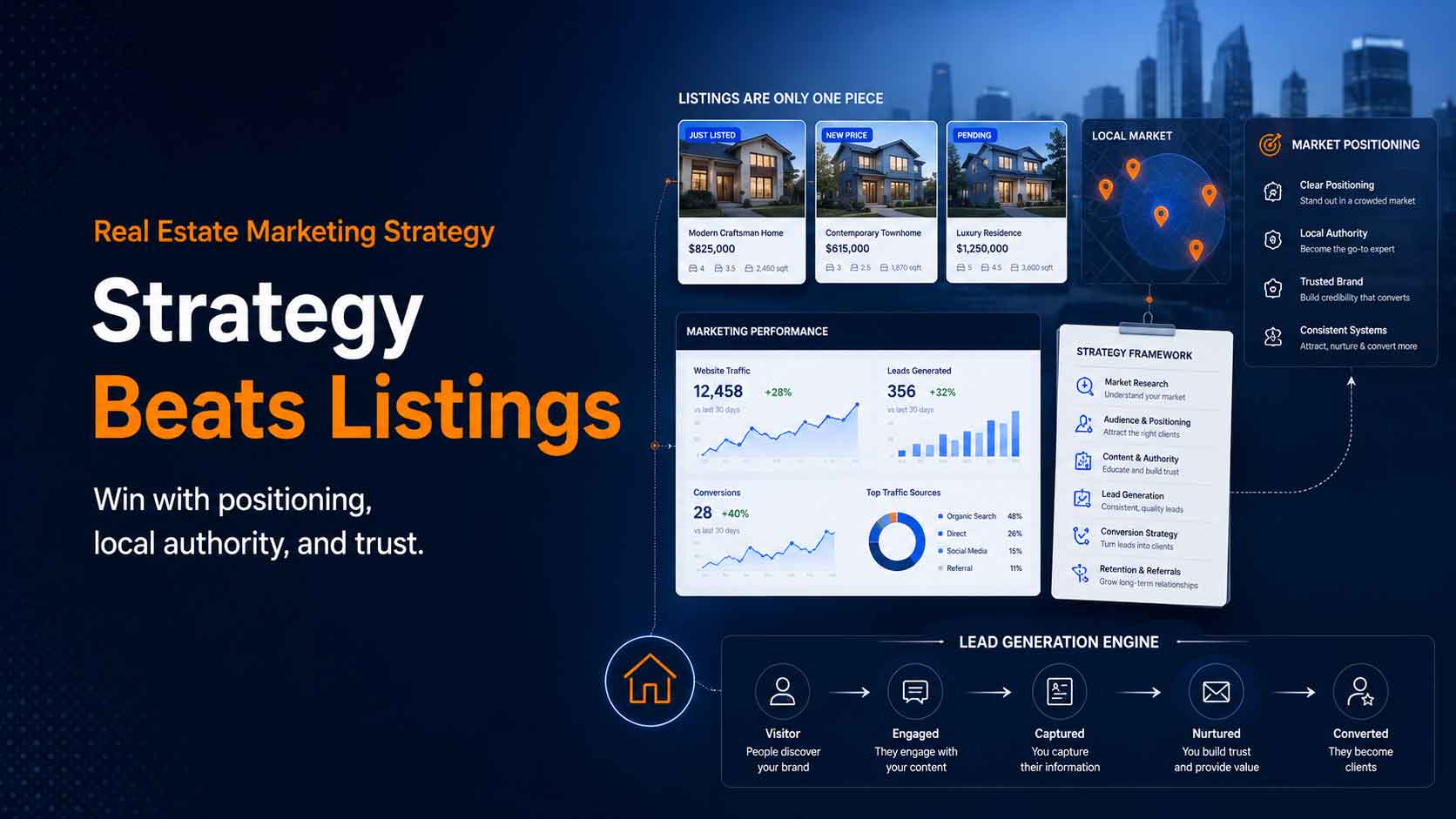
Real estate marketing strategy has changed. Listings aren’t the advantage anymore — strategy is. Here’s how top agents differentiate, build local authority, and win more listings through insight, not inventory.

AI TL;DR:

  • Listings are no longer the competitive advantage in real estate.
  • Consumers already have access — they need strategic guidance.
  • Agents who position themselves as decision-making advisors win more listings.
  • Marketing must shift from promotion to positioning.

As featured in Redfin

Redfin featured Webociti’s perspective on how top agents differentiate through strategy — not listings.


Read the Redfin article →

“Most buyers and sellers don’t need an agent to find listings anymore. What they really need is someone who helps them make smart decisions in a crowded market.”

— Joe Mediate, Webociti, quoted by Redfin

For years, real estate marketing revolved around one thing: listings. More exposure. More portals. More visibility.

Today, buyers and sellers do not need an agent to find homes. Inventory is accessible. The advantage has shifted.

The new differentiator is not access. It is guidance. Agents who win today position themselves as strategic advisors before the first conversation ever happens.

If your website and messaging still lead with listings, it may be time to rethink your positioning. Webociti helps agents, brokers, and teams build stronger real estate marketing services that combine positioning, local authority, lead generation, and local SEO for small business.

Listings Are No Longer the Advantage

Ten years ago, access to listings was leverage. Today, it is commoditized. Consumers do not hire agents because they cannot find homes. They hire agents because they:

  • Need pricing strategy
  • Want neighborhood context and local nuance
  • Need negotiation confidence
  • Want to avoid expensive mistakes

Information is everywhere. Interpretation is rare. That is why your marketing should reinforce the one thing portals cannot replicate: clear, strategic guidance.

Why Most Real Estate Marketing Is Broken

Most real estate marketing still looks like “post listings and boost them.” Agents end up stuck in:

  • Over-reliance on third-party portals
  • No local differentiation
  • Inconsistent lead flow
  • Websites with generic messaging
  • Random tactics with no compounding system

Marketing without strategy creates activity, not predictable growth.

That is why we build strategy-first real estate marketing systems designed to create consistent visibility, stronger positioning, and a more predictable pipeline — often starting with our Growth Strategy Program.

If your real estate website still relies on listings as the main message, it may be time to reposition your marketing around expertise, trust, and local authority. Webociti’s real estate marketing services help agents, brokers, and teams build a stronger strategy for visibility, listing growth, and lead generation.

Strategic Takeaway

Real estate marketing has shifted. Access to listings is no longer enough to differentiate an agent, broker, or team. What matters now is strategic guidance: pricing insight, negotiation clarity, local authority, and risk reduction.

Agents who position themselves as trusted advisors — not just inventory promoters — are better positioned to attract higher-quality listings, build local visibility, and reduce dependence on third-party portals.

Real Estate Marketing FAQs

Quick answers to common questions agents ask as real estate marketing shifts from promoting listings to positioning expertise.

What is strategy-first real estate marketing?

Strategy-first real estate marketing starts with positioning why someone should choose you, then builds the marketing system around that message. This includes local SEO visibility, authority content, conversion-focused pages, and campaigns that support predictable listing growth.

Do listings still matter for real estate marketing?

Listings still matter, but they are no longer the primary differentiator. Buyers and sellers can find inventory almost anywhere. What they need from an agent is clarity, pricing insight, neighborhood nuance, negotiation confidence, and risk reduction.

How can agents win more listings without relying on portals?

Agents can win more listings by building owned visibility through local SEO, Google Business visibility, neighborhood-specific content, seller-focused landing pages, retargeting, and follow-up systems that turn interest into conversations.

How long does real estate marketing take to show results?

Real estate agents may see early activity within weeks from paid campaigns and stronger positioning. Sustainable growth typically builds over 60 to 120 days as SEO, local authority, content, and conversion systems compound.

What should an agent’s website say if listings are not the hook?

An agent’s website should lead with guidance and show how the agent helps clients make smarter decisions. It should explain the local market, the agent’s process, the mistakes clients should avoid, and the outcomes the agent helps deliver, such as confidence, clarity, and fewer costly surprises.

Want Predictable Listing Growth Without Portal Dependence?

Webociti builds strategy-first marketing systems for agents, brokers, and teams who want to win more listings by strengthening positioning, owning local authority, and improving lead generation.


Explore Real Estate Marketing Services →