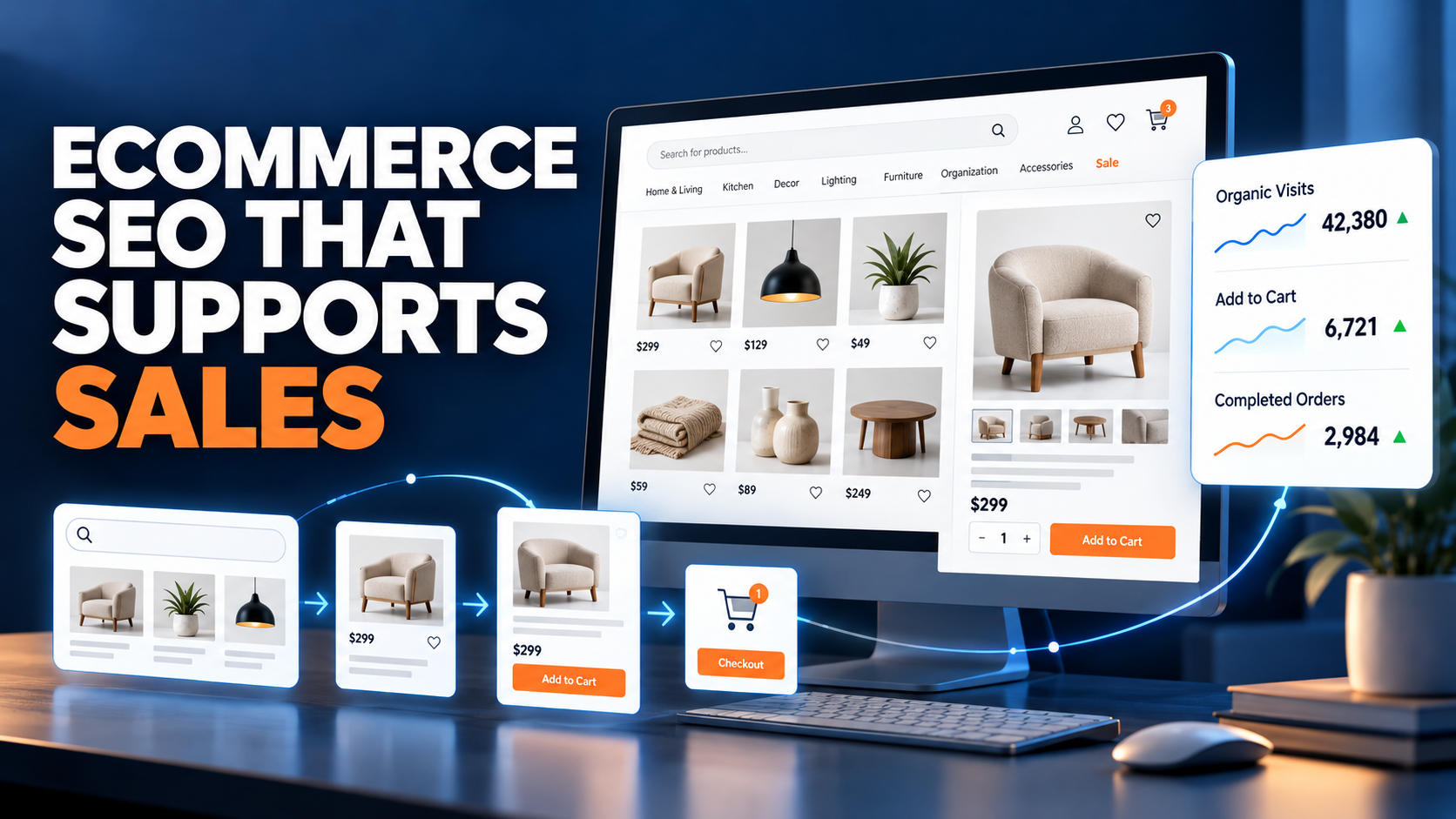
TL;DR: Product page SEO drives revenue when search intent, technical structure, trust signals, and conversion clarity work together. Rankings alone don’t sell optimized decision-making does.

In summary

Most product pages rank poorly or rank but don’t convert because they focus on keywords instead of buyer intent. High-performing product pages combine technical SEO, structured data, persuasive content, internal linking, and frictionless UX to turn search visibility into measurable revenue.

Why Product Page SEO Is Where Revenue Actually Happens

In eCommerce, category pages attract traffic but product pages close the sale.

If your product pages don’t rank for high-intent searches or fail to support decision-making once visitors arrive, your SEO investment stalls at visibility instead of revenue.


Step 1: Align the Product Page With Purchase Intent

Product page SEO starts with understanding the exact query that brings the buyer to the page. Is the search branded? Comparison-based? Feature-specific? Use-case driven?

  • Target long-tail purchase queries (brand + product + attribute)
  • Match page title and H1 to buyer language
  • Avoid keyword stuffing prioritize clarity
  • Ensure metadata reflects transactional intent

Product pages should answer the buyer’s final question not introduce the product for the first time.


Step 2: Build Unique, Conversion-Supporting Content

Manufacturer copy rarely ranks — and it rarely persuades. High-performing product pages include original content that supports decision confidence.

  • Clear value proposition above the fold
  • Use-case explanations
  • Specifications formatted for scanability
  • Benefit-driven subheadings
  • FAQ blocks that reduce purchase friction

If your product description looks identical to 20 competitors, search engines and buyers have no reason to choose you.


Step 3: Implement Clean Product Structured Data

Product schema enhances visibility and improves click-through rate by enabling rich results.

  • Product
  • Offer
  • AggregateRating (when applicable)
  • Review
  • Availability

Structured data doesn’t improve rankings directly but it improves how your listings appear, which increases performance.


Step 4: Strengthen Internal Linking to Support Rankings

Many eCommerce stores accidentally create orphaned product pages. Without internal links, Google treats those pages as low priority.

  • Link products from relevant categories
  • Add “Related Products” and cross-sells
  • Link from blog guides to priority SKUs
  • Reduce crawl depth for high-margin products

Internal linking isn’t just for SEO it also increases average order value.

If you’re restructuring an ecommerce website or launching a redesign, follow our website migration SEO checklist
to avoid losing rankings during site changes.


Step 5: Remove Conversion Friction

Even perfectly optimized pages fail when buyers hesitate.

  • Clear pricing
  • Visible shipping & returns
  • Trust badges
  • Customer reviews
  • Fast mobile performance

As we discussed in our guide on
Why SEO Is Still the Most Reliable Long-Term Growth Channel, sustainable SEO growth depends on alignment between visibility and conversion.


Common Product Page SEO Mistakes

  • Thin content
  • Duplicate manufacturer descriptions
  • Over-optimized anchor text
  • Slow mobile performance
  • Too many filter-indexed variations
  • Ignoring search intent mismatch

How Product Page SEO Compounds

When structured properly:

  • Each optimized product builds domain authority
  • Internal links strengthen priority categories
  • Rich snippets improve click-through rates
  • Better UX increases repeat buyers

Product page optimization is not a one-time task it’s an ongoing performance system.


Where Product Page SEO Fits Into the Bigger System

Product page SEO works best when connected to:

  • Category page strategy
  • Technical SEO structure
  • Content marketing
  • Conversion optimization

If you haven’t read it yet, start with our foundational guide: SEO for eCommerce Websites: What Actually Drives Revenue.


What To Do Next

If your product pages are ranking but not converting or not ranking at all the issue is rarely “more keywords.”

It’s alignment between search intent, technical execution, and buyer decision-making.

When those elements work together, product page SEO becomes a predictable revenue driver not a guessing game.

If you’re scaling ecommerce growth, working with an experienced SEO services team helps align strategy, technical execution, and conversion performance.

Want to improve product page performance?

Request a technical SEO review and we’ll identify where your product pages are losing visibility, conversions, and revenue.

Request a Free SEO Review

TL;DR:SEO for eCommerce websites drives revenue when technical foundations, category structure, product intent, and conversion paths work together as a system not isolated “SEO tasks.”

In summary

Most eCommerce SEO fails because it chases traffic instead of purchase intent. The stores that win build search visibility around how customers actually browse, compare, and buy using category architecture, product page optimization, internal linking, and technical performance to turn rankings into revenue.

Why SEO for eCommerce Websites Is Different Than “Normal” SEO

eCommerce sites don’t have a handful of service pages — they have dozens (or thousands) of products, multiple collections, filters, variants, and constantly changing inventory. That complexity is exactly why SEO can become a revenue engine… or a mess that burns time without meaningful outcomes.

The goal isn’t to “rank more pages.” The goal is to build visibility for the searches that indicate buying intent, then make it easy for searchers to choose you and complete a purchase.

Why Traffic Alone Doesn’t Drive Revenue

Many stores see an SEO bump and still don’t see sales lift. That’s usually because they’re ranking for broad, informational queries that don’t match purchase intent or because the site experience doesn’t convert once visitors arrive.

Sustainable eCommerce SEO focuses on the full chain: discovery → evaluation → decision. If any link breaks, rankings become a vanity metric.

The 5 Revenue Drivers of eCommerce SEO

1) Technical Foundation That Helps Search Engines Trust the Site

You can’t “content your way” out of technical problems. eCommerce SEO requires clean crawling and indexing, fast performance, stable templates, and controlled duplication from filters and variants.

  • Indexation control (what should and shouldn’t be indexed)
  • Canonical strategy for variants and duplicate URLs
  • Core Web Vitals + mobile performance
  • Clean category/product hierarchy and internal link depth

As Google explains, performance directly impacts both user experience and search rankings.

2) Category Page Strategy (Where Most Revenue SEO Lives)

In eCommerce, category and collection pages often carry the biggest revenue weight — because they match
how people shop (browse by intent, then narrow down).

  • Build category pages around buyer language, not internal naming
  • Target “money” queries: brand + product type + use case
  • Add helpful category content (brief, scannable, non-fluffy)
  • Use internal links to push authority into the right collections

3) Product Page Optimization That Supports Decision-Making

Product pages are where intent becomes revenue. SEO is only helpful if the page answers the questions buyers need to feel confident.

  • Unique product copy (not manufacturer boilerplate)
  • Clear value, specs, use cases, and trust signals
  • Strong internal linking: related products, accessories, “frequently bought together”
  • Clean structured data (Product, Offer, AggregateRating when applicable)

4) Internal Linking That Guides Both Crawlers and Customers

eCommerce sites naturally create “orphan” pages — products that exist but aren’t supported by internal links. Internal linking is how you control what ranks and what fades.

  • Use category → subcategory → product pathways consistently
  • Link to top collections from authority content (guides, “best of,” comparisons)
  • Reduce crawl depth for priority revenue pages
  • Avoid creating index bloat from thin tag/filter pages

5) Conversion Alignment (Because Rankings Don’t Pay Bills)

Search visibility is only valuable when it leads to action. That means aligning SEO landing pages with clear conversion paths — and removing friction in the purchase journey.

  • Fast pages, clear pricing, shipping/returns visibility
  • Stronger PDP trust: reviews, guarantees, comparison points
  • Better category UX: filters that help buyers, not hurt indexing
  • Landing-page intent match: the page must match the query’s promise

Platform Notes: Shopify vs WooCommerce vs Custom Stores

The fundamentals are the same, but execution varies. Shopify can create duplication through collections and URL patterns. WooCommerce can get heavy with plugins and performance issues. Custom builds often struggle with template consistency and crawl logic.

The key is not the platform — it’s the system: technical control + intent-driven architecture + conversion alignment.

Platform migrations require careful SEO planning. Our website migration checklist walks through the exact process to protect rankings.


Serious about scaling eCommerce revenue?
If you need an SEO system designed around revenue architecture — not traffic vanity metrics explore our SEO strategy framework →

How eCommerce SEO Compounds Over Time

Unlike paid traffic, SEO compounds. A strong category architecture strengthens future category launches. Great product pages rank and convert for years. Internal links push authority where you want it. And every improvement builds on the last.

This is why we’ve framed SEO as a long-term asset in our guide: Why SEO Is Still the Most Reliable Long-Term Growth Channel.

When to Invest in eCommerce SEO

eCommerce SEO becomes high-leverage when:

  • You sell products with repeat or evergreen demand
  • You’re competing in a category where ads are expensive
  • You want more first-time buyers without perpetual ad spend
  • You need stronger visibility for “ready to buy” searches

What to Do Next

If your SEO efforts are generating traffic but not revenue, it’s time to audit the system not the keywords., start by treating it as a system. That system connects search intent, technical structure, category architecture, product optimization, and conversion performance.

If your business competes in a high-density market and needs a strategy-led approach to search visibility, you’ll see the same framework applied in our location-based work as well including
Atlanta SEO services.

And if you’re mapping a broader marketing system that integrates SEO with the rest of your digital growth engine, this companion guide helps: Internet Marketing for Business Growth.


When SEO is engineered into the structure of the business not layered on top it becomes an asset that compounds for years.

If you’re evaluating how search should support revenue at scale, the first step is not more keywords. It’s clarity around structure, intent alignment, and conversion architecture.

This systems approach to search visibility is the same foundation we apply in competitive markets — including Atlanta SEO services.