Top Content Optimization Techniques for 2025

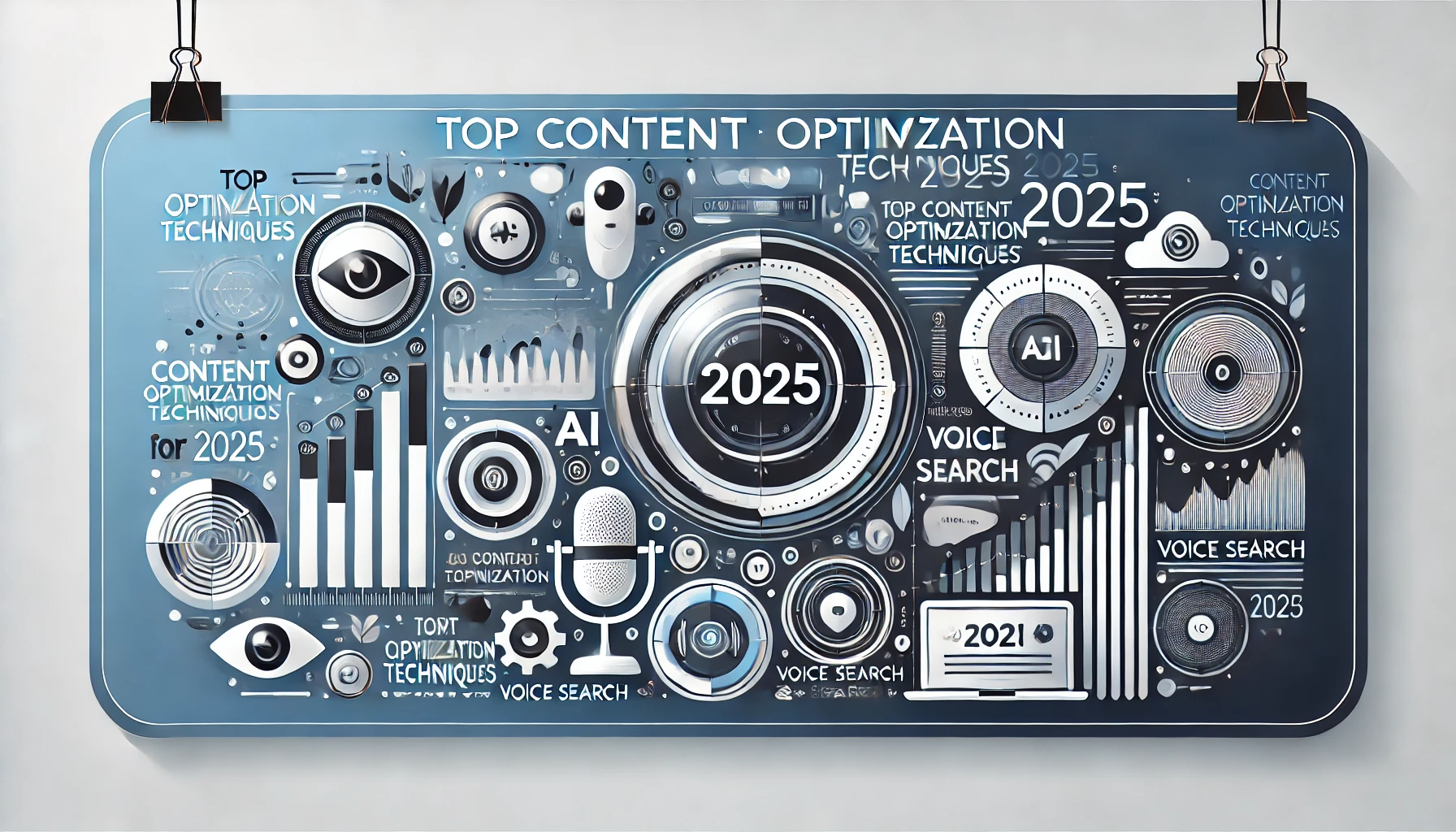
As we head into 2025, the digital marketing landscape continues to evolve at a rapid pace. Content optimization remains a key strategy for businesses aiming to stay competitive, increase visibility, and engage their audiences effectively. Here are the top content optimization techniques to implement in 2025.

1. Embrace AI-Powered Content Tools

Artificial Intelligence (AI) has become an integral part of content creation and optimization, making it easier for marketers to create engaging and effective content. Tools like Jasper, SurferSEO, and others have revolutionized how we approach keyword density, search intent, and readability analysis.

Why It Matters: AI tools help automate content audits, provide data-driven recommendations, and ensure that your content aligns with user expectations and search engine algorithms.

How to Use AI Tools: Integrate these tools into your content workflow by:

  • Using them to identify trending keywords and topics.
  • Generating content outlines and drafts based on real-time data.
  • Optimizing existing content with keyword suggestions and readability improvements.

Pro Tip: Use AI-generated insights as a starting point and apply a human touch to maintain authenticity and connection.

2. Optimize for Voice Search

Voice search continues to grow as smart devices become more common. By 2025, it’s estimated that more than 50% of households will own smart speakers, and users will increasingly turn to voice-activated search for answers.

Voice Search Techniques:

  • Optimize content with conversational language and long-tail keywords that match how people naturally speak.
  • Structure your content in a Q&A format, making it more likely to be featured in voice search snippets.
  • Use schema markup to enhance search engine understanding of your content.

Example: Instead of writing “best running shoes,” try phrasing your content as “What are the best running shoes for marathon training?”

3. Prioritize User Experience (UX)

Search engines have emphasized UX for years, and 2025 will be no different. Elements like page load speed, mobile responsiveness, and intuitive navigation play a huge role in user satisfaction and content ranking.

Optimization Tips:

  • Use tools like Google PageSpeed Insights and Lighthouse to analyze and improve page load speeds.
  • Ensure that your site design is mobile-friendly, as mobile users continue to outnumber desktop users.
  • Implement interactive features like clickable tabs, collapsible lists, and dynamic content to engage users and keep them on the page longer.

Future UX Standards: Keep an eye on potential new accessibility requirements or interactive features that could set new benchmarks for UX.

4. Focus on E-E-A-T (Experience, Expertise, Authoritativeness, Trustworthiness)

Google’s E-E-A-T (Experience, Expertise, Authoritativeness, Trustworthiness) has become more significant, especially with the shift towards high-quality, reliable content. Content that demonstrates these attributes is more likely to rank well.

E-E-A-T Strategies:

  • Collaborate with subject-matter experts for content creation to enhance credibility.
  • Link to authoritative sources to build trust.
  • Regularly update your content to keep it current and accurate.

Case Study: Websites like WebMD and Investopedia thrive because they prioritize expert contributions and transparency, solidifying their authority.

Actionable Insight: Implement author bios with credentials and publish original research or case studies to demonstrate expertise.

5. Use Data-Driven Insights for Content Planning

In the world of content marketing, data is king. By 2025, using data analytics to understand audience behavior and preferences will be a must-have skill. Data-driven insights allow you to tailor content that resonates more with your target audience.

How to Implement:

  • Utilize tools like Google Analytics 4 to analyze audience behavior, demographics, and engagement metrics.
  • Apply heatmaps and session recordings to see how users interact with your content and identify areas for improvement.
  • Conduct A/B testing on headlines, images, and CTAs to find the most effective elements.

Benefits: This data-backed approach ensures that your content is not only relevant but also optimized for maximum impact.

6. Integrate Interactive Content

Interactive content will dominate content marketing in 2025. Unlike static articles, interactive content like quizzes, polls, and interactive infographics encourages users to engage directly with the material.

Why It Works: Interactive content has been shown to boost dwell time and increase user engagement, which can positively impact SEO metrics.

Ideas for Implementation:

  • Create interactive quizzes relevant to your industry (e.g., “What Type of Marketing Strategy Suits Your Business Best?”).
  • Design polls or surveys to gather feedback and increase time spent on the page.
  • Use interactive calculators or planning tools for specific industries, such as finance or travel.

SEO Benefits: Search engines reward pages with lower bounce rates and higher engagement, and interactive content checks both boxes.

7. Optimize for Multilingual and Multicultural Audiences

The internet is a global marketplace, and catering to multilingual and multicultural audiences is more important than ever. As businesses expand globally, content must reflect the linguistic and cultural nuances of diverse audiences.

Strategies:

  • Use translation plugins like Weglot or WPML to create multilingual content without sacrificing SEO.
  • Adapt content to reflect cultural preferences and sensibilities, ensuring relevancy and relatability.
  • Research local keywords and tailor your SEO strategy to match regional trends.

Pro Tip: Don’t rely solely on automated translations. Ensure content is reviewed by native speakers for accuracy and cultural appropriateness.

8. Invest in Visual and Video Content Optimization

Visual and video content has become essential for engaging modern audiences. As attention spans shrink, visuals offer a quick and effective way to convey messages.

Why It Matters: By 2025, video is predicted to account for 82% of all online traffic, making video SEO a critical aspect of content optimization.

Techniques:

  • Optimize images with alt text, descriptive filenames, and appropriate compression to maintain page speed.
  • Use high-quality thumbnails and keyword-rich descriptions for videos.
  • Provide transcripts for video content to improve accessibility and help search engines index the content.

Emerging Formats: Short-form video content, such as Reels or TikToks, will continue to be effective for attracting attention, especially for younger demographics.

Conclusion

Content optimization in 2025 is about embracing the latest trends while maintaining best practices that drive results. Leveraging AI, optimizing for voice search, prioritizing UX, and implementing E-E-A-T principles will help ensure your content remains visible and authoritative. Integrating interactive and multilingual content will expand your reach, while data-driven strategies and visual content will enhance user engagement. By staying proactive and adaptable, your content strategy can thrive and continue to deliver results in an ever-changing digital landscape.

Ready to elevate your content strategy for 2025? Contact us for a consultation and discover how we can help optimize your digital presence for the upcoming year and beyond.


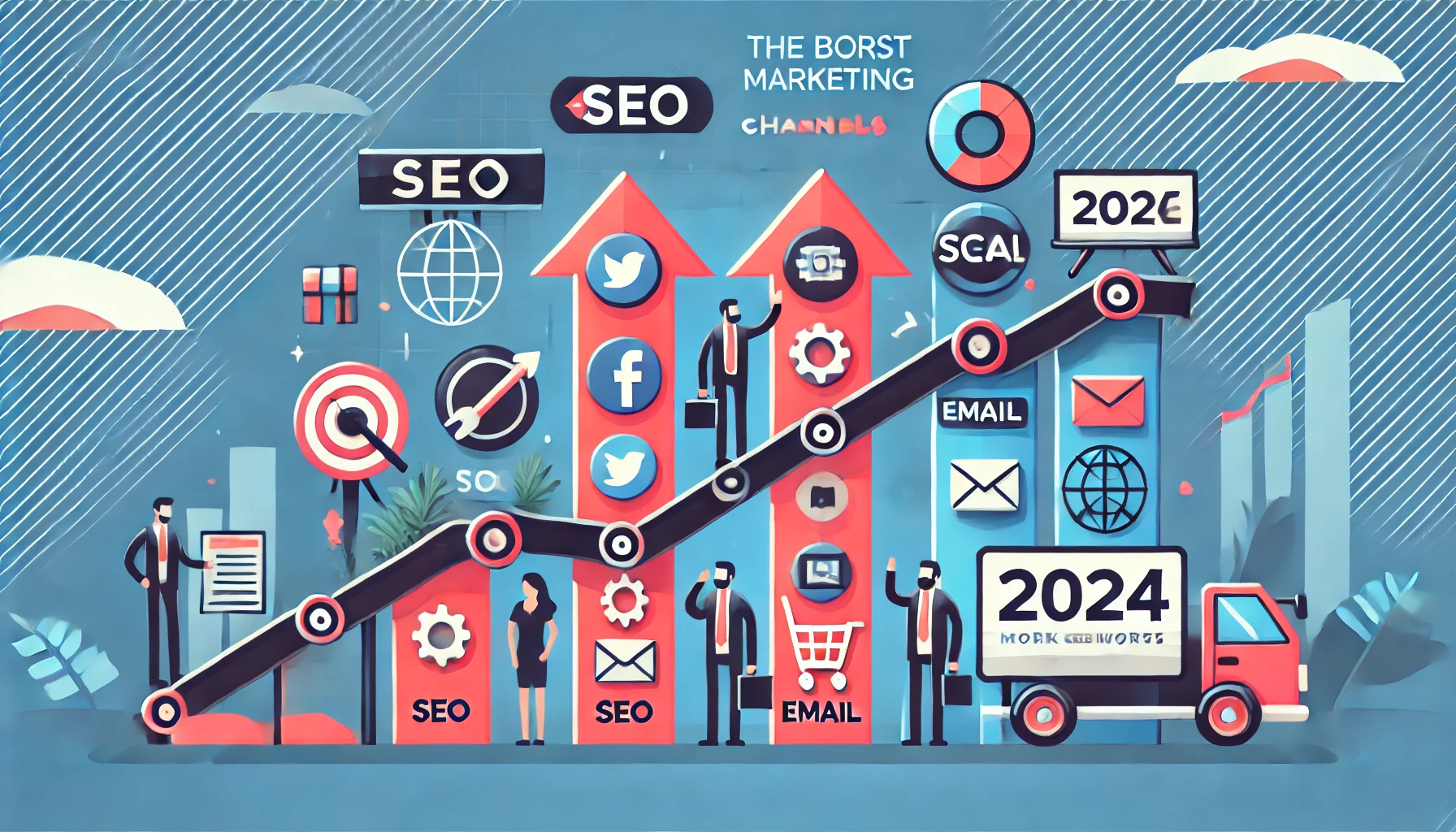
Are you wasting money on the wrong marketing channels? Discover which ones give small businesses the best ROI this year.

As a small business owner, you’ve got to make every dollar count, especially when it comes to marketing. With so many channels to choose from, it can be overwhelming to figure out where your hard-earned money will get the best return on investment (ROI). Some strategies work like magic, while others drain your budget without delivering the results you need.

In 2024, the marketing landscape continues to evolve, and staying ahead means understanding which channels are thriving—and which ones are falling behind. Let’s break down the best (and worst) marketing channels for small businesses this year.


The Best Marketing Channels for Small Businesses in 2024

1. Search Engine Optimization (SEO)

Why It Works: SEO is still one of the most effective long-term strategies for attracting potential customers. Ranking high on Google means getting in front of people actively Top marketing channels for small businesses in 2024searching for what you offer. By optimizing your website for relevant keywords, creating high-quality content, and ensuring a user-friendly experience, you can drive organic traffic without paying for each click.

2024 Tip: Focus on local SEO if you have a brick-and-mortar business. Claim your Google My Business profile, optimize for location-based keywords, and encourage positive reviews from satisfied customers.

For more insights on improving your SEO strategy How SEO Can Boost Your Small Business in 2024.

2. Social Media Advertising (Facebook, Instagram, TikTok)

Why It Works: With billions of active users, social media platforms offer highly targeted advertising opportunities. You can narrow down your audience based on demographics, interests, behaviors, and more. Instagram and TikTok, in particular, have seen a surge in engagement, making them great platforms for brand awareness and lead generation.

2024 Tip: Leverage short-form video content, like Reels and TikToks, to boost engagement and visibility. These formats are gaining more traction and offer a cost-effective way to capture attention.

3. Email Marketing

Why It Works: Email marketing remains a goldmine for small businesses. It’s one of the few channels where you can directly communicate with your audience, build relationships, and drive sales. By segmenting your list and delivering personalized, valuable content, email marketing can deliver some of the highest ROI of any channel.

2024 Tip: Automate your email marketing campaigns to nurture leads and re-engage inactive customers. Triggered emails, like cart abandonment reminders or personalized recommendations, can significantly boost conversions.

4. Pay-Per-Click (PPC) Advertising

Why It Works: PPC, through platforms like Google Ads, allows you to bid on keywords relevant to your business. It’s a fast way to get in front of potential customers. The key benefit is that you only pay when someone clicks on your ad, making it easy to track ROI and optimize your campaigns in real time.

2024 Tip: Use PPC for highly targeted campaigns, especially when testing new markets or promoting seasonal offers. Focus on optimizing ad copy and landing pages for conversions, not just clicks.

5. Content Marketing (Blogs, Videos, Podcasts)

Why It Works: Content marketing builds trust, educates your audience, and improves your SEO. Whether through blog posts, videos, or podcasts, creating valuable content positions your business as an authority in your industry. It’s a powerful way to engage with your audience over time and drive traffic to your website.

2024 Tip: Repurpose your content across multiple platforms. For example, turn a blog post into a video or break down a podcast episode into social media snippets to maximize your content’s reach.

The Worst Marketing Channels for Small Businesses in 2024

1. Print Advertising

Why It’s Failing: While print advertising might still work for some niche industries, its overall effectiveness has been steadily declining. In 2024, digital marketing channels Worst marketing channels for small businesses in 2024offer far more targeting and tracking capabilities, which means better ROI. Print ads are also more expensive and harder to measure in terms of results.

2024 Tip: If you’re set on traditional advertising, consider hybrid options like direct mail with digital tracking (such as QR codes or personalized URLs) to measure engagement.

2. Television Ads

Why It’s Failing: Unless you have a massive budget, television ads aren’t the best use of your marketing dollars. They’re expensive, hard to target, and don’t offer the granular analytics that digital channels provide. In an era where viewers are increasingly cutting the cord and opting for ad-free streaming services, TV ads are losing their influence.

2024 Tip: If video is your focus, try YouTube ads or video marketing on social platforms instead, where targeting is more precise, and budgets are flexible.

3. Billboard Advertising

Why It’s Failing: Like TV and print, billboard advertising can reach a large audience, but it’s a broad approach that doesn’t offer much targeting. With so much focus on digital channels, it’s difficult to measure the direct impact of billboard ads on your business. Additionally, as people spend more time on their phones, they may not even notice billboards anymore.

2024 Tip: If outdoor advertising appeals to your business, consider geofencing ads, which use location data to deliver ads to mobile devices when potential customers are in a specific area.

4. Cold Calling

Why It’s Failing: Cold calling used to be a staple for lead generation, but it’s increasingly seen as intrusive. Most people prefer to research products and services online before engaging with a business. In fact, many people ignore unsolicited calls, and the success rate of cold calling continues to plummet.

2024 Tip: Focus on inbound marketing strategies that encourage potential customers to come to you through valuable content, SEO, and targeted ads, rather than relying on outdated cold calling tactics.

Wrapping It Up

In 2024, the best marketing channels for small businesses are those that offer precise targeting, measurable results, and the ability to adapt to customer behaviors. Digital marketing continues to outperform traditional channels in terms of ROI, especially with the rise of data-driven strategies like SEO, social media advertising, and PPC.

Don’t waste your budget on outdated, ineffective methods. Instead, invest in the channels that are proven to deliver results for your business. With the right approach, you can attract more customers, increase your visibility, and boost your bottom line—all without breaking the bank.

Studies show that small businesses with optimized digital marketing strategies see a higher ROI than those relying on outdated methods (Business News Daily).

Ready to optimize your marketing channels? Let Webociti help you craft a strategy that brings the best ROI in 2024. Contact us today for a free consultation.

Social Media Marketing vs. Search Engine Marketing: Which is Right for Your Business?

In the rapidly evolving landscape of digital marketing, businesses often weigh the benefits of Social Media Marketing (SMM) against Search Engine Marketing (SEM). While both strategies are essential, understanding their unique advantages can help you tailor your marketing efforts more effectively. This blog post delves into the strengths of each approach to guide your decision-making process.

Social Vs Search

The Synergy of Content and SEO

Gone are the days when marketers had to choose between content quality and SEO optimization. Today, it is widely accepted that robust content and effective SEO are not rivals but collaborative partners in driving online marketing success.

Social Media Marketing: Connecting Through Community

Advantages of Social Media Marketing

Recent studies, including one by Econsultancy, suggest that a significant percentage of younger consumers (ages 18-26) rely on social media recommendations before making a purchase. The immediate visibility that social media provides when someone likes, shares, or tweets about your page can expose your business to a broader audience instantly. Moreover, many users within the same network often share similar interests, multiplying your reach with just one click.

Another significant advantage of SMM is real-time reputation management. In an era where consumer feedback can make or break your business, having the ability to quickly respond to criticism on social media is invaluable. Platforms like Facebook and LinkedIn also offer paid advertising options that allow you to target specific demographics, much like traditional SEM.

Search Engine Marketing: Discoverability and Intent

Advantages of Search Engine Marketing

Search engines remain the go-to resource for information seeking, with reports indicating that over 60% of consumers use search engines to research products or services before making a purchase. Effective SEM ensures that your business ranks well in search results, making it easier for potential customers to find you.

It’s crucial to stay updated with search engine algorithms, such as Google’s mobile-first indexing, to maintain a strong SEM presence. Tools like Google AdWords and Keyword Planner are indispensable for identifying relevant keywords and managing your ad spend efficiently.

Integrating SMM and SEM

While breaking into the first page of search results can be challenging, combining SEM with strategic keyword research can significantly enhance your visibility. Paid search campaigns offer a viable method to achieve immediate visibility and complement your long-term organic strategies.

Both Social Media Marketing and Search Engine Marketing offer distinct benefits and can be powerful tools in your digital marketing arsenal. Depending on your business goals, target audience, and marketing budget, you may find one more suitable than the other, or you may discover that a combination of both strategies is the best approach.

Get Started

Unsure about which strategy fits your business best? Contact Webociti today at 678-892-7157 for a personalized consultation. Let our experts help you navigate the complexities of SMM and SEM to maximize your digital marketing success.

#SocialMediaMarketing #SearchEngineMarketing #DigitalMarketing #SEO #SEM


As we step into 2024, the landscape of Search Engine Optimization (SEO) continues to evolve, compelling marketers and content creators to adapt and refine their strategies. Amidst various SEO tactics, one approach stands out for its effectiveness and precision—focusing on long tail keywords. This targeted strategy not only aligns with the latest algorithms but also meets the changing behaviors of users. Here, we delve into why long tail keywords are pivotal for your SEO strategy in 2024 and how you can leverage them to boost your online visibility, traffic, and engagement.

Understanding Long Tail Keywords

Long tail keywords are phrases that are more specific and usually longer than more commonly used keywords. While they tend to attract less traffic, the traffic is more targeted, leading to higher conversion rates. For example, instead of targeting “running shoes,” a long tail keyword would be “women’s trail running shoes for overpronation.”

The Rising Importance of Long Tail Keywords in 2024

Voice Search and Conversational AI: With the increasing use of voice-activated devices and conversational AI, searches have become more natural and specific. People tend to use longer, more conversational phrases when using voice search, making long tail keywords more relevant than ever.

Enhanced User Intent Matching: Search engines are becoming more sophisticated in understanding and matching user intent. Long tail keywords, by their nature, are more explicit about the intent, allowing businesses to cater to specific needs, questions, or problems of their target audience.

Increased Competition for Short Tail Keywords: As the digital space becomes more saturated, ranking for short tail, highly competitive keywords has become increasingly challenging. Long tail keywords present an opportunity to target niche markets with less competition.

Better Conversion Rates: Users searching with long tail keywords are often further along in the buying cycle and are more likely to convert. By targeting these phrases, businesses can attract more qualified leads.

How to Leverage Long Tail Keywords in Your SEO Strategy

Keyword Research: Start with comprehensive keyword research to identify long tail keywords relevant to your business and audience. Tools like Google Keyword Planner, SEMrush, and Ahrefs can provide insights into search volume, competition, and related phrases.

Content Creation:
Create high-quality, valuable content that addresses the specific queries and needs indicated by your long tail keywords. This could be in the form of blog posts, FAQs, how-to guides, or product reviews.

On-Page SEO: Incorporate long tail keywords naturally into your content, including titles, headings, meta descriptions, and throughout the body text. Remember, user experience and readability are paramount, so avoid keyword stuffing.

Voice Search Optimization: Given the rise of voice search, ensure your content is conversational and answers questions directly. Structured data markup can also help search engines understand and index your content more effectively.

Monitor and Adapt: SEO is not a set-it-and-forget-it task. Regularly monitor your rankings, traffic, and conversion rates for your targeted long tail keywords. Use analytics to refine your strategy and explore new long tail opportunities.

Best Practices for Targeting Long Tail Keywords


Focus on Quality Over Quantity:
It’s better to rank highly for a few highly relevant long tail keywords than to rank poorly for many irrelevant ones. Quality content tailored to specific long tail phrases will yield better results.

Understand Your Audience: Deeply understanding your target audience’s preferences, problems, and language will enable you to identify and target the most effective long tail keywords.

Balance with Broader SEO Strategy: While focusing on long tail keywords, don’t neglect broader SEO practices. A well-rounded SEO strategy includes a mix of short tail and long tail keywords, backlink building, technical SEO, and user experience optimization.

Embrace the Future of SEO with Long Tail Keywords

The emphasis on long tail keywords transcends basic SEO tactics; it’s a strategic necessity for businesses aiming for success in the digital arena of 2024. By targeting these specific, less competitive phrases, you not only enhance your site’s traffic and rankings but also significantly boost conversions.

Ready to Elevate Your SEO Game?

Our team of SEO experts is ready to help you harness the full potential of long tail keywords. Whether you’re refining your current strategy or starting anew, we’ll tailor our approach to match your goals and the latest trends.

Don’t let the complexities of SEO hold you back. and let’s embark on a journey to amplify your online visibility and success in 2024 and beyond. Your path to SEO mastery begins with us.

Schedule Your Consultation Now

Embrace the power of long tail keywords and watch your digital marketing efforts soar. With the right strategy, tools, and expertise, there’s no limit to what you can achieve in the vast digital landscape.

Embrace long tail keywords and transform your digital marketing strategy. Let’s make 2024 your most successful year. Call us now at 678-892-7157.

How to Leverage Social Media Marketing for Business Growth

In today’s digital world, the success of your business is significantly influenced by two critical online factors: your engagement with consumers and your visibility in search rankings. For many entrepreneurs, navigating the complexities of digital marketing tools and methods to enhance these aspects remains a daunting challenge. Gone are the days when basic marketing principles were enough to make your mark. The digital landscape now requires a nuanced understanding of SEO, effective tagging, structured website data, strategic image naming, and much more. If you’re feeling overwhelmed and unsure where to start, let’s simplify the process by focusing on a powerful strategy known as “backlinking,” which can significantly amplify your social media marketing efforts.

First, What Exactly Is Backlinking?

Backlinking involves ensuring that every piece of content you publish online—or that others publish about you—includes a link back to your website. These “backlinks” are pivotal for improving your search engine ranking, making your business more discoverable to potential clients through organic search results.

Leveraging Social Media Marketing through Backlinking

Here are several actionable strategies to kickstart your backlinking journey and enhance your social media presence:

Maximize Your YouTube Presence

YouTube isn’t just for entertainment; it’s a potent marketing tool across various industries. Behind-the-scenes insights, tutorials, product launches, and customer testimonials are just a few video ideas that can engage audiences. Remember, the key is to incorporate your website link in every video description, ideally at both the beginning and end, to drive traffic directly from YouTube to your site. Sharing these videos across platforms like Facebook and via email newsletters can broaden your reach.

Create a Compelling Blog

Blogs are not just about writing; they’re about engaging and educating your audience while subtly promoting your products or services. A blog post that tackles an interesting topic within your niche should be around 500-600 words, packed with relevant keywords, and, where appropriate, embedded with your YouTube videos. Crucially, each blog post should include strategic backlinks to your website. Don’t forget to share your blogs on social media platforms to increase visibility.

Engage with Press and Guest Blogging

Contributing to well-known blogs or securing media coverage can significantly boost your credibility and drive traffic to your site. Ensure your contributions offer value and include a subtle mention of your business with a backlink. Online press releases and articles about your business should always link back to your site, further expanding your digital footprint.

Expanding Your Social Media Strategy

While backlinking lays the foundation for enhancing your SEO through social media, consider these additional strategies to maximize your online impact:

  • Diversify Your Social Media Content: Engage your audience with a mix of content types—images, polls, live videos, and stories—to keep your brand top of mind.
  • Utilize Hashtags Effectively: Research and use relevant hashtags to increase the discoverability of your content on platforms like Instagram and Twitter.
  • Engage Regularly with Your Audience: Promptly responding to comments and messages fosters a sense of community and encourages further interaction.
  • Monitor Your Analytics: Use social media analytics to understand what content resonates with your audience, enabling you to refine your strategy over time.

Embrace Social Media Marketing for Enhanced Visibility and Engagement

Social media marketing, bolstered by strategic backlinking, offers a dynamic way to improve your online presence and connect with your target audience. Remember, the digital marketing landscape is ever-evolving, requiring continuous learning and adaptation.

Need Expert Guidance?

Feeling overwhelmed by the intricacies of social media marketing? Webociti is here to help. Our team of digital marketing experts specializes in crafting tailored strategies that cut through the noise, ensuring your business not only survives but thrives in the digital arena.

Contact Webociti at 678-892-7157 for a free Social Media Marketing consultation.
Let’s leverage the power of social media to propel your business forward.

Stay tuned to our blog for more in-depth insights on social media strategies and digital marketing trends. Your journey towards mastering digital marketing begins with a single step. Let Webociti guide you through each one.