Social Media Marketing vs. Search Engine Marketing: Which is Right for Your Business?

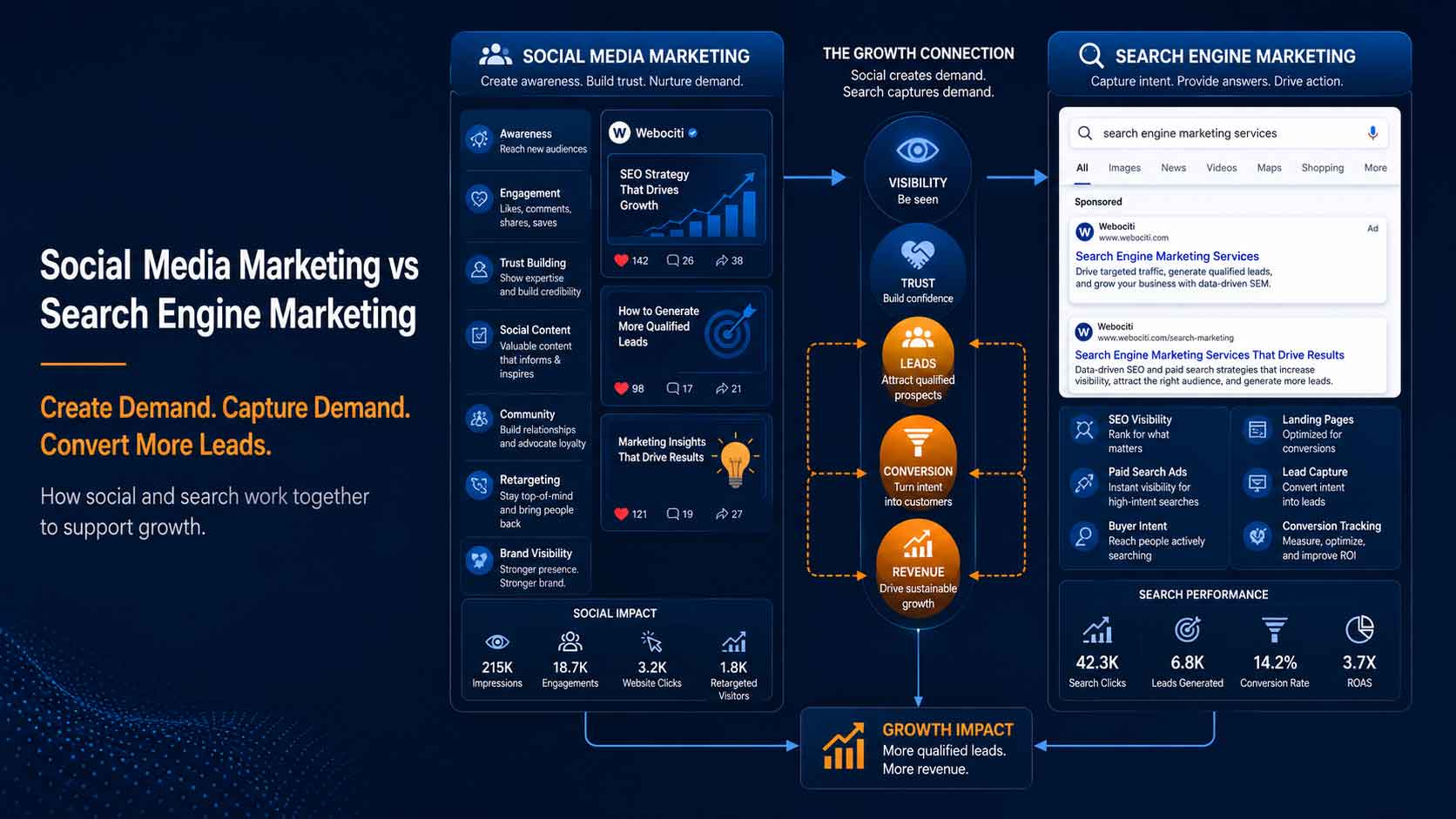
In the rapidly evolving landscape of digital marketing, businesses often weigh the benefits of Social Media Marketing (SMM) against Search Engine Marketing (SEM). While both strategies are essential, understanding their unique advantages can help you tailor your marketing efforts more effectively. This blog post delves into the strengths of each approach to guide your decision-making process.

Social Vs Search

The Synergy of Content and SEO

Gone are the days when marketers had to choose between content quality and SEO optimization. Today, it is widely accepted that robust content and effective SEO are not rivals but collaborative partners in driving online marketing success.

Social Media Marketing: Connecting Through Community

Advantages of Social Media Marketing

Recent studies, including one by Econsultancy, suggest that a significant percentage of younger consumers (ages 18-26) rely on social media recommendations before making a purchase. The immediate visibility that social media provides when someone likes, shares, or tweets about your page can expose your business to a broader audience instantly. Moreover, many users within the same network often share similar interests, multiplying your reach with just one click.

Another significant advantage of SMM is real-time reputation management. In an era where consumer feedback can make or break your business, having the ability to quickly respond to criticism on social media is invaluable. Platforms like Facebook and LinkedIn also offer paid advertising options that allow you to target specific demographics, much like traditional SEM.

Search Engine Marketing: Discoverability and Intent

Advantages of Search Engine Marketing

Search engines remain the go-to resource for information seeking, with reports indicating that over 60% of consumers use search engines to research products or services before making a purchase. Effective SEM ensures that your business ranks well in search results, making it easier for potential customers to find you.

It’s crucial to stay updated with search engine algorithms, such as Google’s mobile-first indexing, to maintain a strong SEM presence. Tools like Google AdWords and Keyword Planner are indispensable for identifying relevant keywords and managing your ad spend efficiently.

Integrating SMM and SEM

While breaking into the first page of search results can be challenging, combining SEM with strategic keyword research can significantly enhance your visibility. Paid search campaigns offer a viable method to achieve immediate visibility and complement your long-term organic strategies.

Both Social Media Marketing and Search Engine Marketing offer distinct benefits and can be powerful tools in your digital marketing arsenal. Depending on your business goals, target audience, and marketing budget, you may find one more suitable than the other, or you may discover that a combination of both strategies is the best approach.

Get Started

Unsure about which strategy fits your business best? Contact Webociti today at 678-892-7157 for a personalized consultation. Let our experts help you navigate the complexities of SMM and SEM to maximize your digital marketing success.

#SocialMediaMarketing #SearchEngineMarketing #DigitalMarketing #SEO #SEM


Unleash the Power of PPC and SEM for Unbeatable Online Visibility and Growth!

Pay-per-click (PPC) and search engine marketing (SEM) are two of the most popular digital marketing and advertising strategies used by businesses to increase their online visibility and drive traffic to their websites. While both PPC and SEM have their similarities, there are also some significant differences between the two. In this blog post, we’ll explore the differences between PPC and SEM and help you decide which one is right for your business.

What is PPC?

PPC is a type of digital advertising that allows businesses to place ads on search engine results pages (SERPs) and other websites. With PPC, businesses only pay when someone clicks on their ad. The most popular PPC platform is Google Ads, which allows businesses to create ads and bid on specific keywords related to their products or services.

What is SEM?

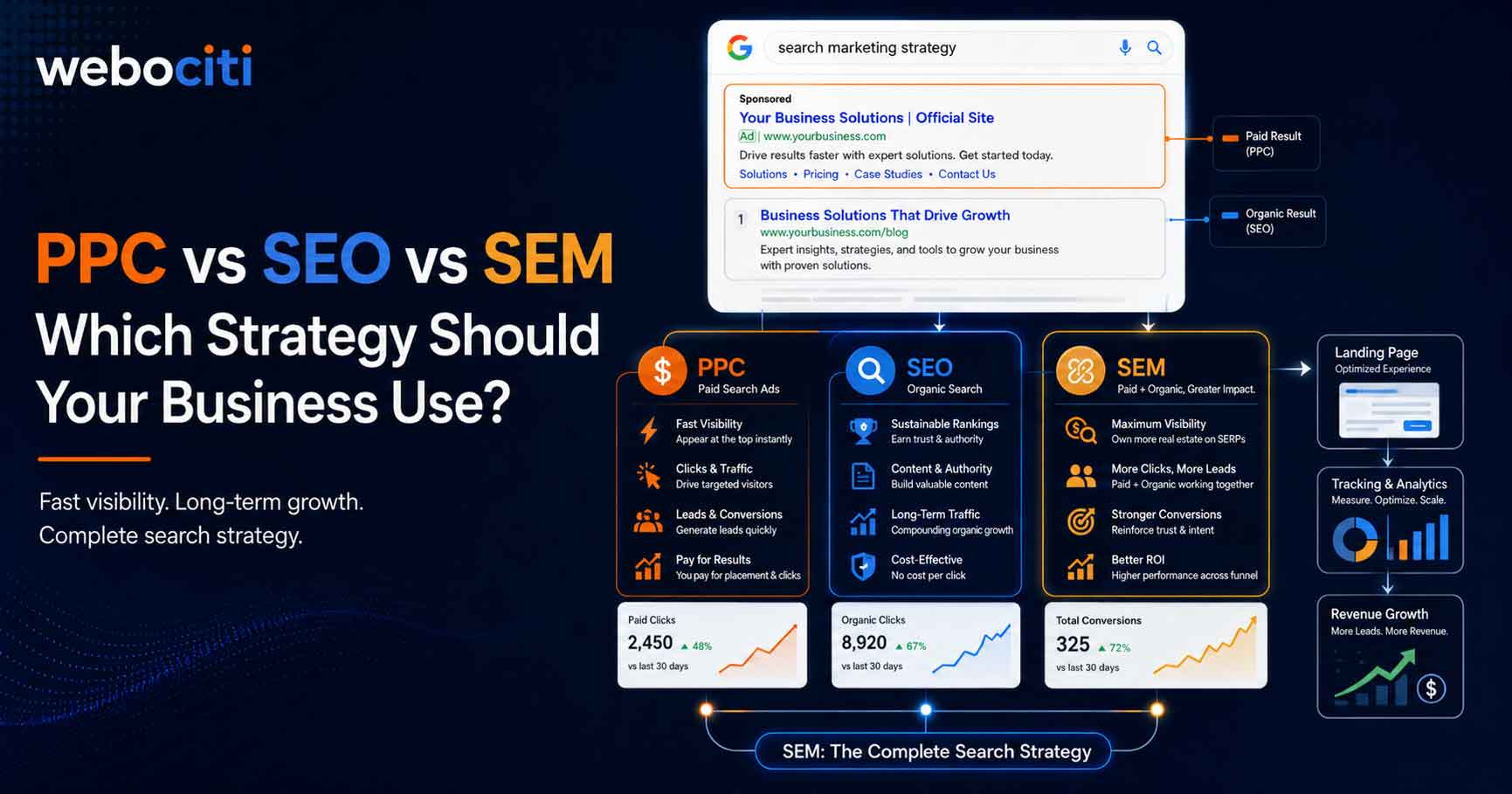
SEM is a broader term that encompasses a range of digital marketing strategies, including PPC. SEM involves using various tactics to increase a website’s visibility in search engine results pages (SERPs). These tactics can include SEO, PPC, and other forms of online advertising.

PPC vs SEM: What’s the difference?

The main difference between PPC and SEM is that PPC is a type of advertising, while SEM is a broader term that includes a range of digital marketing strategies. SEM involves optimizing a website for search engines and promoting it through various channels, including paid advertising.

PPC is a more focused strategy that involves placing ads on search engine results pages or other websites. With PPC, businesses can bid on specific keywords related to their products or services and pay only when someone clicks on their ad. PPC is a highly effective way to drive traffic to a website quickly and generate leads and sales.

Pros and Cons of PPC

Pros:

Highly targeted: With PPC, businesses can target specific keywords and demographics, ensuring their ads are seen by the right people at the right time.
Quick results: PPC campaigns can generate traffic and leads almost instantly, making it a great way to get fast results.
Easy to measure: PPC campaigns are easy to track and measure, making it easy to see which campaigns are working and which are not.

Cons:

Costly: PPC campaigns can be expensive, especially if businesses are bidding on highly competitive keywords.
Requires ongoing management: PPC campaigns require ongoing management to ensure they are optimized for maximum results.
Ad fatigue: Over time, users may become immune to the same ads, leading to ad fatigue and reduced effectiveness.

Pros and Cons of SEM

Pros:

Long-term benefits: SEO and other SEM strategies can have long-term benefits for a website’s visibility and organic traffic.
Cost-effective: Compared to PPC, SEM can be more cost-effective, as businesses don’t have to pay for clicks.
Greater reach: SEM includes a range of tactics, including SEO and social media, allowing businesses to reach a broader audience.

Cons:

Slow results: Unlike PPC, SEM strategies can take time to produce results, making it less effective for businesses looking for fast results.
Requires ongoing effort: SEM requires ongoing effort and optimization to ensure maximum effectiveness.
Limited targeting: SEO and other SEM strategies are less targeted than PPC, making it harder to reach specific demographics and audiences.

Which one should you choose?

The choice between PPC and SEM ultimately depends on your business goals, budget, and timeline. If you’re looking for fast results and have a budget for advertising, then PPC may be the best option. However, if you’re looking for a long-term strategy that can drive organic traffic to your website, then SEM may be the better choice.

Ultimately, the most effective digital marketing strategy will likely involve a combination of PPC and SEM tactics, tailored to your business goals and budget. By leveraging the strengths of both PPC and SEM, businesses can maximize their online visibility, generate leads, and increase sales.

How can you get started?

In the world of digital marketing, the right strategy can make all the difference in driving your business towards success. Whether you choose PPC, SEM, or a combination of both, having the expertise and guidance of a trusted partner can amplify your efforts and deliver exceptional results.

At Webociti, we specialize in helping businesses navigate the complexities of digital marketing, harness the power of PPC and SEM, and unlock their full online potential. Our team of experts is ready to create tailored strategies that align with your business goals, optimize your online visibility, and drive growth like never before. Take the next step towards digital marketing excellence and contact Webociti today. Your journey to online success starts here! 678-892-7157