Website Design & Development Insights

Website design and development play a critical role in how businesses attract,
engage, and convert customers online.

This category focuses on building high-performing business websites, covering
UX strategy, conversion-focused design, WordPress development, site architecture,
performance optimization, and best practices that help websites generate leads,
support SEO, and scale with your business.

If you’re planning a new website or looking to improve performance from an
existing one, explore the articles below or learn more about our

Website Design & Development Services
.

Quick Summary:

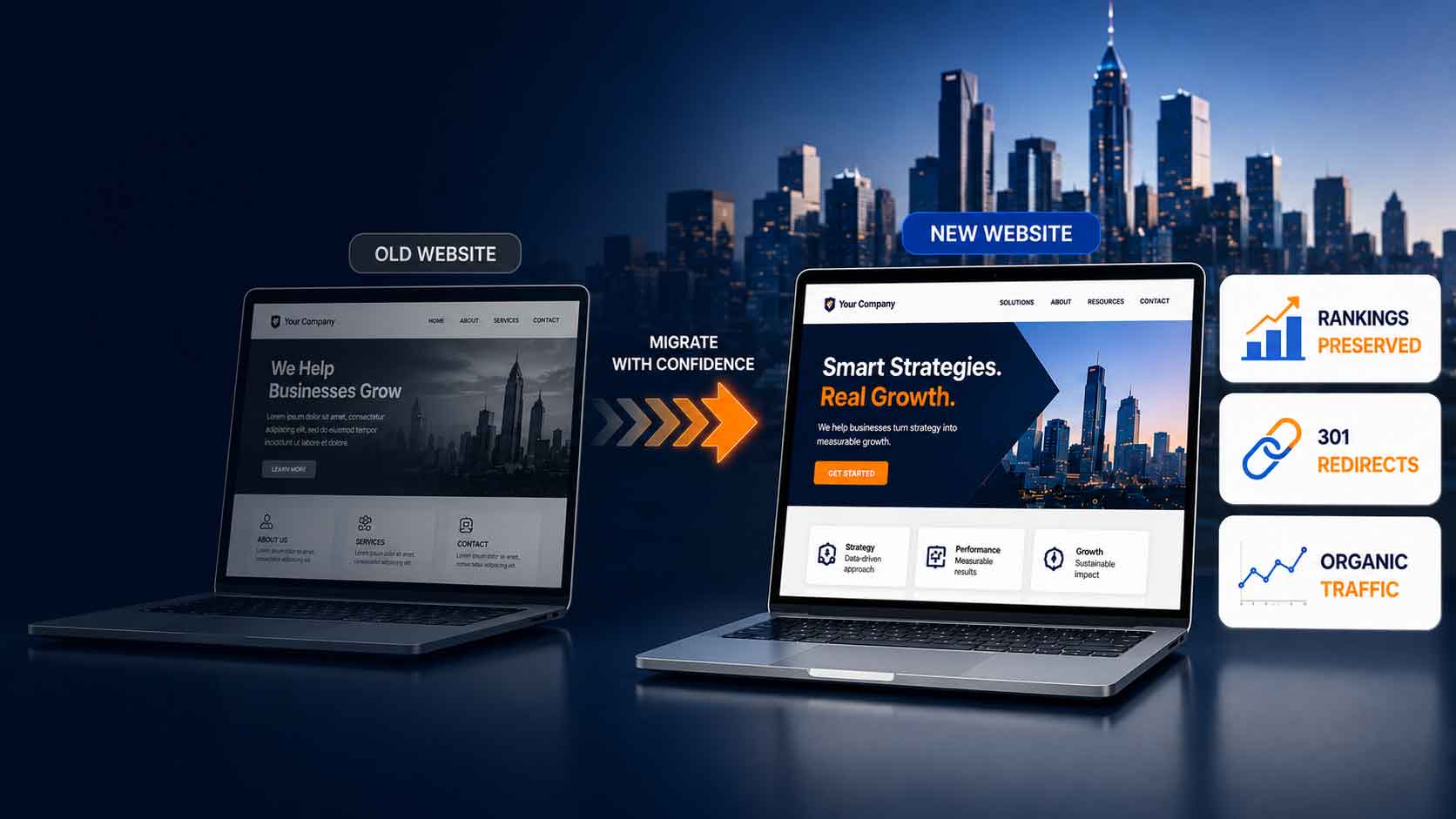
Replacing an existing website requires careful planning to avoid losing SEO rankings and traffic.

Key steps include:

  • Implementing 301 redirects from old URLs to new pages
  • Mapping existing URLs before launching the new site
  • Updating XML sitemaps
  • Testing the site before launch
  • Monitoring rankings and traffic after migration

Following these steps ensures a smooth website migration without damaging your search visibility. A properly planned website migration strategy helps preserve SEO rankings while improving site performance and user experience.

A well-planned website migration strategy protects your SEO rankings, preserves existing traffic, and ensures your new website launches successfully without losing search visibility.

Website migrations often impact search rankings, which is why businesses should understand how search visibility works. If you’re unfamiliar with paid and organic search strategies, read our guide on PPC vs SEM and how they affect website traffic.

There’s nothing quite as exciting as launching a new website. Your website is far more than a simple marketing tool — it represents the culmination of months of planning, development, and strategy. A strong digital presence helps prospects and customers find the information they need while helping your business grow revenue.

When replacing an existing website, however, you must protect the SEO value your current site has built over time. Without a proper migration strategy, companies risk losing search rankings, organic traffic, and valuable leads.

It would be fantastic if you could simply “flip the switch” and bring your site live while maintaining all of your search visibility. Unfortunately, this rarely happens without planning. Following the steps below helps ensure your new website launch protects the momentum your current site has already built.


Case study: A major automotive upfitter went from thousands of monthly visits on their website to only two visits per month after launching a new website with another digital marketing firm. When they came to Webociti, we helped restore their SEO using the strategies outlined below. Unfortunately, the damage was already done and it took nearly 180 days for the company to regain its traffic levels.

Tips for Moving Your Website

Have a security certificate in place? Check. Proofed all the text? Check. But what about the small details companies often discover after launch — details that can frustrate visitors or harm SEO performance? These tips help ensure your website launch goes smoothly and provides the best possible experience for visitors.

Use a 301 Redirect Strategy

When you are creating a new website from the ground up, it’s critical to maintain your current site until the new site is fully tested and ready to launch. One of the most important steps in a website migration is implementing 301 redirects.

A 301 redirect uses HTTP Status Code 301 to forward users and search engines from specific pages on your old site to the same pages on your new site. This allows search engines to transfer ranking signals from the old URLs to the new ones.

When users enter your old URL, they are automatically redirected to the corresponding page on your new website. This ensures visitors can still find your content while protecting the traffic your site has earned over time.

Have URL Mapping Performed on Your Site

Carefully review your existing website using a tool like Screaming Frog SEO Spider. This tool helps identify every page on your current website so you can map each page to a matching page on your new website.

If you have pages that no longer exist on the new site, you can implement a wildcard redirect that forwards visitors to your homepage or the most relevant section of your site. This ensures no traffic is lost due to missing pages.

Update Sitemaps

Sitemaps are more important today than ever before. Both HTML and XML sitemaps help search engines understand your website structure and find important pages more quickly.

SEO PPC SEM Marketing

Google provides a great overview of sitemaps in their Search Console documentation. You can also learn more about implementing sitemaps through Yoast on our guide explaining what SEO is.

Your team should create two types of sitemaps:

  • HTML sitemap – helps visitors navigate your website
  • XML sitemap – used by search engines to crawl and index your pages

XML sitemaps can be submitted through Google Search Console and Bing Webmaster Tools to ensure search engines quickly discover your new pages.

Site Transition

When launching a new website or performing a redesign, coordinate with your marketing and customer service teams before launch. Choose a time with lower traffic levels to minimize disruption for visitors.

Once your new site goes live, review the full list of 301 redirects to ensure every important page has been redirected correctly. Start with the highest-traffic pages and work down through the rest of the site.

During the first few hours after launch, have team members test important pages to confirm everything works properly. Over the following weeks, monitor Google Search Console to identify crawl errors or pages that may require additional redirects.

Do Not Attempt This Without Professional Help

Failing to follow proper migration procedures can severely damage your search rankings. Without advanced SEO techniques, a website migration may result in a significant loss of organic traffic for months.

If you do not have an experienced SEO strategist guiding the project, it is common to see traffic drops during a redesign. Even with a professional SEO team, a temporary 5–7% dip in traffic can occur after launch before rankings stabilize.

These are specialized marketing services that help ensure your new website launch strengthens your digital presence rather than harming it.

Common Website Migration Mistakes That Hurt SEO

Many companies combine website redesign projects with search marketing campaigns such as Google Ads management to quickly rebuild and grow website traffic after a launch.

Website migrations can significantly impact rankings if not handled properly. Some of the most common mistakes include:

  • Failing to implement proper 301 redirects
  • Launching a new site without mapping old URLs
  • Changing site structure without redirect planning
  • Forgetting to submit updated XML sitemaps
  • Not monitoring Google Search Console after launch

Avoiding these mistakes helps ensure your new website maintains its search engine visibility while benefiting from improved design and performance.

SEO Considerations When Replacing a Website

Replacing a website without a proper SEO migration plan can lead to significant traffic loss. Search engines rely on page URLs, redirects, internal links, and sitemaps to understand your website structure.

During a redesign, businesses should preserve important SEO elements such as page titles, meta descriptions, internal links, and structured data whenever possible.

Working with an experienced SEO agency helps ensure your new website launch improves rankings instead of damaging them.

Related Website Migration Resources

Planning a website redesign or migration requires a strong SEO strategy. These guides can help you better understand how search visibility, paid advertising, and SEO work together to protect and grow your traffic:

Website Migration Frequently Asked Questions

Will I lose SEO if I replace my website?

You may lose rankings if the migration is not handled correctly. Implementing 301 redirects and maintaining your URL structure helps preserve SEO performance.

What is a 301 redirect?

A 301 redirect permanently forwards visitors and search engines from an old page to a new page while transferring SEO value to the new URL.

How long does it take Google to reindex a new website?

Google can begin indexing a new site within a few days, but rankings often take several weeks to stabilize after a major website migration.

Should I change URLs when launching a new website?

It is best to keep existing URLs whenever possible. If URLs must change, proper 301 redirects should be implemented to maintain SEO rankings.

Contact the Team at Webociti for Seamless Migration for Your Website

Even if you have the vision for a perfect website, it’s best to work with professionals who understand website migrations and SEO. Need help with a redesign or website upgrade?

Before launching a redesigned website, follow a complete website migration SEO checklist to ensure your rankings and traffic are protected.

Contact the team at Webociti at 678-892-7157 to schedule a complimentary consultation. We have more than 20 years of experience in digital marketing with a strong focus on SEO.

9 Signs Your Website Is Losing Customers

Your website is your digital storefront—so why are customers walking away? Here’s how to spot (and fix) the common issues that are signs your website is losing customers.

In today’s digital world, your website is often the first interaction potential customers have with your business. Think of it as your storefront—the first impression that sets the tone for their experience. If your website is slow, cluttered, or outdated, visitors won’t stick around. Worse, they’ll head straight to your competitors. Here are nine telltale signs your website is losing customers, along with actionable tips to turn things around.

Quick Summary

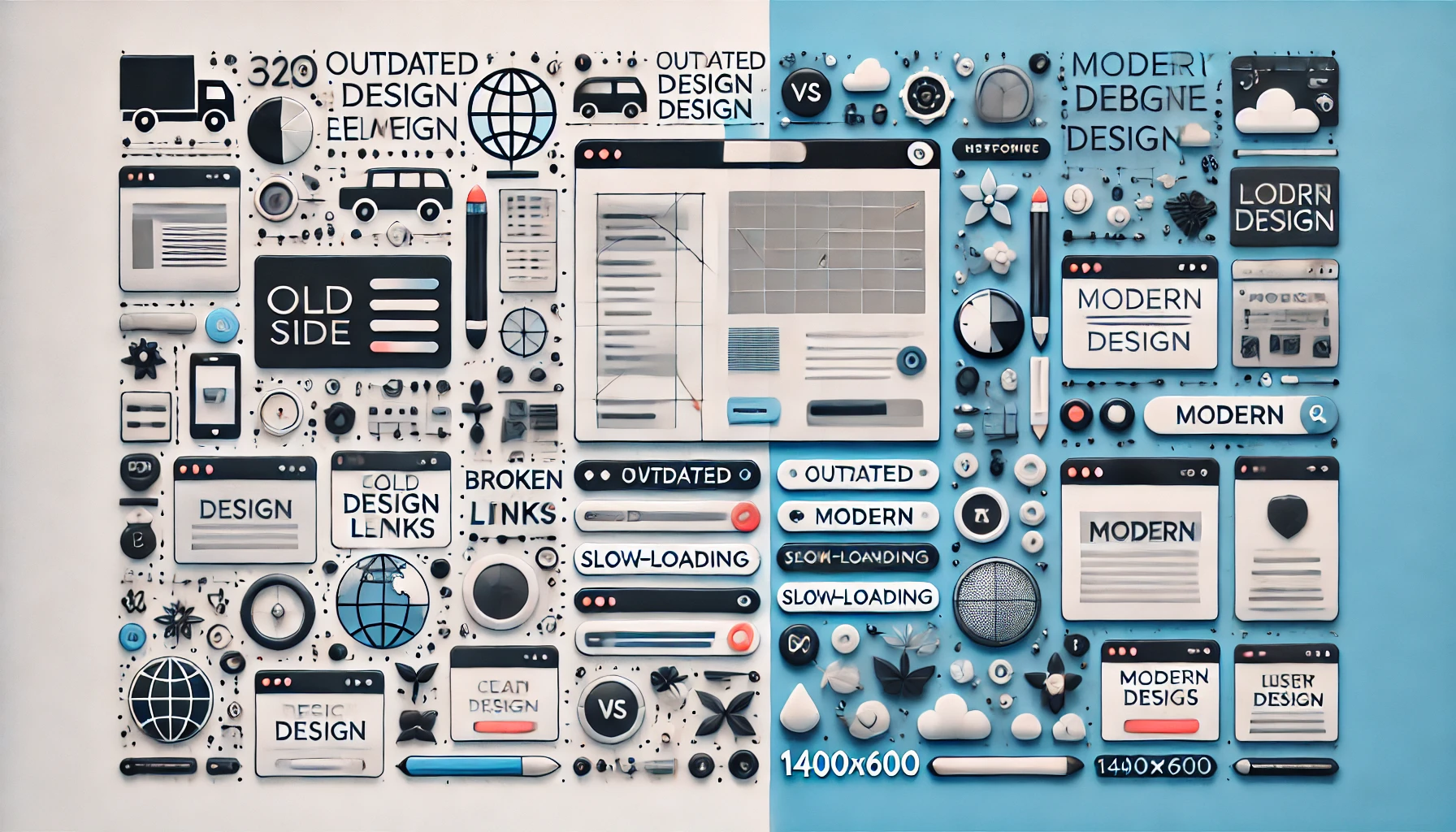
Graphic titled '9 Signs Your Website Is Losing Customers' highlighting issues like poor content quality, outdated design, and slow loading speeds.

  • The importance of storytelling and engaging messaging
  • Copying competitors instead of being unique
  • Lack of trust signals
  • Poor content quality
  • No clear call to action (CTA)
  • Outdated design
  • Lack of mobile optimization
  • Unclear navigation
  • Slow loading speeds
Quick Tip: If you recognize any of these issues on your website, don’t wait—take action now to improve your site’s performance and customer experience.
Contact us for a free consultation.

1. The lack of storytelling and engaging messaging

The Problem: Many websites fail to connect emotionally with their audience, focusing only on features or technical specifications. This approach often fails to address customer needs or pain points, making it harder to resonate and leaving no lasting impression.

The Fix:

  • Tell a brand story that speaks to your audience’s values and aspirations.
  • Use storytelling to show how your product or service helps with real world problems.
  • Address your audience’s challenges and goals head-on.
  • Emphasize the benefits of your product or service and how it can help improve their lives or fix their problems.
  • Include customer success stories or case studies to show real results.
  • Use customer-centric language, such as “Here’s how we help you…” rather than “What we offer.”

Why It Matters: Stories and engaging messaging build trust and create an emotional connection with your audience. By shifting the focus from your product to your customers’ experiences, you differentiate your brand, inspire action, and foster loyalty.

2. Copying Competitors Instead of Being Unique

The Problem: It’s tempting to replicate what your competitors are doing, but this approach can make your brand blend in rather than stand out. Customers are looking for unique solutions, not a copycat business.

The Fix:

  • Identify your unique value proposition (UVP) and make it the centerpiece of your messaging.
  • Focus on how your brand solves problems differently or better than others.
  • Avoid using cookie-cutter templates or language from competitors’ websites.
  • Highlight your company’s story, mission, and values to create a deeper connection with your audience.
  • Be yourself and emphasize what makes you stand out. Show your unique value and the things you do better than your competitors.

Why It Matters: Being unique helps you stand out in a crowded market and establishes your brand as an innovator. Customers are more likely to choose a brand they feel is authentic and original, rather than one that blends in with the rest.

3. Lack of Trust Signals

The Problem: In the digital age, trust is everything. If visitors can’t verify your credibility, they won’t feel confident doing business with you. Missing trust signals like customer reviews, certifications, or secure payment options can drive potential customers away.

The Fix:

  • Display testimonials, case studies, and reviews prominently on your website.
  • Use trust badges for secure payments and privacy assurances (e.g., “SSL Secured” or “Verified by [Payment Provider]”).
  • Include an “About Us” page that highlights your company’s expertise and values.
  • Provide clear contact information to show visitors there’s a real team behind the website.

Why It Matters: Trust signals reduce hesitation by providing reassurance that your business is credible and reliable. Without these, customers may abandon your site for a competitor that appears more trustworthy.

4. Poor Content Quality

The Problem: Low-quality, irrelevant, or outdated content can turn visitors off. If your website doesn’t provide value or answer users’ questions, they’ll leave unsatisfied and unlikely to return.

The Fix:

  • Regularly update your content to ensure it remains relevant and accurate.
  • Use clear, concise language tailored to your target audience.
  • Incorporate visuals like images, videos, and infographics to enhance engagement.
  • Add a blog or resource section to position your brand as an industry expert and improve SEO.

Why It Matters: High-quality content not only improves SEO but also keeps visitors engaged and builds your authority in the industry. Customers return to websites that consistently provide value and answer their questions.

5. No Clear Call to Action (CTA)

The Problem: Your website may look great and provide valuable information, but if it lacks a clear next step, visitors won’t know what to do. Whether it’s contacting you, purchasing a product, or signing up for a newsletter, every page needs a purpose. Most importantly, your website must clearly guide people on how to do business with you.

The Fix:

  • Place prominent CTAs on every key page (e.g., “Contact Us,” “Buy Now,” “Learn More”).
  • Use actionable language that creates urgency, such as “Get Your Free Quote Today!”
  • Ensure CTAs stand out visually with contrasting colors and strategic placement.
  • Test different CTAs to determine what resonates best with your audience.

Why It Matters: CTAs act as signposts that guide visitors toward conversion. Without them, potential customers may feel lost and leave without taking any action, reducing your site’s effectiveness.

6. Outdated Design

The Problem: A website with a dated look or poor design elements can make your business appear unprofessional and out of touch. First impressions matter, and users often judge credibility based on design within seconds of landing on a site.

The Fix:

  • Adopt a clean, modern design that reflects your brand’s identity.
  • Use high-quality visuals and consistent fonts and colors throughout your site.
  • Ensure your website’s design is mobile-responsive, as over half of web traffic comes from mobile devices.
  • Regularly update your website to stay aligned with current design trends and user expectations.

Why It Matters: Your website’s design is often the first impression customers have of your business. A modern, professional design builds trust and confidence, encouraging visitors to stay and explore.

7. Lack of Mobile Optimization

The Problem: With more people browsing on smartphones than ever, a non-mobile-friendly website is a dealbreaker. Visitors will leave if they have to pinch, zoom, or scroll excessively to navigate your site.

The Fix:

  • Use responsive design techniques to ensure your site adapts to any screen size.
  • Test your website on various devices to identify usability issues.
  • Simplify forms and call-to-action buttons to make them easy to interact with on mobile.
  • Optimize images and videos for mobile to ensure fast load times.

Why It Matters: Mobile optimization ensures accessibility for the majority of internet users, who browse on mobile devices. A seamless mobile experience improves engagement and reduces bounce rates.

8. Unclear Navigation

The Problem: If visitors can’t find what they’re looking for quickly, they’ll leave. A confusing or cluttered navigation menu creates frustration and increases bounce rates.

The Fix:

  • Streamline your menu to include only the most important pages.
  • Use clear and concise labels that reflect user intent (e.g., “Services” instead of “What We Offer”).
  • Implement a search bar for easy access to specific information.
  • Test your navigation regularly to ensure it’s intuitive on both desktop and mobile devices.

Why It Matters: Clear navigation creates a seamless user experience, helping visitors find what they need quickly. This reduces frustration, decreases bounce rates, and increases the likelihood of conversions. A well-structured navigation menu keeps users engaged and encourages them to explore more pages on your site.

9. Slow Loading Speeds

The Problem: In the age of instant gratification, nobody wants to wait for a website to load. According to Google’s performance scoring, 53% of mobile users abandon a site if it takes longer than three seconds to load. A slow website frustrates users and sends a signal to search engines that your site isn’t user-friendly, hurting your SEO rankings.

The Fix:

  • Optimize images by compressing their file sizes without sacrificing quality.
  • Use a Content Delivery Network (CDN) to ensure fast loading times across different locations.
  • Minimize code by eliminating unnecessary CSS, JavaScript, and plugins.
  • Upgrade your hosting plan if your current provider doesn’t offer sufficient speed.

Why It Matters: Website speed impacts user experience and SEO rankings. Faster sites keep visitors engaged, reduce bounce rates, and improve conversion rates. Additionally, search engines prioritize fast-loading sites, helping you rank higher in search results.

Back to Top

The Top 7 Warning Signs Your Website Needs a Makeover

In the fast-paced world of digital marketing, your website serves as the storefront of your business. It’s often the first interaction potential customers have with your brand, and as we all know, first impressions matter. Just like physical stores need renovations to stay modern and appealing, websites also require updates to keep up with changing trends, user expectations, and business growth. A website that’s outdated, slow, or poorly designed can cost you in terms of both user engagement and conversions.

In this blog post, we’ll explore the top 7 warning signs that your website might need a makeover and how a fresh design can significantly impact your user experience and bottom line.

1. Your Website Isn’t Mobile-Friendly

More than half of all web traffic now comes from mobile devices. If your website isn’t mobile-friendly, you’re likely losing a significant portion of potential customers. A website that doesn’t scale properly on mobile screens can frustrate users, leading to higher bounce rates and lower conversions.
SEO

Signs your website isn’t mobile-friendly:

  • Visitors have to pinch or zoom to view content.
  • Buttons or links are hard to click because they are too small.
  • The layout looks skewed or off-balance on mobile devices.
  • Page load times are significantly longer on mobile.

Having a responsive, mobile-optimized website is no longer optional; it’s a necessity. Not only does it improve the user experience, but Google also prioritizes mobile-friendly sites in its search rankings.

If your website isn’t mobile-friendly, you could be missing out on valuable leads. Contact us today to explore how Webociti can help redesign your site for the modern mobile experience and drive more conversions.

2. Your Website Is Slow to Load

Did you know that 40% of visitors will abandon a website if it takes more than 3 seconds to load? In the age of instant gratification, users expect websites to load almost instantaneously. If your website is slow, it’s a sure sign you need a makeover.

Signs your website is too slow:

  • High bounce rates (users leaving your site after visiting only one page).
  • Poor performance scores on website speed tests like Google PageSpeed Insights or GTmetrix.
  • Complaints from users about slow page load times.
  • Noticeable delays in loading images, videos, or interactive elements.

A website that loads quickly improves user experience, boosts engagement, and has a positive impact on your SEO ranking. During a website makeover, optimizing images, compressing files, and updating outdated code can significantly improve load times.

3. Your Website Looks Outdated

Design trends in web development evolve rapidly, and what looked modern five years ago may now appear outdated. An old, cluttered design can make your business look unprofessional and out of touch. A dated website can hurt your brand image and decrease your credibility with visitors.

Signs your website design is outdated:

  • Your site uses outdated design elements like skeuomorphism, Flash animations, or old fonts.
  • It lacks modern web features like parallax scrolling, minimalist design, or clean, intuitive navigation.
  • Your website hasn’t been updated in the last 3-5 years.
  • The design looks cluttered, making it difficult for visitors to navigate.

A website makeover will give your business a fresh, modern look that aligns with current design trends and meets user expectations. Incorporating features like sleek typography, bold visuals, and intuitive navigation can dramatically improve your site’s overall appeal.

4. Your Website Isn’t Generating Leads or Conversions

Your website is a powerful tool for lead generation and sales, but if it’s not delivering, something may be off with the design or user flow. Visitors might find it difficult to navigate, locate the right information, or take action, such as filling out a form or making a purchase.

Signs your website isn’t optimized for conversions:

  • Visitors leave your site without taking any action.
  • Your call-to-action (CTA) buttons are hard to find, unclear, or ineffective.
  • Forms are too complicated or lengthy, leading to high abandonment rates.
  • Analytics show low conversion rates despite high traffic.

A website makeover can focus on streamlining the user journey and optimizing the layout for conversions. Simple adjustments like improving CTAs, shortening forms, and using persuasive design elements can make a significant difference in lead generation and sales.

5. Your Website Is Difficult to Update

In today’s digital landscape, you need to be able to update your website regularly—whether it’s adding new content, updating services, or making design tweaks. If your website relies on outdated technology or content management systems (CMS), making these changes can be a cumbersome and time-consuming process.

Signs your website is difficult to update:

  • You need a developer to make even small changes.
  • Your CMS is outdated and lacks modern features.
  • It takes too long to upload new content, images, or updates.
  • Your team finds it challenging to keep the site current with new information.

A website makeover can include migrating to a modern CMS like WordPress, which makes it easier for you to update content and manage your site without the need for technical expertise. This ensures your site stays relevant and up-to-date.

6. Your SEO Performance Has Plateaued

Search Engine Optimization (SEO) is crucial for driving organic traffic to your site, but if your website isn’t performing well in search results, it might be time for a refresh. Google’s algorithms are continually evolving, and an outdated website can negatively impact your rankings.

Signs your website is underperforming in SEO:

  • Your website’s search rankings have stagnated or dropped.
  • Pages are missing essential SEO elements like meta tags, alt text, or proper headings.
  • You’re not generating organic traffic despite optimizing content.
  • Broken links, outdated URLs, or old content remain on your site.

A website makeover can include updating your on-page SEO, improving your website’s structure, and fixing any technical SEO issues. These updates will help you regain visibility in search engines and drive more organic traffic to your site.

7. Your Website Doesn’t Reflect Your Current Brand or Business Offerings

As your business evolves, so should your website. If you’ve recently rebranded, introduced new services, or shifted your business model, your website must reflect those changes. A mismatch between your current brand and your website can confuse visitors and weaken your brand’s identity.
Mobile

Signs your website no longer aligns with your brand:

  • Your site’s color scheme, messaging, or imagery is inconsistent with your current branding.
  • Your products or services have changed, but your site still reflects old offerings.
  • You’ve rebranded or changed your logo, but your site still uses the old one.
  • Your business has expanded to new markets, but your site doesn’t showcase this growth.

A website makeover allows you to align your online presence with your current business and branding. This ensures that visitors get a cohesive brand experience, which helps build trust and encourages engagement.

8. Your Competitors’ Websites Are Better

Take a moment to check out your competitors’ websites. If they’re sleeker, faster, and more modern than yours, it’s time to take action. A website that doesn’t measure up to industry standards can leave you trailing behind in the digital race.

Signs your competitors’ websites are outperforming yours:

  • They have better SEO rankings.
  • Their sites are more visually appealing and easier to navigate.
  • Their mobile experience is superior.
  • They offer a more seamless user journey, leading to higher conversions.

A website makeover will allow you to stay competitive and meet or exceed industry standards, ensuring that you capture and retain more customers.

Conclusion

Your website is more than just a digital brochure—it’s the cornerstone of your online presence and often the first interaction a potential customer has with your brand. If any of the signs mentioned above resonate with you, it’s time to consider a website makeover.

Investing in a modern, functional, and mobile-friendly website will improve user experience, increase conversions, and ensure your business remains competitive in the digital marketplace.

At Webociti, we specialize in designing websites that not only look great but also deliver measurable results. Contact us today for a consultation, and let us help you transform your website into a powerful tool for business growth.


How To Enhance Your Website Conversion Rates: Overcoming Common Hurdles


Transforming browsers into buyers is a universal challenge in e-commerce.

Whether due to the nature of online shopping or potential missteps in web design and digital marketing strategy, abandoned shopping carts are a common headache for e-commerce sites.

Travel sites experience the highest cart abandonment rates at 80.1%, followed by general retail at 70.4%, and fashion at 67.6%. Although cart abandonment rates have increased nearly 15% from 2010 to 2015, the volume of online shopping has also surged, presenting more opportunities to capture sales.

Common Reasons for Shopping Cart Abandonment

Understanding why consumers abandon their shopping carts is the first step in addressing the issue:

  • Unexpected Shipping Costs: 28% of consumers abandon shopping carts due to high shipping fees that weren’t clear upfront.
  • Account Creation Requirement: 23% of users leave because they need to create an account.
  • Just Browsing: 16% are only conducting research or comparing prices.
  • Security Concerns: 13% withdraw due to worries about payment security.
  • Complex Checkout Process: 12% give up because the checkout process is too complicated.

Strategies to Improve Conversion Rates

Address Unexpected Shipping Costs

High shipping fees can deter customers, especially if they’re unexpected. Clearly disclose shipping costs early in the shopping process or consider offering free standard shipping to reduce cart abandonment. Statistically, orders with free shipping average 30% higher values than those without, and nearly half of consumers expect free shipping for their online purchases.

Simplify Account Creation

Allow customers to check out as guests to streamline the buying process. This approach not only secures a sale but also captures an email address, allowing for future marketing opportunities. Consider incentives for creating an account post-purchase rather than making it a prerequisite.

Cater to Researchers

While you can’t completely control comparison shopping, you can make your pricing transparent and offer a wishlist or save-for-later feature. This helps keep potential purchases top of mind for customers and simplifies the transition from browsing to buying.

Enhance Site and Payment Security

Display security badges and trustmarks prominently across your site to reassure customers. Ensure your site has SSL certificates and up-to-date security measures to protect user data.

Streamline the Checkout Process

Keep the checkout process simple. Limit required fields to essentials like name, shipping address, and payment information. Consider offering a progress tracker or delivery updates via email to encourage customers to provide their email address voluntarily.

Turning Browsers into Buyers

Improving your website’s conversion rate isn’t just about reducing friction—it’s about creating a smoother, more reassuring shopping experience that aligns with customer expectations. If your e-commerce site struggles with high abandonment rates, implementing these strategies can significantly enhance your conversion rates and overall customer satisfaction.

At Webociti, we specialize in optimizing e-commerce experiences to turn clicks into customers. Contact Webociti today at 678-892-7157 for a free consultation to discover how we can help you improve your digital marketing strategy and enhance your website’s conversion rates.

#EcommerceTips #ConversionRateOptimization #ShoppingCartAbandonment #DigitalMarketing #WebsiteOptimization #UserExperience #OnlineShopping #CheckoutOptimization #SEOTips #WebDesignTips

Consumer behavior is a complex and fascinating subject that lies at the heart of marketing strategies. Understanding why consumers make certain buying decisions is essential for businesses seeking to effectively engage and persuade their target audience. This blog post will delve into the psychology of consumer behavior, exploring the key factors that influence buying decisions and providing valuable insights for businesses to optimize their marketing efforts.

The Role of Perception

Perception plays a crucial role in consumer behavior, as it shapes how individuals interpret and make sense of the world around them. Perception can be influenced by various factors, including personal experiences, cultural background, and marketing messages. By understanding how consumers perceive their products or services, businesses can tailor their marketing campaigns to align with consumers’ expectations and preferences.

The Power of Emotions

Emotions have a significant impact on consumer behavior, often driving purchasing decisions more than rational considerations. Businesses that evoke positive emotions through their branding, storytelling, and customer experiences can create a strong emotional connection with their target audience. By understanding the emotional drivers behind consumer behavior, businesses can craft compelling marketing messages that resonate deeply with consumers and foster brand loyalty.

Cognitive Processes and Decision Making

Consumer decision making involves various cognitive processes, such as information processing, evaluation of alternatives, and post-purchase evaluation. Businesses can influence these processes by providing clear and concise information, highlighting key benefits, and reducing decision-making complexity. By understanding the cognitive processes that consumers go through, businesses can optimize their marketing strategies to facilitate informed and confident buying decisions.

Social Influence and Social Proof

Consumers are influenced by social factors, including the opinions and behaviors of others. Social proof, such as testimonials, customer reviews, and influencer endorsements, can significantly impact consumer buying decisions. Businesses can leverage social influence by encouraging positive reviews, showcasing customer success stories, and fostering a sense of community around their brand.

The Impact of Persuasive Techniques

Persuasive techniques, such as scarcity, urgency, and authority, can heavily influence consumer behavior. Businesses can create a sense of urgency through limited-time offers or emphasize their expertise to establish authority in the industry. Understanding these persuasive techniques and incorporating them strategically into marketing campaigns can enhance the effectiveness of messaging and drive consumer action.

The Role of Personalization

Personalization has become increasingly important in consumer behavior. Tailoring marketing messages, recommendations, and experiences to individual consumers can enhance their engagement and create a sense of relevance. By leveraging data and technology, businesses can deliver personalized experiences that resonate with consumers’ unique preferences and needs.

Conclusion

Consumer behavior is a dynamic field influenced by various psychological factors. By understanding the psychology behind consumer decision making, businesses can optimize their marketing strategies and effectively engage with their target audience. By considering perception, emotions, cognitive processes, social influence, persuasive techniques, and personalization, businesses can create compelling experiences that drive consumer action and foster long-term customer relationships.

Understanding the psychology of consumer behavior empowers businesses to align their marketing efforts with the desires and motivations of their target audience, ultimately leading to increased sales and business success. By staying attuned to evolving consumer behavior trends and implementing strategies informed by psychology, businesses can stay ahead in a competitive marketplace.

Are you ready to tap into the power of consumer psychology and drive your business forward? Contact our team today to learn how we can help you unlock valuable insights about your target audience and develop tailored marketing strategies that resonate. Don’t miss out on the opportunity to connect with your customers on a deeper level and make informed decisions that drive results.

Take the next step

Take the next step towards understanding and leveraging consumer behavior to elevate your business. Contact Webociti now and let’s embark on this exciting journey together!

Remember, the key to successful marketing lies in comprehending the underlying factors that drive buying decisions. Start applying the principles of consumer psychology to your marketing efforts and witness the transformative impact it can have on your business.

Start your journey into the psychology of consumer behavior today and witness the positive impact it can have on your business growth! 678-892-7157

Storytelling in Marketing

Good messaging and storytelling play a crucial role in successful marketing efforts. In this section, we will explore the importance of crafting compelling messages and telling a captivating story to engage your audience and differentiate your brand.

Connecting Emotionally with Your Audience

Humans are naturally drawn to stories. A well-crafted narrative has the power to evoke emotions, create connections, and leave a lasting impact. By incorporating storytelling elements into your marketing messages, you can engage your audience on an emotional level, making your brand more relatable and memorable.

Establishing Brand Identity and Differentiation

In a crowded marketplace, having a unique brand identity is essential. Storytelling allows you to showcase what sets your business apart from the competition. By telling your brand’s story and conveying its values, mission, and vision, you can differentiate yourself and build a loyal customer base.

Building Trust and Credibility

Effective storytelling builds trust and credibility with your audience. When you share stories that highlight your expertise, showcase real-life customer experiences, or demonstrate the impact of your products or services, you establish yourself as a reliable and trustworthy authority in your industry.

Simplifying Complex Concepts

Complex ideas or technical aspects of your business can be challenging to communicate effectively. Storytelling provides a powerful tool for simplifying complex concepts and making them more accessible to your audience. By using relatable narratives, analogies, or examples, you can break down complicated information into digestible and engaging content.

Engaging and Memorable Content

People have shorter attention spans in today’s fast-paced digital world. Captivating storytelling allows you to create content that grabs attention and keeps your audience engaged. Whether through blog posts, videos, podcasts, or social media content, weaving a compelling narrative will make your message more memorable and shareable.

Inspiring Action and Driving Conversions

Ultimately, the goal of marketing is to drive action and generate conversions. Well-crafted messaging and storytelling can inspire your audience to take the desired actions, whether it’s making a purchase, signing up for a newsletter, or sharing your content with others. By effectively communicating the value and benefits of your offerings through storytelling, you can increase conversions and achieve your marketing goals.

Conclusion

In the world of marketing, good messaging and storytelling are powerful tools that can elevate your brand and drive business growth. By harnessing the emotional connection and engagement that stories provide, you can differentiate your brand, build trust, simplify complex concepts, and inspire action. At Webociti, we understand the importance of crafting compelling narratives, and we can help you develop messaging strategies that resonate with your target audience. Let us be your partner in creating captivating stories that elevate your brand and drive results.

Ready to harness the power of storytelling in your marketing? Contact Webociti today to learn how our expertise can help you craft compelling messages and engage your audience through storytelling. Let us guide you in creating a narrative that sets your brand apart and drives business success. 678-892-7157

The Power of Storytelling and Website Copy: Crafting Compelling Narratives for Business Success

In a digital landscape teeming with competition, businesses strive to connect with their audience in meaningful ways. Enter the enchanting realm of storytelling—a timeless art that has the power to captivate hearts and minds. In this captivating journey, we will explore the significance of storytelling and website copy, unlocking the secrets to crafting narratives that resonate with your audience and drive business success.

The Art of Storytelling

Throughout history, stories have shaped cultures, inspired change, and forged deep connections. Storytelling taps into our emotions, engages our senses, and sparks our imagination. It is a powerful tool that transcends traditional marketing tactics, allowing businesses to create lasting impressions and build authentic relationships.

Crafting a Compelling Narrative

Every great story has key elements that enthrall readers and listeners. Applying these storytelling principles to your website copy can make a remarkable difference. Begin by understanding your target audience and their desires. Position your brand as the guide and identify how you can help them overcome challenges. Craft a narrative that highlights the transformation your customers can experience by engaging with your brand.

Engaging Your Audience

To truly captivate your audience, your website copy needs to resonate with them on an emotional level. It should be relatable, persuasive, and empathetic. Use storytelling techniques to communicate your brand’s unique value proposition, address pain points, and connect with your audience’s aspirations. By speaking directly to their needs and desires, you can create a powerful bond that compels them to take action.

Building an Immersive Website Experience

Your website serves as the gateway to your brand’s story. Design an immersive user experience that seamlessly integrates storytelling elements. Consider the visual aesthetics, layout, and navigation of your website to ensure a cohesive narrative experience. Use captivating visuals, engaging videos, and interactive features to guide visitors through your story and keep them engaged.

Measuring Success: Analyzing Website Performance

To gauge the effectiveness of your storytelling and website copy, you need to analyze key performance metrics. Track user engagement, conversion rates, and other relevant data to gain insights into how your audience is responding to your narrative. Use this information to refine your approach, optimize your website, and continually improve the impact of your storytelling efforts.

Empowering Your Brand: Real-Life Success Stories

Real-life success stories demonstrate the transformative power of storytelling in business. Explore examples from various industries where brands embraced storytelling to connect with their audience, enhance brand identity, and achieve tangible results. Gain inspiration from these success stories and uncover valuable insights that you can apply to your own storytelling journey.

Embrace the Magic of Storytelling

As our storytelling adventure concludes, remember that the true magic of storytelling lies in its ability to create meaningful connections. Embrace storytelling as an integral part of your business strategy. Craft narratives that inspire, resonate, and leave a lasting impression on your audience. By harnessing the power of storytelling in your website copy, you can build stronger connections, differentiate your brand, and drive business success.

In The Enchanting Realm of Storytelling

Webociti stands ready to be your guide and partner on your business’s narrative journey. Our team of experts understands the power of compelling storytelling and effective website StoryBrand copy to drive business growth. With our comprehensive suite of digital marketing services, we can help you craft captivating narratives, design immersive website experiences, and measure your success along the way. Let us be the catalyst that propels your brand’s story to new heights and unlocks your business’s full potential.

Ready to embark on your storytelling adventure with Webociti? Visit our website today at www.webociti.com to learn more about our digital marketing services and how we can help you harness the power of storytelling to achieve business success. Connect with us for a consultation and let’s create a narrative that leaves a lasting impact on your audience and takes your brand to new horizons.

Building your online presence with expert web design in Atlanta

In today’s digital age, your website is your storefront. It’s the first impression that potential customers will have of your business. And just like a brick-and-mortar store, you want your website to be inviting, easy to navigate, and reflective of your brand. That’s where we come in.

Digital Store Front

At Webociti, we specialize in creating custom website designs that meet the unique needs of businesses in Atlanta and beyond. We understand that every business is different, and that’s why we take a tailored approach to every project. Our team of experienced designers and developers work closely with you to understand your goals, your brand, and your target audience. From there, we create a website that is both visually stunning and user-friendly.

Our process begins with a consultation to discuss your business goals and needs. We’ll work with you to understand your brand, your audience, and your competition. From there, we’ll create a custom website design that is unique to your business. Our designs are created to be responsive, so they look great on any device, whether it’s a desktop computer, tablet, or smartphone.

We believe that great website design goes beyond just aesthetics. That’s why we also focus on creating a website that is easy to use and navigate. Our designs are created with the user in mind, ensuring that visitors can easily find the information they need and take the actions you want them to take. Whether it’s filling out a contact form, making a purchase, or simply learning more about your business, we’ll make sure that your website is optimized for conversions.

In addition to custom website design, we also offer a range of other services to help you elevate your online presence. Our team of experts can help with search engine optimization (SEO), pay-per-click (PPC) advertising, social media marketing, and more. We believe that a comprehensive digital marketing strategy is essential for businesses to succeed in today’s competitive landscape.

Atlanta Website Design Firm

At Webociti, we’re passionate about helping businesses in Atlanta and beyond succeed online. Whether you’re a small local business or a large corporation, we’ll work with you to create a custom website design that meets your needs and helps you achieve your goals. Contact us today at 678-892-7157 to learn more about our services and how we can help take your online presence to the next level.

Customer Journey Optimization: How to Optimize Every Step on Your Website

What if every click on your website brought your visitors closer to making a purchase?

Customer journey optimization on your website is a crucial aspect of your overall digital marketing strategy. It’s the path that a potential customer follows as they discover, evaluate, and ultimately take action on your offerings. Optimizing the customer journey is key to improving conversions, building trust, and nurturing long-term customer relationships. In this guide, we’ll break down each stage of the customer journey and show you how to optimize it for maximum effectiveness.

Optimizing the Awareness Stage: Building Trust from the First Click

The customer journey optimization process begins with the awareness stage, where visitors first learn about your brand. Making a great first impression is key to moving them down the path.

Key Strategies for Optimization:

  • Use Storytelling: Start by telling your brand’s story. Why did you start your business? What sets you apart from competitors? Storytelling can establish an emotional connection with your audience, drawing them in and keeping them interested.
  • Optimize SEO: At this stage, potential customers may not know about your brand. This is where SEO becomes crucial. Use targeted keywords to ensure your content ranks well on search engines, increasing the likelihood of visitors finding your site.
  • Engage with Visuals: Use compelling images, videos, and infographics that highlight your products or services and communicate your brand’s values.

Consider creating a dedicated landing page that introduces your brand, your mission, and the unique value you offer. A clean, clear, and visually engaging landing page can captivate visitors and keep them exploring further.

Optimizing the Consideration Stage: Help Visitors See Why You’re the Right Choice

At this stage, the visitor is already aware of your brand, and they’re evaluating whether your products or services meet their needs. Your goal now is to help them make an informed decision.

Key Strategies for Optimization:

  • Create Detailed Product Descriptions: Ensure that your product or service descriptions are clear, detailed, and speak directly to the needs of your target audience. Explain the features, benefits, and why your offering is the best solution to their problem.
  • Leverage Social Proof: Incorporating customer testimonials, case studies, and reviews can help build credibility and trust. When visitors see that others have had positive experiences with your products or services, they’ll be more likely to consider making a purchase.
  • Offer Product Comparisons: Create comparison charts or interactive demos that allow visitors to see how your offerings stack up against competitors. This makes it easier for them to see why your solution is superior.

At this point, your potential customer needs to feel confident that you are the right choice. By providing them with relevant information, building trust, and showcasing your products’ value, you increase the chances of them moving to the next stage.

Optimizing the Decision Stage: Make It Easy to Say Yes

Now, the visitor is on the verge of making a decision. They’re ready to take action, whether it’s purchasing a product, scheduling a consultation, or signing up for a service. This is where you need to make the process as seamless and easy as possible.

Key Strategies for Optimization:

  • Simplify the Checkout Process: A complicated checkout process is one of the main reasons for cart abandonment. Make sure that the process is quick, easy, and intuitive. The fewer steps a customer has to take, the more likely they are to complete the purchase.
  • Offer Multiple Payment Options: Customers prefer having multiple payment options. Make sure you offer various methods such as credit cards, PayPal, and other popular payment gateways to cater to different preferences.
  • Use Retargeting Ads: Visitors who abandon their cart may just need a little nudge to complete their purchase. Retargeting ads can remind them of the items they left behind and encourage them to return to your website.

At this stage, your goal is to eliminate friction in the decision-making process. Make sure the customer has everything they need to confidently complete their purchase.

Optimizing the Post-Purchase Stage: Turn Customers into Loyal Advocates

The journey doesn’t end after the purchase is made. In fact, the post-purchase stage is one of the most important for building long-term relationships with your customers.

Key Strategies for Optimization:

  • Offer Loyalty Programs: Reward customers for repeat purchases with loyalty programs or exclusive discounts. This incentivizes them to keep coming back to your site for future purchases.
  • Encourage Repeat Purchases with Personalized Offers: After a customer makes a purchase, use email marketing to follow up with personalized recommendations based on their past purchases or browsing behavior.
  • Ask for Feedback: Asking for customer feedback not only shows that you care about their experience, but it can also provide valuable insights into how you can improve your website and offerings.

A satisfied customer is likely to become a repeat customer, and with the right post-purchase strategies, you can turn them into a loyal advocate who will refer others to your business.

In Conclusion: Ready to Optimize Your Customer Journey?

Mastering the customer journey on your website is essential for increasing conversions and improving the overall user experience. By optimizing each stage—from building awareness to post-purchase engagement—you can create a smoother, more enjoyable experience for your visitors, build trust, and drive long-term success for your business.

If you’re ready to take your website to the next level and transform it into a conversion powerhouse, contact Webociti today for expert digital marketing services. 678-892-7157

For more information on customer journey optimization, learn more about customer journey optimization strategies from HubSpot.

Contact Us Today

The Importance of a Clear Message on Your Website

Your website is often the first impression potential customers have of your business. It’s crucial that your website clearly communicates what your business does and what makes it unique. A clear message is essential to attracting and retaining customers. Here’s why:

It Establishes Credibility

A clear message establishes credibility with your audience. When visitors land on your website and can easily understand what your business does, they are more likely to trust you. On the other hand, if your message is confusing or unclear, visitors may question the legitimacy of your business and move on.

It Helps You Stand Out

A clear message helps you stand out from your competitors. If your message is the same as everyone else’s, visitors won’t be able to differentiate your business from others in your industry. However, if your message is unique and resonates with your target audience, visitors will be more likely to choose your business over competitors.

It Makes Your Website More User-Friendly

A clear message makes your website more user-friendly. Visitors should be able to quickly and easily find the information they’re looking for on your website. If they have to spend a lot of time trying to figure out what your business does, they’re likely to become frustrated and leave your website.

It Increases Conversions

A clear message increases conversions. When visitors understand what your business does and how it can help them, they are more likely to take action, such as making a purchase or filling out a contact form. If your message is unclear, visitors may leave your website without taking any action.

It Helps with SEO

A clear message helps with search engine optimization (SEO). Search engines look for relevant content when determining search rankings. If your message is clear and includes relevant keywords, your website is more likely to rank higher in search results.

Tips for Creating a Clear Message on Your Website

Now that you understand the importance of a clear message on your website, here are some tips for creating one:

Identify Your Unique Selling Proposition

Your unique selling proposition (USP) is what sets your business apart from competitors. Identify your USP and communicate it clearly on your website.

Use Clear and Concise Language

Use clear and concise language to communicate what your business does. Avoid jargon or technical terms that may be confusing to visitors.

Use Headlines and Subheadings

Use headlines and subheadings to break up content and make it easier to read. Visitors should be able to quickly scan your website and understand what your business does.

Use Images and Videos

Images and videos can help communicate your message in a more engaging way. Use them to showcase your products or services and communicate the benefits of working with your business.

Test Your Message

Test your message with friends, family, or colleagues to make sure it’s clear and easy to understand. Ask for feedback and make changes as needed.

In conclusion, a clear message is essential to the success of your website and your business. Take the time to craft a message that communicates what your business does and what makes it unique. Use clear and concise language, break up content with headlines and subheadings, and use images and videos to make your message more engaging. By doing so, you’ll establish credibility, stand out from competitors, and increase conversions.

If you’re struggling with crafting a clear message for your website or need help improving your website’s overall performance, Webociti is here to help. Our team of experts can work with you to create a website that effectively communicates your message and drives results for your business. Contact us today to learn more. 678-892-7157