The Ultimate Guide to Social Media Advertising, Google Ads, and Programmatic: Which is Right for Your Business?

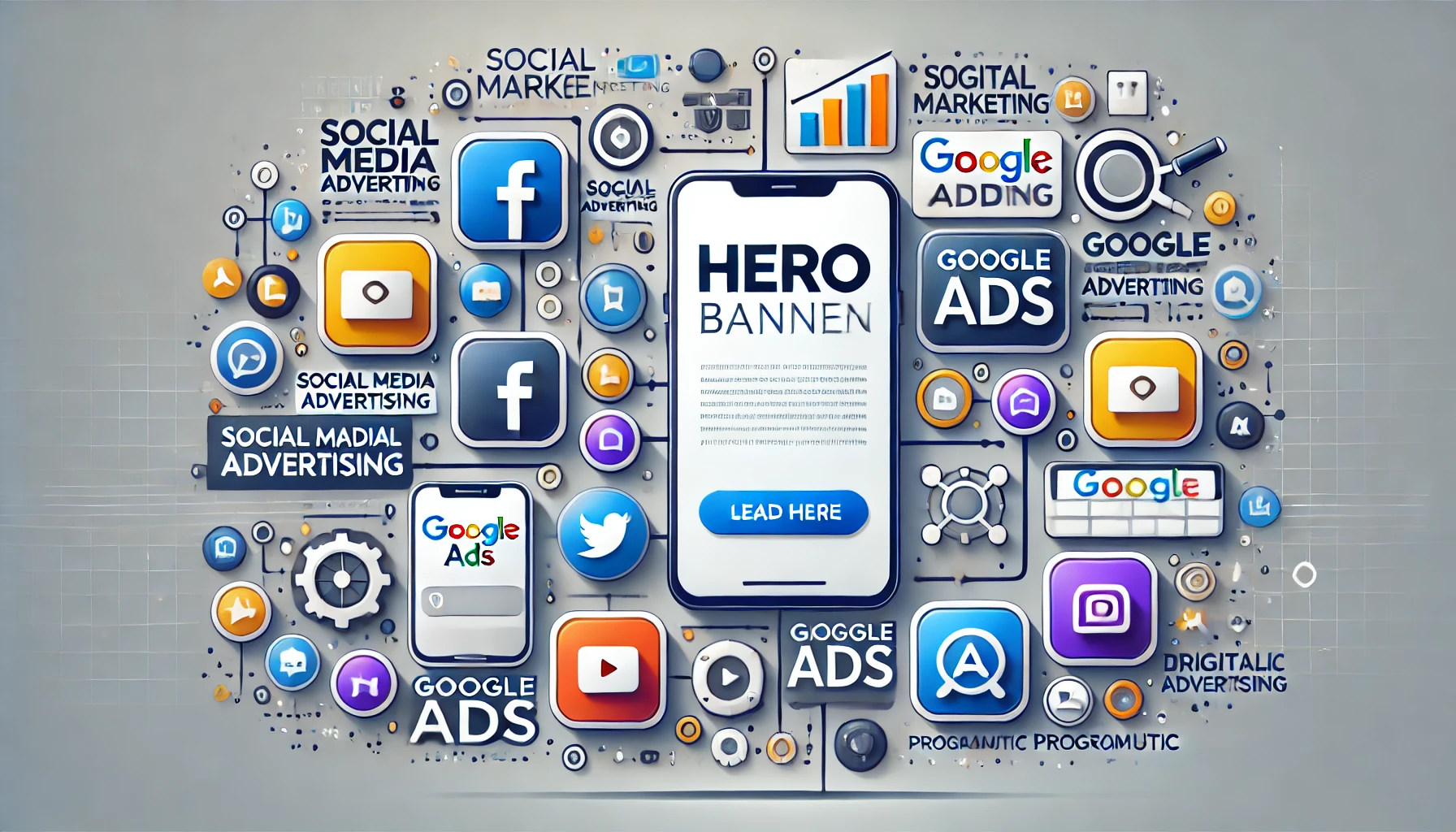
Social media ads vs Google
In 2024, businesses are expected to spend over $600 billion on digital advertising, but with so many platforms available, how do you know where to invest for the best returns? Among the most powerful are social media advertising, Google Ads, and the increasingly popular programmatic advertising. Each of these platforms offers unique ways to reach your audience, and understanding how they work is crucial to making an informed decision.

In this post, we’ll explore the strengths and weaknesses of each option, giving you the insight you need to choose the right advertising approach for your business.


Understanding Social Media Advertising

Social media advertising allows businesses to promote their products or services directly within the feeds of popular social platforms such as Facebook, Instagram, LinkedIn, and TikTok. This type of advertising leverages rich user data to target audiences based on their interests, behaviors, and demographics, making it an incredibly effective tool for building brand awareness and engaging potential customers.

But there’s an important distinction to make: successful social media advertising isn’t about how many likes you get, it’s about how many people engage with your posts and ads.

Engagement Over Vanity Metrics

While accumulating likes, followers, and shares might feel gratifying, these “vanity metrics” don’t necessarily translate into tangible business results. Instead, what really matters is engagement—how many people are interacting meaningfully with your content. Engagement metrics, such as comments, shares, click-through rates, and even direct messages, give you deeper insight into how your audience is connecting with your brand.

Why is engagement more important than likes?

  • Higher Engagement = More Reach: Social media algorithms prioritize content that generates high engagement, meaning the more your audience interacts with your posts (through comments, clicks, and shares), the more people will see your content organically.
  • Engagement Drives Conversions: People who take the time to engage with your posts—whether by commenting, clicking on links, or sharing—are more likely to convert into leads or customers. This makes engagement a more actionable metric for determining the success of your campaigns.
  • Better Audience Insights: Engagement shows how well your message resonates with your target audience. By focusing on engagement, you can gain a better understanding of what content drives action and tailor future campaigns for higher performance.

Key Features of Social Media Advertising

Social Media Advertising

  • Visually Driven Content: Social platforms are inherently visual, making them ideal for businesses that can create engaging images or videos.
  • Robust Audience Targeting: Social media platforms collect extensive user data, allowing for highly targeted ads based on location, interests, behaviors, and past interactions with your brand.
  • Multiple Ad Formats: You can choose from a variety of ad formats, including photo ads, video ads, carousel ads, and stories, depending on the platform and your goals.

Pros of Social Media Advertising

  • High Engagement Rates: Social media platforms encourage interaction, meaning well-crafted ads can generate high engagement, which boosts their visibility to a broader audience.
  • Great for Building Brand Awareness: Social media helps increase your brand’s visibility and fosters direct interaction with customers through comments, shares, and other engagements.
  • Affordable: Even businesses with smaller budgets can experiment with social ads and scale their spending as they see results.

Success Story: One Webociti client increased their social media engagement by 35% after shifting their focus from likes to meaningful engagement, resulting in a 20% increase in conversions. This proves that quality interaction far outweighs sheer numbers!

Cons of Social Media Advertising

  • Lower Purchase Intent: Users on social media are often not actively looking to buy, so while engagement may be high, conversions can be lower.
  • Algorithm Dependence: Changes in platform algorithms can affect the visibility and performance of your ads, requiring constant adaptation.

Need help mastering social media advertising? Our team at Webociti can craft a strategy that ensures your business gets real engagement, not just likes. Contact us today!


Understanding Google Ads

Google Ads operates on a pay-per-click (PPC) model, where businesses bid on specific keywords to have their ads appear at the top of search engine results pages. This platform is particularly effective for targeting users with a high purchase intent, as they are actively searching for products or services.

Key Features of Google Ads

Understanding Google Ads

  • Search Intent: Google Ads capitalizes on users who are already searching for solutions, making it easier to capture customers further down the sales funnel.
  • Keyword Targeting: By bidding on relevant keywords, you can ensure your ads reach users interested in your products or services.
  • Multiple Formats: Google Ads supports text ads, shopping ads, display ads, and video ads, providing versatility in reaching your audience.

Pros of Google Ads

  • High Purchase Intent: Since users are actively searching, they are more likely to convert when they see your ad.
  • Precise Keyword Targeting: You can target specific searches, ensuring your ads are relevant to what people are looking for.
  • Immediate Results: Google Ads campaigns can drive traffic and conversions quickly after launch.

Cons of Google Ads

  • Competitive and Costly: Popular keywords can be expensive, especially in competitive industries.
  • Requires Expertise: Running an optimized campaign requires PPC knowledge and can be time-consuming without proper management.

Ready to capture high-intent customers? Webociti’s Google Ads experts can help you create a PPC campaign that drives conversions. Contact us now for a free consultation!


Understanding Programmatic Advertising

Programmatic advertising is the automated buying and selling of ad inventory across a wide variety of platforms and devices. It uses machine learning and AI to purchase ad space in real time, targeting users with high precision across websites, apps, videos, and even smart TVs.

Retargeting with Programmatic Ads

One of the key strengths of programmatic advertising is retargeting—the ability to show ads to users who have already visited your website or engaged with your brand in some way.   Retargeting is an effective way to re-engage users who didn’t convert the first time they interacted with your content, helping to nurture them further down the sales funnel.
Retarageting Ads

How does retargeting work?
Through tracking pixels or cookies, programmatic platforms can display your ads to people who have previously interacted with your website, ensuring your brand stays top of mind as they browse the internet.

Key Features of Programmatic Advertising

  • Real-Time Bidding (RTB): Programmatic ads are placed using automated auctions that happen in milliseconds, ensuring that your ads are shown to the right users at the right time.
  • Cross-Platform Reach: Programmatic ads can appear on websites, apps, video platforms, and even smart TVs, giving you access to a wide range of audiences.
  • Automated Optimization: Machine learning continuously refines your campaign to improve performance over time.

Pros of Programmatic Advertising

  • Efficient and Scalable: Programmatic ads are automated, reducing the need for manual effort and allowing campaigns to scale quickly.
  • Precise Targeting & Retargeting: With access to first-party and third-party data, programmatic allows for highly granular audience targeting, including retargeting users who have previously engaged with your brand.
  • Performance Optimization: AI-powered systems adjust your bids and ad placements in real time to optimize performance and reduce wasted spend.

Cons of Programmatic Advertising

  • Complex Setup: While programmatic is automated, setting it up and managing it effectively requires specialized knowledge.
  • Potential for Ad Fraud: The automated nature of programmatic advertising can expose advertisers to risks such as bot traffic or click fraud, although many platforms offer fraud detection tools.

Want to explore programmatic advertising? Webociti’s experts can help you take advantage of this advanced advertising technique to scale your campaigns efficiently. Get in touch for more information!


Which Advertising Platform is Right for Your Business?

Each platform serves different purposes depending on your business goals, audience, and budget. Here’s a quick guide to help you choose:

1. Brand Awareness

Best option: Social Media Advertising
Social platforms are ideal for building brand awareness and engaging with a broad audience through visually compelling ads.

2. Driving Conversions

Advertising Platform is Right
Best option: Google Ads
If your goal is to capture high-intent users actively searching for products or services, Google Ads can drive immediate sales and conversions.

3. Cross-Platform Reach

Best option: Programmatic Advertising
For businesses looking to scale their advertising efforts across multiple platforms and devices, programmatic advertising offers the efficiency and reach needed to engage diverse audiences.

4. Budget Considerations

Best option: Social Media Advertising (Smaller Budgets) or Google Ads (Performance-Based)
Social media advertising allows for flexible budgets and incremental spending, while Google Ads offers predictable costs through a pay-per-click model.


The Hybrid Approach: Combining Social Media, Google Ads, and Programmatic

For many businesses, a hybrid approach—using all three platforms—yields the best results. Social media advertising can increase brand awareness and engagement, Google Ads can capture high-intent searchers ready to buy, and programmatic advertising ensures you reach your audience across multiple channels with automated precision.


Final Thoughts: Choosing the Right Digital Marketing Strategy

Choosing between social media advertising, Google Ads, and programmatic advertising depends on your business goals, target audience, and budget. Often, a mix of these platforms provides the most comprehensive approach to capturing leads at every stage of the buyer’s journey.

At Webociti, we specialize in creating tailored digital marketing strategies that include the perfect combination of social media, Google Ads, and programmatic advertising. Our team of experts can help you determine which platforms will deliver the best ROI for your business. Contact us today to get started with a free consultation!

The Power of Email Marketing for B2B Companies

In the dynamic world of digital marketing, where trends come and go, one strategy remains the undisputed champion for B2B companies – email marketing. This time-tested tool continues to drive the highest volume of leads and delivers the highest ROI. But that’s not all; we’ll also explore the complementary role of other strategies like SEO, PPC, Social Media, Retargeting, and Content Marketing in the B2B marketing landscape.

B2B Marketing Strategies

Email marketing has been a cornerstone of B2B marketing for decades, and its resilience is no accident. According to recent statistics, email marketing generates an astounding $38 for every $1 spent, resulting in an ROI that’s off the charts. But what sets email apart from other marketing strategies, and how do other approaches like SEO, PPC, Social Media, Retargeting, and Content Marketing contribute to the overall success of B2B companies?

The Reign of Email Marketing

Email Leads the Pack Email marketing reigns supreme in the B2B realm for several reasons. Firstly, it’s a highly targeted form of communication. B2B marketers can segment their email lists based on various criteria, such as industry, job role, or past interactions with the company. This precision targeting ensures that the message reaches the right audience, increasing the likelihood of conversion.

Moreover, email marketing offers a direct line of communication to potential clients. Emails land directly in their inboxes, making it convenient for them to access and engage with the content. This direct connection fosters a sense of exclusivity and personalization, crucial for building strong B2B relationships.

Personalization Matters Personalization is a driving force behind email marketing’s success. B2B buyers are more likely to engage with emails that feel tailored to their needs and interests. Modern email marketing tools allow businesses to personalize emails with recipient names, company information, and even content recommendations based on previous interactions. These personalized touches humanize the communication and significantly improve conversion rates.

Automation for Efficiency In the B2B world, nurturing leads through the sales funnel can be a lengthy process. Email marketing automation streamlines this journey. Automation tools enable businesses to send a series of emails triggered by specific actions or time intervals. For example, when a potential client downloads a whitepaper, an automated email series can follow up with additional resources, product information, and ultimately a request for a sales call. Automation ensures that no lead falls through the cracks, optimizing conversion rates and saving time for the marketing and sales teams.

The SEO Advantage

Organic Traffic for the Win Search Engine Optimization (SEO) is the cornerstone of online visibility. For B2B companies, organic traffic through search engines can be a goldmine of leads. When potential clients search for solutions or information related to your industry, a well-optimized website can appear at the top of the search results. This visibility establishes credibility and positions your company as an industry leader.

Content is King Content plays a pivotal role in SEO. Creating high-quality, relevant, and informative content not only attracts organic traffic but also engages potential B2B clients. Blog posts, whitepapers, case studies, and industry reports can all serve as valuable content assets. When optimized for search engines, they can attract users actively seeking the services or products your company offers.

Building Authority SEO isn’t just about keywords and rankings; it’s also about building authority. When your website consistently provides valuable content and answers industry-related questions, it becomes a trusted resource. Other websites and industry publications are more likely to link to your content, further boosting your SEO efforts. This increased authority not only enhances your online presence but also instills trust in potential B2B clients.

The Potent PPC Game

Immediate Visibility Pay-Per-Click (PPC) advertising is a powerful tool in the B2B marketer’s arsenal. Unlike SEO, which can take time to yield results, PPC provides immediate visibility. Through platforms like Google Ads or LinkedIn Ads, businesses can create highly targeted ad campaigns that appear at the top of search results or within social media feeds. This instant visibility can be invaluable when trying to reach B2B decision-makers.

Budget Control One of the significant advantages of PPC is budget control. B2B companies can set daily or monthly budgets for their campaigns, ensuring that they don’t overspend. Additionally, the pay-per-click model means that you only pay when someone clicks on your ad, making it a cost-effective option for generating leads. This budget flexibility allows companies to scale their PPC efforts as they see fit, adapting to changing needs and market conditions.

Precise Audience Targeting PPC platforms offer granular audience targeting options. B2B marketers can specify who sees their ads based on factors like job title, industry, company size, and location. This precision ensures that your message reaches decision-makers within the organizations most likely to benefit from your services or products. It minimizes wasted ad spend on audiences that aren’t a good fit.

The Social Media Impact

Engagement and Awareness Social media platforms have become indispensable for B2B companies looking to expand their reach and engage with potential clients. These platforms are not just for sharing updates; they provide a space for showcasing expertise and thought leadership. By consistently sharing valuable content, participating in discussions, and providing insights into industry trends, B2B companies can build brand awareness and trust.

Networking and Relationship Building LinkedIn, in particular, is a goldmine for B2B networking. It’s a platform where professionals connect, share insights, and explore business opportunities. By actively participating in LinkedIn groups and engaging with relevant content, B2B companies can foster valuable relationships. These connections can lead to collaboration, referrals, and even direct business inquiries.

Paid Advertising on Social Media In addition to organic efforts, B2B companies can leverage paid advertising on social media platforms. Facebook, Instagram, LinkedIn, and Twitter all offer ad options that allow for precise audience targeting. These ads can drive traffic to your website, promote content, or generate leads directly on the platform. The ability to tailor ad campaigns to specific B2B segments ensures that your marketing dollars are well-spent.

The Remarkable World of Retargeting

Recapturing Lost Opportunities Retargeting, also known as remarketing, is a technique that allows you to re-engage with website visitors who didn’t convert during their initial visit. This is particularly valuable for B2B companies, as decision-makers often require more time to consider their options. By placing a tracking pixel on your website, you can identify visitors and show them targeted ads as they browse other websites or social media platforms.

Strengthening Brand Recall Retargeting reinforces brand recall. When potential B2B clients see your ads repeatedly as they navigate the web, your brand becomes more memorable. This increased visibility can prompt them to return to your website and eventually convert.

Personalized Offers and Content Retargeting allows for highly personalized marketing. You can tailor ad content and offers based on the visitor’s previous interactions with your website. For instance, if a user visited a product page but didn’t make a purchase, you can retarget them with an ad featuring that specific product along with an incentive to complete the purchase.

The Power of Holistic Marketing

In today’s fiercely competitive B2B landscape, a holistic marketing approach is essential. Email marketing, SEO, PPC, social media, and retargeting all have their unique strengths and contributions. However, the real power lies in integrating these strategies into a cohesive marketing plan.

The key takeaway is that each of these strategies complements the others. Email marketing nurtures leads generated through PPC, SEO content drives organic traffic that can be retargeted, and social media amplifies brand messages created through email marketing. By strategically allocating resources and focusing on synergy, B2B companies can maximize their marketing efforts, generate high-quality leads, and achieve a remarkable return on investment.

Supercharge Your B2B Marketing


Ready to supercharge your B2B marketing efforts?

At Webociti, we specialize in creating customized, results-driven marketing strategies for businesses like yours. Whether you’re looking to revamp your email campaigns, boost your SEO, optimize your PPC ads, or enhance your social media presence, we’ve got you covered. Let’s embark on a journey to unlock your business’s full potential. Reach out to us today and start achieving remarkable results. Your success is just a click away. 678-892-7157

As a small business owner, you’ve worked hard to build a steady stream of customer traffic to your website or brick-and-mortar business. Developing that customer base took a lot of hard work and digital advertising dollars. But, once you get those prospects and customers to your website, how do you keep them coming back? That’s the job of retargeting advertising.

The concept of targeting customers is not new, but retargeting is an essential component of building a lasting customer experience.


This article will review the benefits and drawbacks of retargeting advertising so you can boost your profitability and visibility.

How Retargeting Advertising Works

Businesses use different marketing strategies to drive potential customers to their website or retail store.

Digital display advertising campaigns feature online billboard ads (also called banner ads) promoting your products and services. Internet users click on the ad, which sends them to the company websites to buy their products. When the customers visit the website, they accept a cookie, which is a small computer code saved in their internet browser. The cookie tracks the user’s website behavior, and the advertiser can see which pages the customer visited and what products they viewed or purchased. Retargeting advertising uses that cookie data to display ads for similar products as user travel to various websites and social media locations over time. This allows advertisers to create highly-relevant messages that reach users in a time when they’re most likely to be researching for your products or services and making a buying decision. These campaigns are effective at bringing existing customers back to purchase new products and reminding people who haven’t yet made a purchase to return. The Benefits of Retargeting Advertising.

Retargeting advertising keeps customers engaged with your brand by increasing a products visibility and encouraging customers to return to the storefront. Since selling to existing customers is less expensive than bringing in new customers, the profitability of the advertising campaigns increases as the customer buys more products.

Retargeting increases website traffic and converts visitors into paying customers. According to a recent blog post on Finances Online, “App remarketing drives 50% more paying users.” Since the advertiser views their customers’ online behaviors, their advertising investments are more targeted and produce a better return on marketing investment (ROMI) than general ad campaigns. For instance, if your storefront sells sports apparel, you can target ads for shorts and other gear to customers who purchased running shoes. As a result, there is a higher likelihood these customers will buy additional products and improve profitability.

The Drawbacks of Retargeting

Retargeting is an effective advertising strategy for most small businesses, but sometimes these ads can turn off buyers if they are displayed improperly. For instance, someone buys a baby present for a friend, and the next day they see ads for diapers. Many of these problems are actually caused by improperly developed advertising campaigns. When you work with advertising professionals who work inside retargeting platforms on a daily basis, you’re much more likely to see a positive ROI and improve the experience for your prospects. Small businesses experience an increase in revenue and profits when using retargeting advertising – provided the campaigns are properly configured.

Privacy Laws to Restrict the Use of Retargeting Advertising

Privacy advocates consider retargeting and tracking consumer website behavior for the purpose of selling information to third-party companies a violation of personal privacy. According to the International Association of Privacy Professionals (IAPP), California is the first state in the United States to enact data privacy laws under a bill called the California Consumer Privacy Act (CCPA). This law requires consumers to provide consent before allowing cookies to be added to their browsers. Virginia is the second state to enact a similar law. Technology companies are following suit as Apple will be requiring app developers to obtain opt-in consent. Google will also stop selling ads based on a user’s browser activity. The bottom line is that small businesses must focus on collecting their own first-party data rather than depending on third-party sources.

Identifying the Target Audience

To develop an effective retargeting campaign, the first thing an advertiser must do is identify the audience the ads will speak to by creating a profile or persona of the buyer. These personas are created through in-depth research and customer interviews and include basic demographics like age, gender, buying habits, social media usage and other facts about the buyer. Retargeting ads can also be shown to website visitors in certain geographies. This location-specific targeting is an important criterion for retail businesses and restaurants. Ads can be shown to a group of buyers within a certain number of miles from the location.

Retargeting Advertising Continues To Be a Powerful Advertising Tool

For small businesses looking to drive traffic to their eCommerce websites or retail locations, display advertising is an effective way to build brand awareness and increase revenues. Profits and visibility can be improved by using retargeting advertising to bring customers back to their websites or target buyers with a similar profile to their existing customers. Retargeting is more profitable since click rates and conversion to sales ratios are higher than traditional digital advertising. There are some drawbacks to retargeting, including click fraud and privacy restrictions, but retargeting continues to be a powerful tool to increase website traffic and build consumer loyalty.

For a free digital advertising consultation to learn more about retargeting and how you can use it in your business call Webociti at 678-892-7157 or visit our the Webociti website.

Did you know that 60% of small businesses struggle to generate online traffic and leads? Your company has built a list of hundreds or thousands of customers and potential customers. You’ve worked hard to grow your customer base, but now your online growth has stalled. Despite efforts to optimize SEO and create content, your website traffic and in-store visits remain unchanged. Your own success proves that Internet marketing works, but you’ve reached the limits of your skills. Perhaps it’s time to get help from an Internet Marketing professional?

Signs and Symptoms That Your Website Needs Professional Help

When Was the Last Time You Updated Your Site?

Keeping your website filled with fresh information and product updates is essential to attract new and returning visitors. Most experts recommend updating your website at least once a quarter to stay competitive. This includes adding new content, refreshing outdated information, and ensuring all technical aspects, like page speed and mobile responsiveness, are optimized. If you can’t remember the last time you updated your site, it’s time to consider help from an Internet Marketing professional.

Quick Tip: A fresh, regularly updated website signals to search engines that your site is active and relevant, boosting your visibility online. Learn more about this in our SEO Strategies Guide.

Does Your Website Reflect Your Brand?

Your website is often the first impression potential customers have of your business. Outdated design, slow load times, or poor mobile optimization can turn visitors away. A professional Internet marketing team can give your site a modern, user-friendly makeover that aligns with your brand identity.

The Rules of SEO

Statistics show that 75% of users never scroll past the first page of search results. Without expert help, your website may be missing out on valuable traffic. Did you know that search engines prioritize content quality, relevance, and user experience when ranking sites? Pro Tip: Focus on these elements to improve your rankings.

For more SEO insights, check out Moz’s Beginner’s Guide to SEO, a trusted resource for understanding the fundamentals of search engine optimization.

Pay Per Click

Pay-per-click (PPC) advertising can drive targeted traffic to your site, but it’s not just about clicks. Are those clicks converting into sales, or are visitors leaving without engaging? If you’re unsure, it’s time to work with an Internet marketing professional who can optimize your PPC campaigns for better results.

The average ROI for PPC is $2 for every $1 spent, but without proper management, your campaigns could be wasting money rather than generating leads. Quick Tip: Monitor your ad performance regularly to ensure maximum efficiency.

Are You Retargeting? Do You Even Know What It Is?

Retargeting helps you reconnect with visitors who’ve already shown interest in your site.

  • What is Retargeting? Retargeting uses display networks and banner ads to ensure your advertising dollars target users who’ve previously engaged with your content.
  • How It Works: Retargeting involves placing pixels on your website to track visitors. This data enables you to serve ads to these users as they browse other sites, reminding them of your business.
  • Why It Matters: Retargeting has a high return on investment (ROI) because it focuses on warm leads who are already familiar with your brand.

However, retargeting requires careful planning and technical setup. It’s a strategy best managed with the help of an Internet marketing professional.

Retargeting Success Story

One of our clients, a regional e-commerce business, saw a 50% increase in conversions within three months of implementing a professional retargeting strategy. By focusing on past visitors who abandoned their shopping carts, we delivered personalized ads that encouraged them to complete their purchases. This targeted approach turned lost opportunities into loyal customers and significantly boosted their revenue.

Speaking of ROI, Do You Know Yours?

Understanding your ROI on Internet marketing is critical. Tools like Google Analytics can provide insights into traffic, leads, and conversions, but interpreting these reports requires expertise. Do you know your cost per customer acquisition? Are you tracking the effectiveness of your retention efforts? If not, it’s time to call a professional Internet marketing company.

Did You Know? Only 39% of marketers say they are successful at measuring their ROI. Don’t let your business fall into the majority that struggles to quantify success.

Your Search Engine Results Are Lower Than Expected

Properly done, search-engine advertising is one of the most cost-effective ways to find new prospects. Managing paid search campaigns requires time, skill, and regular adjustments. If your website isn’t ranking on the first page of local search results, even with minimal competition, an Internet marketing professional can help you turn things around.

Social Media Marketing: Are You Missing Out?

Social media is a powerful tool for reaching new customers and building relationships with your audience. Platforms like Facebook, Instagram, and LinkedIn offer targeted advertising options that can deliver impressive results when managed by professionals. For example, one of our clients increased their social media engagement by 150% within six months by leveraging a tailored posting schedule and targeted ad campaigns designed by our team. If your social media presence is inconsistent or ineffective, it’s time to seek help.

Quick Tip: Consistency is key—posting regularly and engaging with your audience can significantly improve your social media performance.

Contact Webociti

Professional help doesn’t have to be local help. Webociti is a professional Internet marketing firm with an international reach. Visit our website or call us at 678-892-7157 for affordable and expert help. While we are based in Atlanta, Georgia, we can work with you remotely via phone, video, or email to achieve your marketing goals.

Free Consultation Offer

Take the first step toward transforming your online presence. Contact Webociti today for a free consultation and let us help you achieve your marketing goals. Sign up before January 15, 2025 to receive a special bonus! Don’t let marketing challenges hold your business back—get professional help now!

As you know, tracking website page views can be both exciting and frustrating. Although unique visitor counts may increase thanks to various online marketing campaigns, it can be difficult to convert those searchers into buyers on their first visit. Many searchers perform product research and price comparisons across multiple websites, so how can you make them revisit yours?

Re-Targeting Get Prospects Back to Your Website

Re-targeting, also called re-marketing, is a digital advertising strategy designed to convert one-time page visitors by showing them your advertisements as they continue to browse the Internet after viewing your website. Re-targeting is most powerful when used in conjunction with other digital advertising tools, such as search engine optimization through keyword research and lead generation through pay per click (PPC) advertising. Still, re-targeting has
its own distinct advantages, as you will see below:
Retargeting

Continuing the Conversation

Upon visiting a business’ website, viewers will take note of the various products and services offered. Aside from the desire to perform price comparison, consumers may hesitate to make a decision upon their first visit if they are not familiar with the company. Re-targeting allows the advertiser to continue the conversation later, while the consumer is browsing other websites.
The ability to re-engage the consumer makes re-targeting unlike any other marketing strategy. It offers visitors a chance to reverse their earlier snap decision and give your business a second look. Even if they do not make a purchase on their second visit, they may bookmark the page, subscribe to an email newsletter, or forward the link to a friend to ask for advice. If nothing else, you will have increased brand awareness while establishing your company as a figure in the industry market. Ultimately, however, adding re-marketing to your advertising tools will increase page views, site visits, returning visits, and even unique visitors in conjunction with other digital marketing strategies. Re-targeting is particularly useful for e-commerce websites, but can also be used to increase online bookings and in-store traffic.

How Does Re-Targeting Work?

Although re-targeting is an innovative marketing tool, it relies on the web-standard practice of utilizing anonymous browser cookies. The use of cookies is standard policy for most websites, including banks, social media accounts, and mass-market e-commerce retailers. As a visitor views your website, the site will drop unique Javascript code that converts into a cookie and “follows” the viewer around as they browse other websites. With re-targeting, the cookie lets your re-targeting provider know when to serve ads. Consumers who have previously visited your website will begin see on-line advertising featuring your company’s name and website.
Retargeting

The ability to keep your brand name in front of potential customers is what makes re-targeting so effective. In fact, consumers may be more likely to convert simply thanks to increased brand awareness. Still, advertisements can also include information on seasonal sales, special offers, or discount codes as extra incentives. By specifically targeting certain consumers with advertisements, re-marketing offers a higher return on investment (ROI) rate than most other on-line advertising tools.

Developing a Digital Strategy

Ways to Improve Re-Marketing Results

Even in its most basic form, re-targeting is a highly productive and cost-effective form of advertising. Still, you can continue to improve results and generate more leads refining your re-marketing tactics and developing a strong digital marketing strategy. Re-targeting is even more effective with the creation and expansion of re-marketing lists, which tag certain pages and actions. If a consumer visited a particular product page, for example, your re-targeting strategy can be more customized and involved than for a viewer who simply stopped by the front page and left. This process of segmenting visitors increases cost-effectiveness and improves conversion rates by only heavily targeting consumers who were interested in purchasing.

On its own, re-targeting is ideal for conversion optimization but does not generate new leads or drive traffic. Because of this, re-targeting works best as part of a larger digital marketing strategy. Including SEO and PPC marketing, among other tools, will make your advertising much more balanced and effective, resulting in more leads, conversions, and sales.

To implement a Re-targeting, contact Webociti for a free consultation 678-892-7157.