Marketing Consulting Insights & Strategy

Marketing consulting helps businesses make smarter decisions before investing
time, budget, or resources into execution.

This collection of marketing consulting insights covers strategy development,
planning, positioning, and performance analysis to help business owners and
leadership teams clarify what to do next — and why. The focus is on building
sustainable growth through informed decisions, aligned messaging, and measurable
outcomes.

If you’re looking for clarity before execution or need strategic guidance,
explore the articles below or learn more about our

Marketing Consulting Services
.

Quick Summary:

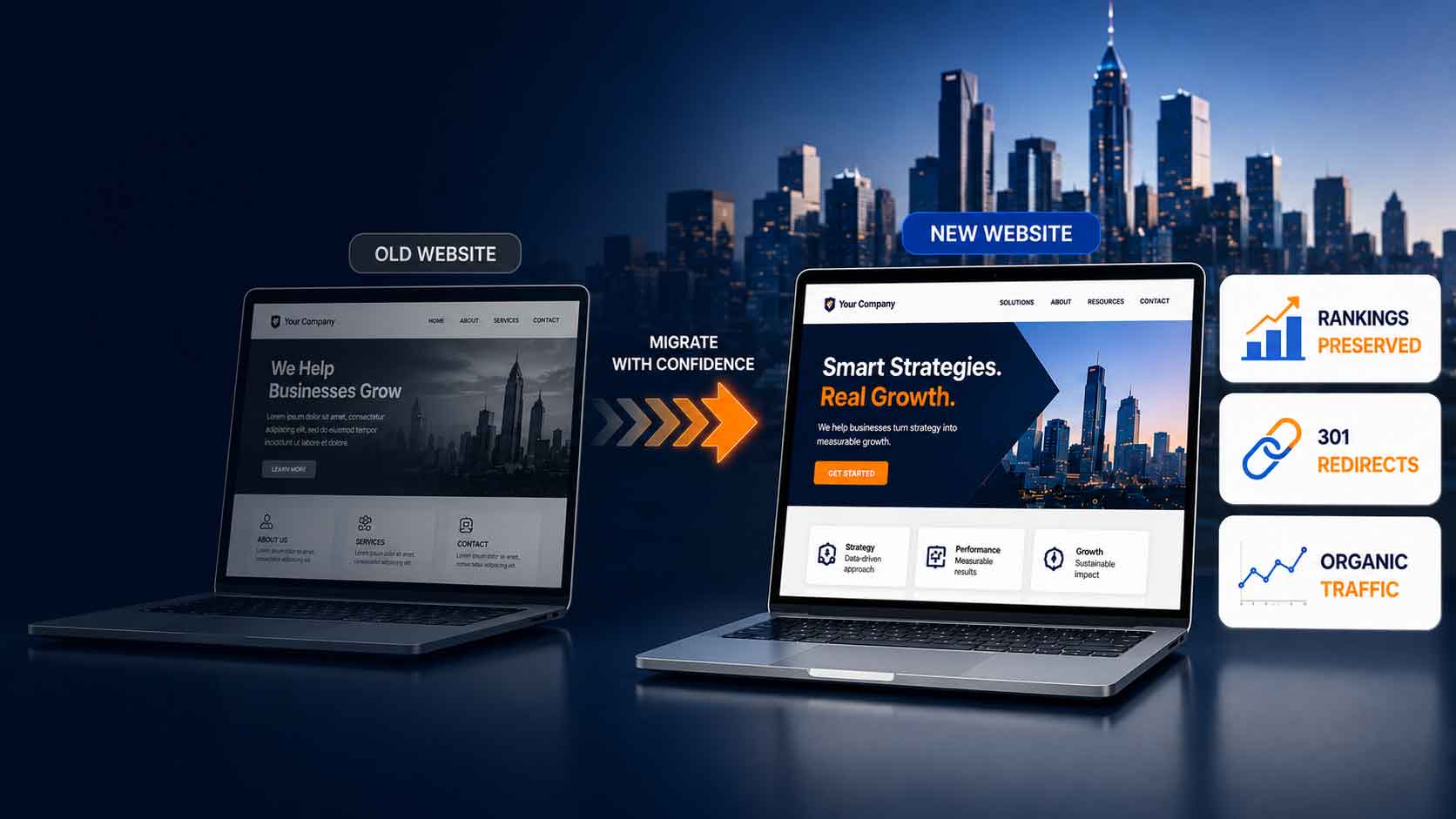
Replacing your website can improve design, speed, user experience, lead generation, and conversion — but only if the migration is handled correctly.

Without a proper website migration strategy, a redesign can cause lost SEO rankings, broken links, traffic drops, missing redirects, and lost leads.

Key steps include:

  • Mapping existing URLs before launching the new site
  • Implementing 301 redirects from old URLs to new pages
  • Preserving important page titles, meta descriptions, and structured data
  • Updating internal links and XML sitemaps
  • Testing forms, tracking, analytics, and conversion points before launch
  • Monitoring rankings, crawl errors, and traffic after migration

A properly planned website migration strategy helps preserve SEO rankings while improving site performance, user experience, and conversion.

Replacing an existing website is not just a design project. It is an SEO, traffic, and revenue protection project.

A new website can improve your brand, user experience, speed, lead generation, and conversion. But if the migration is handled poorly, your business can lose rankings, organic traffic, and qualified leads almost overnight.

A well-planned website migration strategy protects the search visibility your current site has already earned while giving your new website a stronger foundation for growth.

The key is to plan the migration before launch. That means mapping existing URLs, setting up 301 redirects, preserving important SEO elements, testing conversion tracking, and monitoring performance after the new site goes live.

Website migrations often affect search rankings, traffic, and lead generation. If you want to understand how paid and organic search work together, read our guide on
PPC vs SEM and how they affect website traffic.

Important: A website redesign should never be launched without an SEO migration plan. Even a better-looking site can lose traffic if redirects, page structure, metadata, internal links, and tracking are not handled correctly.


Case study: A major automotive upfitter went from thousands of monthly visits on their website to only two visits per month after launching a new website with another digital marketing firm. When they came to Webociti, we helped restore their SEO using the strategies outlined below. Unfortunately, the damage was already done and it took nearly 180 days for the company to regain its traffic levels.

SEO Website Migration Checklist

Before replacing your existing website, make sure these items are handled before launch:

  • Export and review all current website URLs
  • Map every important old URL to the correct new URL
  • Set up 301 redirects before launch
  • Preserve important page titles, meta descriptions, headings, and structured data
  • Review high-value content before removing or consolidating pages
  • Update internal links so they point to the correct new pages
  • Create and submit a new XML sitemap
  • Test forms, tracking, analytics, call tracking, and conversion points
  • Monitor Google Search Console after launch for crawl errors and indexing issues

For a more detailed launch process, use our
Website Migration SEO Checklist.

Website Migration Tips Before You Launch

A website redesign can look finished before it is actually ready to launch. The design may be approved, the copy may be proofed, and the SSL certificate may be in place, but the SEO details still need to be handled carefully.

These website migration tips will help protect existing rankings, reduce broken links, preserve organic traffic, and create a smoother experience for visitors and search engines.

Use a 301 Redirect Strategy

When you are creating a new website or redesigning an existing one, it is critical to keep the current site live until the new site has been fully tested and the redirect plan is ready.

A 301 redirect permanently forwards users and search engines from an old URL to a new URL. This helps preserve SEO value when page URLs change during a website migration.

For example, if an old service page is replaced by a new version, the old URL should redirect to the most relevant new page. That way, visitors do not land on a broken page, and search engines receive a clear signal that the content has moved.

A strong 301 redirect strategy protects important pages, reduces 404 errors, and helps maintain the traffic your site has earned over time.

Map Old URLs to the Correct New Pages

URL mapping is one of the most important steps in protecting your SEO during a website redesign.

Before launch, review your existing website using a tool like Screaming Frog SEO Spider, Google Search Console, Google Analytics, or another crawling tool. The goal is to identify every important page on your current website and map it to the correct page on the new site.

Pay special attention to pages that already rank, generate organic traffic, earn backlinks, support lead generation, or drive conversions. These pages should not disappear during the redesign.

If a page no longer exists on the new site, avoid redirecting everything to the homepage by default. Whenever possible, send the old URL to the most relevant new service page, category page, location page, blog post, or related resource.

A clean URL map gives users a better experience and gives search engines a clearer understanding of where your old content has moved.

Update Your Sitemaps Before and After Launch

Sitemaps help search engines understand your website structure and discover important pages more efficiently. During a website migration, both your internal navigation and XML sitemap should be reviewed carefully.

Your team should review two types of sitemaps:

  • HTML sitemap — helps visitors navigate your website and find important pages
  • XML sitemap — helps search engines crawl, understand, and index your pages

Before launch, make sure your new XML sitemap includes the correct live URLs and does not include outdated, redirected, duplicate, or test pages.

After launch, submit the updated XML sitemap through Google Search Console and Bing Webmaster Tools. This helps search engines discover the new site structure more quickly.

Google also provides a helpful overview of sitemaps in Search Console.

Plan the Website Launch and Transition

A website launch should be coordinated across marketing, sales, customer service, development, and leadership. Choose a launch window with lower traffic levels when possible so your team can monitor the transition and respond quickly if issues appear.

Once the new site goes live, review the full list of 301 redirects to make sure every important page is redirecting correctly. Start with your highest-traffic pages, top organic landing pages, key service pages, and pages with backlinks.

During the first few hours after launch, test important pages, forms, calls to action, tracking scripts, phone links, analytics, and conversion events. Over the following days and weeks, monitor Google Search Console for crawl errors, indexing issues, redirect problems, and pages that may require additional attention.

Get SEO Support Before Launch

Failing to follow proper migration procedures can damage your search rankings, reduce organic traffic, and disrupt lead generation. Without an experienced SEO strategist guiding the project, a website migration can create ranking drops that take months to recover.

Even with a well-managed migration, some temporary movement in rankings or traffic can happen after launch while search engines crawl, process, and evaluate the new site. The goal is to reduce risk, preserve as much SEO value as possible, and quickly identify issues before they become major traffic losses.

These are specialized marketing services that help ensure your new website launch strengthens your digital presence rather than harming it.

Common Website Migration Mistakes That Hurt SEO

Website migrations can significantly impact rankings, traffic, and lead generation if they are not handled properly. Even a better-looking website can create problems if SEO, redirects, tracking, and conversion paths are overlooked.

Some of the most common website migration mistakes include:

  • Failing to implement proper 301 redirects
  • Launching a new site without mapping old URLs
  • Changing site structure without redirect planning
  • Deleting useful pages that already rank, earn backlinks, or generate leads
  • Changing page titles, headings, or content without reviewing SEO impact
  • Forgetting to submit updated XML sitemaps
  • Not checking forms, tracking, analytics, phone links, and conversion points
  • Not monitoring Google Search Console after launch

Avoiding these mistakes helps ensure your new website maintains search visibility while benefiting from improved design, speed, user experience, and conversion performance.

A website migration can also affect more than rankings. If your website is a core part of your lead generation and sales process, lost traffic can quickly become lost pipeline. That is why a redesign should be planned as part of a larger revenue growth system, not treated as a standalone design project.

SEO Considerations When Replacing a Website

Replacing a website without a proper SEO migration plan can lead to significant traffic loss. Search engines rely on page URLs, redirects, internal links, page structure, sitemaps, and content signals to understand your website.

During a redesign, businesses should preserve important SEO elements wherever possible, including:

  • Page titles and meta descriptions
  • Heading structure
  • High-value content
  • Internal links
  • Image alt text
  • Schema markup and structured data
  • Canonical tags
  • Top-performing landing pages

Working with an experienced SEO agency helps ensure your new website launch improves your digital presence instead of damaging the rankings, traffic, and leads your current site has already earned.

Website Migration and Conversion Tracking

SEO is not the only thing that can break during a website migration. Forms, phone tracking, analytics, conversion pixels, CRM integrations, call-to-action buttons, and lead capture points should also be tested before and after launch.

A redesigned website may look better, but if lead forms stop working or conversion tracking disappears, your team can lose visibility into what is actually driving growth.

Before launch, confirm that key tracking and conversion systems are working properly, including:

  • Google Analytics
  • Google Search Console
  • Google Ads conversion tracking
  • Meta pixels or other advertising pixels
  • Call tracking
  • CRM forms and lead routing
  • Contact forms and quote request forms
  • Newsletter or lead magnet forms

This is especially important for companies that rely on organic search, paid media, or website leads as part of their growth system. A successful migration should protect both search visibility and the conversion paths that turn traffic into revenue.

Related Website Migration Resources

Planning a website redesign or migration requires more than a new design. These related guides can help you understand how SEO, paid search, website structure, and revenue systems work together to protect traffic and support growth.

Website Migration Frequently Asked Questions

Will I lose SEO if I replace my website?

You may lose rankings, traffic, and leads if the migration is not handled correctly. Implementing 301 redirects, mapping old URLs to new pages, preserving high-value content, and submitting updated sitemaps can help protect SEO performance.

What is a 301 redirect?

A 301 redirect permanently forwards visitors and search engines from an old page to a new page. This helps preserve SEO value when URLs change during a website redesign or migration.

How long does it take Google to reindex a new website?

Google can begin indexing a new site within a few days, but rankings often take several weeks to stabilize after a major website migration. Larger sites, major URL changes, or poorly handled redirects may take longer to recover.

Should I change URLs when launching a new website?

It is best to keep existing URLs whenever possible. If URLs must change, proper 301 redirects should be implemented so users do not land on broken pages and search engines can understand where the content moved.

What should I check after a website migration?

After launch, review Google Search Console for crawl errors, check that redirects are working, submit your new XML sitemap, test forms and tracking, monitor rankings, review organic traffic, and confirm that important conversion paths are still working.

Replacing Your Website? Protect Your SEO Before You Launch

A new website should strengthen your visibility, not erase the rankings and traffic you have already earned. If you are planning a redesign, Webociti can help you map your URLs, protect your SEO, improve your site structure, test conversion tracking, and launch with a smarter migration strategy.

Before launching a redesigned website, follow a complete website migration SEO checklist to help protect your rankings, traffic, and leads.

Not sure whether your redesign is ready for launch? Schedule a Revenue Strategy Call with Webociti to review your website migration plan before the switch is made.

Affordable Online Marketing Program for Startups & Small Businesses

By Joe Mediate – September 19, 2025 – Digital Marketing Programs

Looking for an affordable online marketing program that helps you grow without wasting money or time? You’re not alone. Most small business owners feel overwhelmed by the complexity and cost of digital marketing—but it doesn’t have to be that way.

At Webociti, we designed the Smart Start Program to help startups and small business owners build a solid foundation without breaking the bank. It includes everything you need to attract leads, build your brand, and create lasting growth—at a price that works for your budget.

Start With the Right Marketing Strategy

Marketing success starts with clarity. We help you identify your goals, audience, and message so you don’t waste time on tactics that don’t work. You’ll walk away with:

  • A clearly defined ideal customer profile
  • A core message that differentiates you
  • A focused go-to-market plan

Build Your Online Presence

A strong online presence is non-negotiable. Our team helps you launch or refine your digital footprint with:

  • A clean, fast-loading website (or a refresh of your existing one)
  • Basic SEO setup so customers can find you on Google
  • Setup of local listings and branded social profiles

Capture Leads Automatically

Too many businesses miss opportunities because they don’t have a system to collect leads. We’ll help you:

  • Add forms to capture email addresses and inquiries
  • Set up simple automations for follow-ups
  • Use tools like Mailchimp or Klaviyo to stay top of mind

Get Monthly Expert Guidance

You’ll never feel lost. The Smart Start Program includes monthly strategy calls with our experts. We’ll review your progress, answer questions, and update your plan based on what’s working.

Built to Be Budget-Friendly

We know early-stage businesses are watching every dollar. That’s why our program starts at just $499/month—giving you everything you need without locking you into long-term contracts.

Who Benefits from This Program?

Whether you’re a solopreneur or small local business, Smart Start is designed for you. It’s especially ideal for:

  • Founders launching a product or service
  • Service-based businesses looking for local leads
  • Entrepreneurs who want expert support without agency-level fees

Plug In and Launch

Starting your marketing journey doesn’t have to be complicated. With Webociti’s Smart Start Program, you’ll finally have a step-by-step system, expert coaching, and the confidence to grow.

Click here to explore all our digital marketing programs and find the one that fits you best.

Book a Free Strategy Call

Posted in Digital Marketing Programs


What Google Expects From Your Website in 2025 (And What Customers Want Too)

In this post: Discover exactly what Google and your visitors expect from your website in 2025—and how to meet those expectations to increase traffic, trust, and conversions.

What Google Expects From Your Website: A 2025 Wake-Up Call

If your website isn’t generating leads, building trust, or delivering a great user experience, it’s falling behind. As we head into 2025, both Google and your potential customers expect more than just a pretty homepage. They want speed, clarity, security, and usefulness—all from the first click. In this post, we’ll break down what Google expects from your website and how to exceed those expectations.

Why What Google Expects From Your Website Matters

Google remains the gatekeeper to online visibility. Its ranking algorithm grows more sophisticated each year, increasingly focused on user experience and content quality. In 2025, Google’s What Google expects from your website in 2025 – website performance, user experience, and trust signalsexpectations will include:

  • Core Web Vitals: Measuring page load speed, interactivity, and visual stability
  • Mobile-first indexing: Prioritizing mobile usability and responsive design
  • Helpful content: Rewarding content that genuinely solves problems and demonstrates expertise
  • AI-generated content detection: Ensuring your website adds human value beyond automation
  • EEAT: Experience, Expertise, Authoritativeness, and Trustworthiness—Google’s trust metrics for ranking

For a deeper look at these priorities, check out Google’s Page Experience guidelines.

What Customers Expect From Your Website in 2025

It’s not just Google’s bots evaluating your site—your visitors are, too. In 2025, your customers expect your website to deliver fast, helpful, and secure experiences. That means your site must:

  • Load fast: 2 seconds or less is the new standard
  • Be mobile-optimized: More than 70% of browsing is now on smartphones
  • Provide instant clarity: Who you are, what you offer, and how it helps them—within 5 seconds
  • Offer social proof: Testimonials, reviews, and case studies
  • Feel personal: Content and calls to action tailored to their intent
  • Be secure and trustworthy: SSL encryption, transparent policies, and fast support

Today’s online audiences have shorter attention spans and higher expectations. A poorly optimized site isn’t just an inconvenience—it’s a dealbreaker. Your website is often the first impression of your business, and visitors will judge your professionalism, credibility, and capability based on it within seconds. Meeting these expectations isn’t a luxury—it’s a necessity for competing online.

1. Core Web Vitals: What Google Expects From Your Website Speed

Google’s Core Web Vitals will continue to shape rankings. These metrics include:

  • Largest Contentful Paint (LCP): How fast the main content loads
  • First Input Delay (FID): How quickly users can interact
  • Cumulative Layout Shift (CLS): How stable the page layout is while loading

If your site takes more than 2.5 seconds to load or jumps around as it loads, you’re likely losing both rankings and visitors. Optimizing images, enabling caching, and reducing unnecessary code are crucial.

Simple updates like choosing faster hosting, compressing files, or using a content delivery network (CDN) can significantly improve your scores and enhance both SEO and UX. Test your site regularly with tools like Google PageSpeed Insights or GTmetrix to ensure optimal performance.

2. Mobile Optimization: Critical to What Google Expects From Your Website

With Google using mobile-first indexing, your mobile site is now your primary site. That means navigation, tap targets, image loading, and copy readability must all be optimized for smaller screens. In 2025, visitors will leave quickly if your mobile experience feels cramped, confusing, or slow.

Focus on mobile menus that are easy to access, avoid intrusive pop-ups, and make sure buttons are easy to click with a thumb. Clean, simple designs and mobile-first layouts ensure you won’t alienate over half your audience.

3. Content That Actually Helps (and Meets Google’s Expectations)

Google’s Helpful Content Update puts the user first. Gone are the days of keyword stuffing or shallow blog posts. Your content must answer real questions and show real expertise. Blogs, FAQs, landing pages, and even product pages should be written with clarity and helpful intent.

Use structured data, include FAQs, add video summaries, and link to authoritative sources like Google’s SEO Starter Guide and Moz’s Beginner’s Guide to SEO. Keep content skimmable, but detailed.

Also consider using long-form blog content that answers related questions in depth. This not only satisfies your audience but improves dwell time and signals quality to search engines.

4. EEAT: What Google Expects From Your Website’s Trust Signals

Google is pushing hard on “EEAT” (Experience, Expertise, Authoritativeness, and Trustworthiness). To compete, your site should:

  • Feature expert authors or real company leadership
  • Include detailed “About” and “Team” pages
  • Display client logos, case studies, and testimonials
  • Link out to credible sources
  • Maintain an active blog that demonstrates thought leadership

These trust signals assure both Google and your visitors that your brand is knowledgeable, legitimate, and worth doing business with. The more transparent and informative you are, the more likely people are to engage and convert.


🚀 Let’s Improve Your Website Today

5. Human Over AI: Why Originality Matters More Than Ever

As AI content becomes more common, Google is prioritizing human insight and experience. Repurposing generic content will lower your visibility. Use storytelling, personal examples, and real case studies to stand out. Voice and tone that reflects your brand’s personality are also key.

Think of content as a conversation. Speak directly to your audience’s problems, and don’t be afraid to inject personality. In 2025, people won’t just be searching for information—they’ll be seeking connection and credibility.

6. Design That Supports What Google and Customers Expect

Good design isn’t about bells and whistles. It’s about guiding visitors toward action. In 2025, effective website design will:

  • Use a clear visual hierarchy and whitespace
  • Feature short headlines and action-oriented CTAs
  • Balance images with copy (and use real photography when possible)
  • Keep forms short and user-friendly

Your website is your #1 sales rep. Make sure it looks and behaves like one. If users get lost, overwhelmed, or distracted—they won’t convert. Simplicity is more effective than complexity when your goal is action.

7. Conversion-Ready: What Google Expects From Your Website’s Engagement

Traffic means nothing without conversion. Your website should be optimized to capture leads, guide inquiries, and support sales follow-up. Essentials include:

  • Sticky call-to-action buttons
  • Live chat or contact widgets
  • Lead magnets (eBooks, free consultations)
  • Exit-intent popups or reminders

In 2025, people expect to interact on their terms. Give them multiple ways to raise their hand. And make your conversion actions feel seamless and rewarding, not like a sales trap.

Key Takeaways: How to Future-Proof Your Website

  • Meet Core Web Vitals benchmarks: fast, stable, and interactive
  • Design mobile-first with intuitive navigation
  • Create human-first content with real value
  • Showcase trust signals: reviews, credentials, partnerships
  • Optimize for conversions: clear CTAs and interactive elements

Is Your Website Ready for What Google Expects in 2025?

Chances are, your website could be doing more to meet what Google expects from your website and your customers’ expectations. At Webociti, we help businesses transform outdated websites into modern growth engines that rank better, convert more, and build trust with every click.


🚀 Let’s Improve Your Website Today

Customer Journey Marketing Strategy: How to Make Your Brand Story Resonate

A well-crafted customer journey marketing strategy ensures that your brand storytelling connects with your audience and leads to conversions.

Most brands make one crucial mistake:

  • They talk too much about themselves—their history, their features, their success.
  • But customers only care about how you can help them solve their problem.

The best brands don’t position themselves as the hero of the story. They position themselves as the trusted guide helping the customer succeed.

In this post, we’ll show you how to shift your messaging to focus on your customers, tell a compelling brand story, and start converting more leads using a customer journey marketing strategy.

Internal Resource: Check out our Customer Journey Marketing Strategy Guide
to dive deeper into this concept.


Why Customers Ignore Self-Centered Marketing

  • People are bombarded with thousands of marketing messages daily—and they filter out anything that doesn’t feel relevant to them.
  • Customers are constantly looking for solutions, not company backstories.
  • A brand that talks about itself too much comes off as self-promotional, unrelatable, and forgettable.

Example:

  • Brand A: “We’ve been in business for 25 years, serving thousands of satisfied clients.”
  • Brand B: “Struggling with [Problem]? We help businesses like yours solve it with [Solution].”

Which one grabs your attention?


How a Customer Journey Marketing Strategy Improves Storytelling

Instead of focusing on what you do, focus on who you help and how you help them.

The StoryBrand Framework is a great way to structure your brand message:

customer journey map

  • The Customer = The Hero (They have a challenge they need to overcome)
  • Your Brand = The Guide (You provide the solution and expertise)
  • A Clear Plan (You show them exactly how you’ll help them succeed)
  • A Call to Action (Encourage them to take the next step)
  • The Transformation (How their life/business improves after working with you)

Example of a Story Shift:

  • Old Message: “We create cutting-edge software for business automation.”
  • New Message: “Struggling with wasted time and inefficient processes? We help businesses streamline operations with easy-to-use automation tools.”

See the difference? The second one speaks directly to the customer’s pain point.


How to Rewrite Your Brand Story to Focus on the Customer

Step 1: Identify Your Customer’s Biggest Pain Points

  • What keeps them up at night?
  • What problem are they actively trying to solve?
  • How does your solution fit into their journey?

Step 2: Speak Their Language, Not Yours

  • Avoid industry jargon. Use simple, relatable language.
  • Talk about outcomes and benefits, not just features.

Step 3: Show Empathy & Authority

  • Let them know you understand their struggle and have the experience to guide them.
  • Use case studies, testimonials, or success stories to prove it.

Internal Resource: Explore our Case Study on Customer-Centric Branding to see this strategy in action.


It’s Time to Optimize Your Customer Journey Marketing Strategy

Watch the Video: How to Make Your Customer the Hero

  • If your marketing isn’t getting the engagement or conversions you expect, it’s time to rethink your messaging.
  • Make your customer the hero and position your brand as the trusted guide.
  • Speak to their problems, desires, and goals—not just about what you offer.

Learn More About Storytelling in Marketing

Need help crafting a compelling brand story?

Contact Webociti today for a free consultation!

Read more marketing insights on our blog: https://www.webociti.com/blog/

5 Reasons a Marketing Agency Beats a Freelancer Every Time

In today’s fast-paced and competitive business world, effective marketing is no longer a luxury – it’s a necessity. Whether you’re a startup looking to establish your presence or a growing business aiming to scale, having the right marketing partner is crucial. Many businesses face a tough choice: Should you hire a freelancer or work with a marketing agency? While freelancers may offer flexibility and affordability, agencies provide the expertise, scalability, and strategic approach necessary for sustained success.

This blog explores five compelling reasons why partnering with a marketing agency is the smarter choice for businesses looking to achieve real, measurable results.

1. A Full Team of Experts

When comparing a Marketing Agency vs Freelancer, agencies bring a full team of experts to the table. Freelancers are often skilled in one or two areas of marketing, such as content creation or social media management. Agencies, on the other hand, provide a full team of specialists, from graphic designers and copywriters to SEO analysts and strategists. This diverse expertise ensures your campaigns are comprehensive and aligned with your business goals.

Example: A freelancer might create beautiful social media posts, but a marketing agency Comparison of a marketing agency vs freelancer highlighting the benefits of agencies for businesses.will also track performance, optimize ad spend, and ensure your posts align with your brand’s overarching strategy.

2. Scalability and Resources

Freelancers can handle only so much work at once. As your business grows, you may outpace their capacity. Agencies are built to scale with your needs, offering the resources and manpower to manage larger campaigns and expand into new channels without skipping a beat.

Benefit: Need a sudden increase in ad spend for a product launch? An agency can quickly mobilize a team to meet your needs, while a freelancer might struggle to keep up.

3. Strategic Planning and Long-Term Vision

Strategic planning is a key advantage of choosing a Marketing Agency vs Freelancer. Marketing agencies don’t just execute campaigns; they create long-term strategies tailored to your business. Agencies invest time in understanding your target audience, analyzing competitors, and crafting data-driven plans to achieve sustained growth. Freelancers, by contrast, often focus on individual tasks rather than big-picture strategy.

Key Insight: With an agency, you’re not just getting a service provider – you’re gaining a strategic partner dedicated to your success.

4. Access to Advanced Tools and Technology

Marketing agencies invest in premium tools and software for analytics, automation, and campaign management. These tools allow for more precise targeting, better performance tracking, and superior optimization. Most freelancers rely on free or limited tools, which can restrict the effectiveness of your campaigns.

Advantage: Agencies leverage tools like SEMrush, HubSpot, or Google Analytics to gain deeper insights and maximize your ROI.

5. Reliability and Consistency

Freelancers, while talented, are individuals and may face challenges like bandwidth issues, personal emergencies, or competing priorities. Agencies, with their teams and structured processes, ensure consistent delivery of results regardless of circumstances. Additionally, agencies often provide dedicated account managers to keep communication seamless and progress on track.

Example: If your freelancer suddenly becomes unavailable, your marketing could come to a halt. An agency ensures continuity and peace of mind.

Final Thoughts

For businesses seeking growth, the decision between a Marketing Agency vs Freelancer is clear. While freelancers can be a great choice for small, isolated projects, marketing agencies are the go-to solution for businesses aiming to grow, scale, and thrive in today’s competitive landscape. With their team expertise, strategic planning, and reliable resources, agencies provide unmatched value that can transform your marketing efforts.

Investing in a marketing agency is more than just outsourcing tasks – it’s partnering with a team that’s dedicated to your success. By leveraging their experience, tools, and strategic insight, you can unlock new levels of growth and performance that freelancers simply can’t deliver.

Ready to take your marketing to the next level? Learn more about how agencies excel compared to freelancers by checking out this detailed guide on outsourcing marketing. Contact Us to see how our team can help your business grow.

Schedule Your Free Consultation

9 Signs Your Website Is Losing Customers

Your website is your digital storefront—so why are customers walking away? Here’s how to spot (and fix) the common issues that are signs your website is losing customers.

In today’s digital world, your website is often the first interaction potential customers have with your business. Think of it as your storefront—the first impression that sets the tone for their experience. If your website is slow, cluttered, or outdated, visitors won’t stick around. Worse, they’ll head straight to your competitors. Here are nine telltale signs your website is losing customers, along with actionable tips to turn things around.

Quick Summary

Graphic titled '9 Signs Your Website Is Losing Customers' highlighting issues like poor content quality, outdated design, and slow loading speeds.

  • The importance of storytelling and engaging messaging
  • Copying competitors instead of being unique
  • Lack of trust signals
  • Poor content quality
  • No clear call to action (CTA)
  • Outdated design
  • Lack of mobile optimization
  • Unclear navigation
  • Slow loading speeds
Quick Tip: If you recognize any of these issues on your website, don’t wait—take action now to improve your site’s performance and customer experience.
Contact us for a free consultation.

1. The lack of storytelling and engaging messaging

The Problem: Many websites fail to connect emotionally with their audience, focusing only on features or technical specifications. This approach often fails to address customer needs or pain points, making it harder to resonate and leaving no lasting impression.

The Fix:

  • Tell a brand story that speaks to your audience’s values and aspirations.
  • Use storytelling to show how your product or service helps with real world problems.
  • Address your audience’s challenges and goals head-on.
  • Emphasize the benefits of your product or service and how it can help improve their lives or fix their problems.
  • Include customer success stories or case studies to show real results.
  • Use customer-centric language, such as “Here’s how we help you…” rather than “What we offer.”

Why It Matters: Stories and engaging messaging build trust and create an emotional connection with your audience. By shifting the focus from your product to your customers’ experiences, you differentiate your brand, inspire action, and foster loyalty.

2. Copying Competitors Instead of Being Unique

The Problem: It’s tempting to replicate what your competitors are doing, but this approach can make your brand blend in rather than stand out. Customers are looking for unique solutions, not a copycat business.

The Fix:

  • Identify your unique value proposition (UVP) and make it the centerpiece of your messaging.
  • Focus on how your brand solves problems differently or better than others.
  • Avoid using cookie-cutter templates or language from competitors’ websites.
  • Highlight your company’s story, mission, and values to create a deeper connection with your audience.
  • Be yourself and emphasize what makes you stand out. Show your unique value and the things you do better than your competitors.

Why It Matters: Being unique helps you stand out in a crowded market and establishes your brand as an innovator. Customers are more likely to choose a brand they feel is authentic and original, rather than one that blends in with the rest.

3. Lack of Trust Signals

The Problem: In the digital age, trust is everything. If visitors can’t verify your credibility, they won’t feel confident doing business with you. Missing trust signals like customer reviews, certifications, or secure payment options can drive potential customers away.

The Fix:

  • Display testimonials, case studies, and reviews prominently on your website.
  • Use trust badges for secure payments and privacy assurances (e.g., “SSL Secured” or “Verified by [Payment Provider]”).
  • Include an “About Us” page that highlights your company’s expertise and values.
  • Provide clear contact information to show visitors there’s a real team behind the website.

Why It Matters: Trust signals reduce hesitation by providing reassurance that your business is credible and reliable. Without these, customers may abandon your site for a competitor that appears more trustworthy.

4. Poor Content Quality

The Problem: Low-quality, irrelevant, or outdated content can turn visitors off. If your website doesn’t provide value or answer users’ questions, they’ll leave unsatisfied and unlikely to return.

The Fix:

  • Regularly update your content to ensure it remains relevant and accurate.
  • Use clear, concise language tailored to your target audience.
  • Incorporate visuals like images, videos, and infographics to enhance engagement.
  • Add a blog or resource section to position your brand as an industry expert and improve SEO.

Why It Matters: High-quality content not only improves SEO but also keeps visitors engaged and builds your authority in the industry. Customers return to websites that consistently provide value and answer their questions.

5. No Clear Call to Action (CTA)

The Problem: Your website may look great and provide valuable information, but if it lacks a clear next step, visitors won’t know what to do. Whether it’s contacting you, purchasing a product, or signing up for a newsletter, every page needs a purpose. Most importantly, your website must clearly guide people on how to do business with you.

The Fix:

  • Place prominent CTAs on every key page (e.g., “Contact Us,” “Buy Now,” “Learn More”).
  • Use actionable language that creates urgency, such as “Get Your Free Quote Today!”
  • Ensure CTAs stand out visually with contrasting colors and strategic placement.
  • Test different CTAs to determine what resonates best with your audience.

Why It Matters: CTAs act as signposts that guide visitors toward conversion. Without them, potential customers may feel lost and leave without taking any action, reducing your site’s effectiveness.

6. Outdated Design

The Problem: A website with a dated look or poor design elements can make your business appear unprofessional and out of touch. First impressions matter, and users often judge credibility based on design within seconds of landing on a site.

The Fix:

  • Adopt a clean, modern design that reflects your brand’s identity.
  • Use high-quality visuals and consistent fonts and colors throughout your site.
  • Ensure your website’s design is mobile-responsive, as over half of web traffic comes from mobile devices.
  • Regularly update your website to stay aligned with current design trends and user expectations.

Why It Matters: Your website’s design is often the first impression customers have of your business. A modern, professional design builds trust and confidence, encouraging visitors to stay and explore.

7. Lack of Mobile Optimization

The Problem: With more people browsing on smartphones than ever, a non-mobile-friendly website is a dealbreaker. Visitors will leave if they have to pinch, zoom, or scroll excessively to navigate your site.

The Fix:

  • Use responsive design techniques to ensure your site adapts to any screen size.
  • Test your website on various devices to identify usability issues.
  • Simplify forms and call-to-action buttons to make them easy to interact with on mobile.
  • Optimize images and videos for mobile to ensure fast load times.

Why It Matters: Mobile optimization ensures accessibility for the majority of internet users, who browse on mobile devices. A seamless mobile experience improves engagement and reduces bounce rates.

8. Unclear Navigation

The Problem: If visitors can’t find what they’re looking for quickly, they’ll leave. A confusing or cluttered navigation menu creates frustration and increases bounce rates.

The Fix:

  • Streamline your menu to include only the most important pages.
  • Use clear and concise labels that reflect user intent (e.g., “Services” instead of “What We Offer”).
  • Implement a search bar for easy access to specific information.
  • Test your navigation regularly to ensure it’s intuitive on both desktop and mobile devices.

Why It Matters: Clear navigation creates a seamless user experience, helping visitors find what they need quickly. This reduces frustration, decreases bounce rates, and increases the likelihood of conversions. A well-structured navigation menu keeps users engaged and encourages them to explore more pages on your site.

9. Slow Loading Speeds

The Problem: In the age of instant gratification, nobody wants to wait for a website to load. According to Google’s performance scoring, 53% of mobile users abandon a site if it takes longer than three seconds to load. A slow website frustrates users and sends a signal to search engines that your site isn’t user-friendly, hurting your SEO rankings.

The Fix:

  • Optimize images by compressing their file sizes without sacrificing quality.
  • Use a Content Delivery Network (CDN) to ensure fast loading times across different locations.
  • Minimize code by eliminating unnecessary CSS, JavaScript, and plugins.
  • Upgrade your hosting plan if your current provider doesn’t offer sufficient speed.

Why It Matters: Website speed impacts user experience and SEO rankings. Faster sites keep visitors engaged, reduce bounce rates, and improve conversion rates. Additionally, search engines prioritize fast-loading sites, helping you rank higher in search results.

Back to Top

Stop Selling Features: How Empathy-Driven Marketing Transforms B2B Success

Discover the Power of Empathy in Shifting Your B2B Marketing Strategy from Features to Benefits

In an era where B2B buyers are bombarded with an endless stream of marketing messages, standing out requires more than highlighting technical features or complex product specifications. The secret to capturing attention and fostering lasting business relationships is empathy. Empathy-driven marketing doesn’t just communicate a product’s capabilities; it connects with decision-makers on a human level, addressing their challenges and demonstrating how your solutions benefit their everyday work.

Consider the powerful example of Salesforce’s “Trailblazers” campaign. Instead of focusing solely on CRM features, Salesforce shared stories of real business leaders who used its tools to drive innovation and success. This approach positioned Salesforce as a partner invested in its clients’ growth, not just a software provider. The result? Stronger relationships, deeper trust, and more loyal clients.

So, why is empathy so transformative in B2B marketing, and how can you harness it to shift your focus from features to the benefits that matter most to your audience? Let’s explore.

What Does Empathy in Marketing Mean?

Empathy in marketing involves understanding and addressing the needs, challenges, and goals of your clients. It’s about looking beyond your product’s capabilities and asking, “How does this make life easier for the person using it?” By shifting your focus from features to benefits, you create messaging that resonates on a personal level and positions your brand as a problem-solver.

For example, instead of a tech company promoting its platform’s “real-time data analytics,” empathetic marketing would highlight how this feature empowers business analysts to make informed decisions quickly, reducing stress and improving their professional impact.

Why Companies Must Shift from Features to Benefits

Empathetic marketing underscores the importance of communicating benefits that are meaningful to the user. While product features highlight what a product does, benefits explain why it matters to the user. This shift makes your messaging more relatable and engaging, fostering trust and encouraging long-term partnerships.

The Difference Between Features and Benefits

  • Feature-Focused Messaging: “Our project management tool integrates with 50+ applications.”
  • Benefit-Focused Messaging: “Our project management tool streamlines your workflow by integrating with your essential apps, freeing up time for strategic planning.”

This shift in focus moves from providing factual information to delivering value that resonates with the user’s day-to-day experience.

Strategies for Incorporating Empathy into Your B2B Marketing

Deep Customer Research

The foundation of empathetic marketing lies in knowing your audience:

    • Surveys and Interviews: Go beyond demographic data and uncover the specific challenges and motivations of your audience. Ask questions like, “What are the biggest obstacles in your workflow?” and “What outcomes would make your work easier?”
    • Industry Forums and Social Listening: Monitor industry-specific discussions on LinkedIn, professional forums, and social media to identify pain points and common challenges. Pay attention to the language your potential clients use and the emotions they express when discussing these challenges.

For instance, if you find that your target audience often talks about the difficulty of managing remote teams, your marketing can emphasize how your communication tool fosters seamless collaboration and reduces managerial stress.

Customer-Centric Content Creation

Empathetic marketing puts the client’s experience at the center of your messaging. To do this effectively, focus on how your product benefits the user rather than just detailing its specifications.

  • Frame Your Brand as the Guide: Borrow from the storytelling concept of the Hero’s Journey, where your client is the hero overcoming challenges, and your product is the mentor that helps them succeed. For example, highlight how your software helps finance teams eliminate manual data entry, freeing them to focus on strategic analysis and higher-value work.
  • Speak Directly to User Needs: Tailor your content to resonate with specific roles within your target businesses. If you’re marketing an HR platform, don’t just promote its compliance tracking feature; show how it simplifies the HR manager’s job by ensuring peace of mind and reducing the risk of non-compliance penalties.

Personalization and the Human Touch

Empathy can be demonstrated effectively through personalization. Sending generic emails or automated responses doesn’t foster connections. Instead, address your client by name and reference specific issues relevant to their industry or recent interactions with your brand.

Use automation tools for segmentation but keep the tone authentic. Including real client success stories and acknowledging feedback in your marketing content builds trust and shows that you understand your clients’ needs.

Use Real Stories and Case Studies

Real stories resonate because they provide concrete examples of how your product or service impacts users. Whether through case studies, client testimonials, or user-generated content, sharing genuine experiences helps potential clients envision how your product can benefit them.

Empathy in B2B Marketing Concept
  • Example: A logistics company using your route optimization tool could share a story of how it reduced delivery times and operational costs. Emphasize how the tool helped managers streamline their processes, enhance customer satisfaction, and reduce day-to-day stress.

Real-Life Examples of Empathy-Driven B2B Campaigns

Empathy in B2B marketing isn’t just theoretical—it’s a proven approach:

  • Salesforce’s “Trailblazers” Campaign: Salesforce showcased business leaders who succeeded using their platform, emphasizing personal growth, leadership, and innovation. This approach demonstrated that Salesforce’s solutions were not just about CRM capabilities but were instrumental in achieving professional milestones.
  • Slack’s “Where Work Happens”: Slack focused on how its platform helps teams stay connected, productive, and less overwhelmed by emails. The ads didn’t just highlight features like “real-time messaging” but showed how it created a seamless work experience that empowered teams to collaborate efficiently.
  • IBM’s “Let’s Put Smart to Work”: IBM featured real-world applications of its AI and cloud solutions, showing how these technologies helped businesses solve complex challenges and improve operations. This demonstrated empathy by aligning IBM’s capabilities with the client’s need for practical and scalable solutions.

Practical Steps for Businesses to Start Selling Benefits Over Features

  • Understand the User’s Perspective: Conduct thorough research to understand your audience’s pain points and the outcomes they desire.
  • Refine Your Messaging: Replace feature-heavy language in your marketing materials with benefit-focused statements. Emphasize the positive impact on the end-user’s daily work life.
  • Develop Case Studies That Highlight Benefits: Create case studies that showcase not just the technical success but also the real-world benefits experienced by users, such as increased productivity and reduced workload.
  • Incorporate Empathy in Every Step of the Customer Journey: From your website copy to follow-up emails, ensure that your messaging validates and addresses your clients’ challenges, offering solutions that make their professional lives easier.

Make Empathy Your Marketing Superpower

Empathy isn’t just a feel-good element in marketing; it’s a powerful tool that builds stronger connections, fosters loyalty, and drives engagement. By shifting from selling features to emphasizing benefits, your marketing becomes more relatable and impactful.

In a business world where relationships are key, empathetic marketing helps you move beyond transactions to become a strategic partner in your clients’ success. Evaluate your current strategy and find ways to incorporate empathy into your messaging. Your clients—and your bottom line—will thank you.

Ready to transform your marketing strategy and connect with your audience on a deeper level? Contact us today for a consultation and learn how we can help you create empathetic, benefit-focused content that drives results.


The Top 5 Digital Marketing Trends You Can’t Ignore in 2025

How to Stay Ahead and Thrive in the Rapidly Changing Marketing Landscape

As 2025 approaches, the digital marketing landscape is evolving at an unprecedented pace. To stay ahead, businesses must adapt and leverage new trends that are reshaping the industry. At Webociti, we keep our finger on the pulse of these changes to help our clients achieve sustainable growth and success. Here’s a closer look at the top five digital marketing trends you simply can’t afford to ignore in 2025.


1. Artificial Intelligence (AI) Integration

AI has long been a buzzword in marketing, but in 2025, it’s becoming indispensable. From automated content creation to real-time data analysis, AI is enhancing marketing strategies with unparalleled efficiency. Key applications include:

  • Predictive Analytics: Using AI to analyze consumer behavior and anticipate future trends, allowing businesses to tailor campaigns that resonate more deeply with their audience.
  • Chatbots and Virtual Assistants: Offering 24/7 customer service that is both responsive and personalized.
  • Content Optimization: AI tools like Jasper and ChatGPT are helping marketers create more targeted and relevant content faster than ever.

Takeaway: Businesses that integrate AI into their marketing efforts will not only improve customer experience but also streamline operations, giving them a competitive edge.


2. Personalized Marketing at Scale

Consumers are demanding more personalized experiences. In 2025, the use of first-party data is key to crafting unique, relevant interactions. Privacy regulations are reshaping how marketers approach data, emphasizing the importance of leveraging data that customers willingly share. Personalized marketing involves:

  • Dynamic Content: Delivering tailored content based on user preferences, past interactions, and real-time data.
  • Segmentation Strategies: Advanced customer segmentation for more precise targeting and engagement.
  • Omnichannel Experiences: Integrating marketing efforts across platforms to provide a seamless customer journey.

Takeaway: Brands that can master personalization will see higher engagement and conversion rates, building stronger relationships with their audience.


3. Voice Search and Smart Devices Optimization

The rise of smart speakers and voice-activated devices continues to shift consumer search behavior. By 2025, over 50% of online searches are expected to be voice-based. This trend is influencing SEO strategies, as marketers need to optimize content for:

  • Conversational Keywords: Focusing on long-tail keywords that mirror natural speech patterns.
  • Local SEO: Enhancing local listings, as many voice searches are location-based queries.
  • Mobile-First Indexing: Ensuring websites are mobile-friendly and voice-search optimized for the best user experience.

Takeaway: Businesses that optimize their digital presence for voice search will gain a competitive advantage in local and mobile search rankings.


4. Interactive and Immersive Content

The demand for engaging and interactive content is rising, driven by advancements in technology such as AR (Augmented Reality) and VR (Virtual Reality). Consumers are no longer satisfied with static content; they crave experiences. Examples of interactive content include:

  • Augmented Reality (AR) Ads: Allowing users to virtually try on products or visualize them in their own space.
  • Interactive Quizzes and Polls: Engaging content that keeps users on the page longer and encourages shares.
  • 360-Degree Videos and Virtual Tours: Enhancing user engagement and providing a richer experience.

Takeaway: Brands that adopt immersive content will captivate their audiences, increase time spent on their site, and boost conversions.


5. Sustainability and Purpose-Driven Marketing

Consumers, especially younger generations, are prioritizing sustainability and ethical business practices. In 2025, it’s no longer enough to just offer a great product or service; brands must demonstrate that they care about the environment and social issues. Purpose-driven marketing can include:

  • Transparency and Authenticity: Sharing the brand’s commitment to sustainable practices and social impact.
  • Sustainable Products and Packaging: Highlighting eco-friendly product lines or practices.
  • Cause Marketing: Partnering with charitable organizations and actively promoting social good.

Takeaway: Businesses that integrate purpose-driven narratives into their marketing strategy can strengthen customer loyalty and differentiate themselves in a crowded market.


Final Thoughts: Preparing for 2025 and Beyond

As we look ahead to 2025, the common thread in these trends is the need for agility and a customer-centric approach. Embracing these top trends can help businesses future-proof their strategies and maintain a competitive edge.

At Webociti, we specialize in equipping our clients with the tools and strategies needed to navigate this ever-changing landscape. From integrating AI and enhancing personalized marketing to creating immersive content and aligning with purpose-driven values, we’re here to help you succeed.

Ready to prepare your marketing strategy for 2025? Contact Webociti for a Free Consultation


Top Content Optimization Techniques for 2025

As we head into 2025, the digital marketing landscape continues to evolve at a rapid pace. Content optimization remains a key strategy for businesses aiming to stay competitive, increase visibility, and engage their audiences effectively. Here are the top content optimization techniques to implement in 2025.

1. Embrace AI-Powered Content Tools

Artificial Intelligence (AI) has become an integral part of content creation and optimization, making it easier for marketers to create engaging and effective content. Tools like Jasper, SurferSEO, and others have revolutionized how we approach keyword density, search intent, and readability analysis.

Why It Matters: AI tools help automate content audits, provide data-driven recommendations, and ensure that your content aligns with user expectations and search engine algorithms.

How to Use AI Tools: Integrate these tools into your content workflow by:

  • Using them to identify trending keywords and topics.
  • Generating content outlines and drafts based on real-time data.
  • Optimizing existing content with keyword suggestions and readability improvements.

Pro Tip: Use AI-generated insights as a starting point and apply a human touch to maintain authenticity and connection.

2. Optimize for Voice Search

Voice search continues to grow as smart devices become more common. By 2025, it’s estimated that more than 50% of households will own smart speakers, and users will increasingly turn to voice-activated search for answers.

Voice Search Techniques:

  • Optimize content with conversational language and long-tail keywords that match how people naturally speak.
  • Structure your content in a Q&A format, making it more likely to be featured in voice search snippets.
  • Use schema markup to enhance search engine understanding of your content.

Example: Instead of writing “best running shoes,” try phrasing your content as “What are the best running shoes for marathon training?”

3. Prioritize User Experience (UX)

Search engines have emphasized UX for years, and 2025 will be no different. Elements like page load speed, mobile responsiveness, and intuitive navigation play a huge role in user satisfaction and content ranking.

Optimization Tips:

  • Use tools like Google PageSpeed Insights and Lighthouse to analyze and improve page load speeds.
  • Ensure that your site design is mobile-friendly, as mobile users continue to outnumber desktop users.
  • Implement interactive features like clickable tabs, collapsible lists, and dynamic content to engage users and keep them on the page longer.

Future UX Standards: Keep an eye on potential new accessibility requirements or interactive features that could set new benchmarks for UX.

4. Focus on E-E-A-T (Experience, Expertise, Authoritativeness, Trustworthiness)

Google’s E-E-A-T (Experience, Expertise, Authoritativeness, Trustworthiness) has become more significant, especially with the shift towards high-quality, reliable content. Content that demonstrates these attributes is more likely to rank well.

E-E-A-T Strategies:

  • Collaborate with subject-matter experts for content creation to enhance credibility.
  • Link to authoritative sources to build trust.
  • Regularly update your content to keep it current and accurate.

Case Study: Websites like WebMD and Investopedia thrive because they prioritize expert contributions and transparency, solidifying their authority.

Actionable Insight: Implement author bios with credentials and publish original research or case studies to demonstrate expertise.

5. Use Data-Driven Insights for Content Planning

In the world of content marketing, data is king. By 2025, using data analytics to understand audience behavior and preferences will be a must-have skill. Data-driven insights allow you to tailor content that resonates more with your target audience.

How to Implement:

  • Utilize tools like Google Analytics 4 to analyze audience behavior, demographics, and engagement metrics.
  • Apply heatmaps and session recordings to see how users interact with your content and identify areas for improvement.
  • Conduct A/B testing on headlines, images, and CTAs to find the most effective elements.

Benefits: This data-backed approach ensures that your content is not only relevant but also optimized for maximum impact.

6. Integrate Interactive Content

Interactive content will dominate content marketing in 2025. Unlike static articles, interactive content like quizzes, polls, and interactive infographics encourages users to engage directly with the material.

Why It Works: Interactive content has been shown to boost dwell time and increase user engagement, which can positively impact SEO metrics.

Ideas for Implementation:

  • Create interactive quizzes relevant to your industry (e.g., “What Type of Marketing Strategy Suits Your Business Best?”).
  • Design polls or surveys to gather feedback and increase time spent on the page.
  • Use interactive calculators or planning tools for specific industries, such as finance or travel.

SEO Benefits: Search engines reward pages with lower bounce rates and higher engagement, and interactive content checks both boxes.

7. Optimize for Multilingual and Multicultural Audiences

The internet is a global marketplace, and catering to multilingual and multicultural audiences is more important than ever. As businesses expand globally, content must reflect the linguistic and cultural nuances of diverse audiences.

Strategies:

  • Use translation plugins like Weglot or WPML to create multilingual content without sacrificing SEO.
  • Adapt content to reflect cultural preferences and sensibilities, ensuring relevancy and relatability.
  • Research local keywords and tailor your SEO strategy to match regional trends.

Pro Tip: Don’t rely solely on automated translations. Ensure content is reviewed by native speakers for accuracy and cultural appropriateness.

8. Invest in Visual and Video Content Optimization

Visual and video content has become essential for engaging modern audiences. As attention spans shrink, visuals offer a quick and effective way to convey messages.

Why It Matters: By 2025, video is predicted to account for 82% of all online traffic, making video SEO a critical aspect of content optimization.

Techniques:

  • Optimize images with alt text, descriptive filenames, and appropriate compression to maintain page speed.
  • Use high-quality thumbnails and keyword-rich descriptions for videos.
  • Provide transcripts for video content to improve accessibility and help search engines index the content.

Emerging Formats: Short-form video content, such as Reels or TikToks, will continue to be effective for attracting attention, especially for younger demographics.

Conclusion

Content optimization in 2025 is about embracing the latest trends while maintaining best practices that drive results. Leveraging AI, optimizing for voice search, prioritizing UX, and implementing E-E-A-T principles will help ensure your content remains visible and authoritative. Integrating interactive and multilingual content will expand your reach, while data-driven strategies and visual content will enhance user engagement. By staying proactive and adaptable, your content strategy can thrive and continue to deliver results in an ever-changing digital landscape.

Ready to elevate your content strategy for 2025? Contact us for a consultation and discover how we can help optimize your digital presence for the upcoming year and beyond.


Unlock SEO Success in 2025: How AI is Changing the Rules of Search

The world of search engine optimization (SEO) has seen transformative changes, with artificial intelligence (AI) leading the charge. AI is reshaping SEO practices, offering innovative tools and changing how search engines interpret, rank, and serve content. For businesses and marketers aiming to stay competitive, understanding AI’s role in SEO is essential. This guide explores the transformative ways AI is influencing SEO, the tools available, best practices, and strategies to stay ahead.

What is AI in SEO?

AI in SEO involves the application of machine learning algorithms, natural language processing, and data analytics to improve the search engine optimization process. AI helps search engines understand the context and meaning behind user queries, making search results more relevant and personalized. For SEO professionals, AI-powered tools simplify tasks like keyword research, content creation, and performance tracking, enabling efficient, data-driven optimization strategies.

How AI is Transforming SEO: Key Areas of Impact

1. Enhanced Keyword Research and Content Optimization

Keyword research can be complex and time-consuming. AI-driven tools like Ahrefs, SEMrush, and Moz use machine learning to analyze vast datasets, quickly identifying keyword trends and search patterns. These tools can also suggest related keywords, search volume predictions, and ranking potential based on current competition.

For content optimization, AI tools like Surfer SEO and MarketMuse evaluate top-ranking content and provide specific recommendations on word count, structure, and keyword density for maximum relevance.

2. Voice Search Optimization

With the rise of AI-powered virtual assistants like Google Assistant, Amazon Alexa, and Apple Siri, voice search has grown significantly. Voice searches are more conversational and question-based, prompting SEO professionals to adapt content with natural, long-tail keywords that match spoken language.

  • Use question-based keywords (e.g., “How does AI improve SEO?”)
  • Incorporate conversational language and focus on local SEO for geographically specific queries
  • Use structured data to provide context, increasing the chance of appearing in voice search results

3. Content Generation and Personalization

Content creation is central to SEO, and AI is changing how it’s done. Tools like ChatGPT and Copy.ai, powered by natural language generation (NLG), allow for scalable content production. While AI-generated content may need human editing, it speeds up tasks like blog posts, social media updates, and product descriptions.

AI also enables content personalization, tailoring it to user preferences and behaviors. This helps boost engagement metrics like click-through rates and dwell time, improving SEO rankings.

4. Predictive Analysis for Better SEO Strategy

Predictive analysis powered by AI helps marketers anticipate trends and user behavior, enabling proactive SEO strategies. Tools like BrightEdge and Crimson Hexagon analyze historical data to forecast trending keywords, high-engagement content types, and competitor strategies. This allows SEO professionals to craft content with greater precision.

5. Improved User Experience (UX) Through AI-Powered Analysis

User experience is crucial for SEO, as Google rewards sites with seamless, enjoyable user journeys. AI-driven UX tools like Hotjar and Crazy Egg provide heat maps and session replays to observe user interactions and identify areas for improvement.

By enhancing UX elements like page load time, navigation, and content flow, businesses can reduce bounce rates and improve dwell time—both key factors for better search rankings.AI and SEO integration illustration for 2025

6. Semantic Search and Natural Language Processing (NLP)

Modern search engines now prioritize semantic search, aiming to understand a query’s meaning rather than simply matching keywords. NLP models like Google’s BERT (Bidirectional Encoder Representations from Transformers) enhance search engines’ ability to interpret context, synonyms, and sentence structure.

  • Develop content clusters that cover topics in depth
  • Use structured data to clarify content context
  • Answer common questions related to the primary topic for NLP algorithms

AI-Powered SEO Tools to Consider

Here are some top AI-powered SEO tools to help you harness AI’s potential effectively:

  • ClearScope: Uses AI to offer keyword suggestions based on competitor analysis, optimizing content relevance.
  • Surfer SEO: Provides on-page optimization insights by comparing content to high-ranking pages.
  • Frase: Assists in creating content briefs and provides AI-driven optimization suggestions.
  • BrightEdge: Delivers AI-powered SEO recommendations, predictive insights, and content performance analysis.
  • MarketMuse: Analyzes competition and suggests keyword strategies for effective content planning and optimization.

Best Practices for Leveraging AI in SEO

While AI offers significant benefits, integrating it into your SEO strategy effectively requires adhering to best practices:

  • Prioritize High-Quality Content: While AI can identify trends and suggest topics, high-quality, unique content still reigns supreme. Focus on delivering insights that set you apart.
  • Use Data Responsibly: AI tools provide ample data, but interpret it wisely. Combine AI insights with your industry knowledge and expertise.
  • Balance Automation with Human Insight: AI automates repetitive tasks, but human creativity and judgment remain vital. Think of AI as a support tool, not a replacement.
  • Optimize for Natural Language: With semantic search, AI algorithms prioritize natural language. Create content that flows naturally and addresses user intent.
  • Stay Updated on AI and Algorithm Changes: AI technology and search algorithms evolve rapidly. Stay informed on the latest SEO tools and algorithm updates to remain competitive.

The Future of SEO with AI: What’s Next?

Illustration of AI-driven search optimization for SEO in 2025 AI will continue to redefine SEO, as advancements in predictive algorithms and NLP enable an even greater focus on understanding and meeting user intent. Google’s developments, such as BERT and MUM (Multitask Unified Model), hint at a more intuitive, conversational, and context-aware search experience.

The democratization of AI tools will empower small businesses to compete with larger brands by offering accessible data-driven insights. This trend promises effective solutions for keyword optimization, backlinking, content creation, and audience analysis.


Embracing AI for SEO Success

AI isn’t just a futuristic concept; it’s actively transforming SEO, offering smarter, faster, and more efficient ways to optimize for search engines. From predictive keyword research to enhanced content creation, AI allows marketers to adopt a data-driven, user-centric approach that aligns with search engine expectations.

The intersection of AI and SEO will present both opportunities and challenges. Businesses that learn to integrate AI into their SEO strategies will stand to gain through improved rankings, better engagement, and agility in a rapidly evolving digital landscape. Embrace AI-driven tools, stay informed, and watch your SEO strategy reach new heights in 2025 and beyond.

Take Your SEO to the Next Level in 2025

If you’re ready to leverage AI to boost your SEO strategy in 2025, Webociti can help. Our team specializes in cutting-edge digital marketing solutions that incorporate AI tools for optimized keyword research, content personalization, and enhanced user experience.

Contact us today to schedule a free consultation and discover how AI can transform your approach to SEO. Let’s get your business seen by the right audience with innovative, data-driven marketing strategies.

Contact Webociti |
Explore Our SEO Services