Marketing Consulting Insights & Strategy

Marketing consulting helps businesses make smarter decisions before investing
time, budget, or resources into execution.

This collection of marketing consulting insights covers strategy development,
planning, positioning, and performance analysis to help business owners and
leadership teams clarify what to do next — and why. The focus is on building
sustainable growth through informed decisions, aligned messaging, and measurable
outcomes.

If you’re looking for clarity before execution or need strategic guidance,
explore the articles below or learn more about our

Marketing Consulting Services
.

Performance Marketing Program Magnifies Your ROI

Marketing failures — pricing errors, business models, lack of understanding of customers — make up 6 of the top 10 reasons that businesses fail.

Business success is often attributed to marketing factors as well: disruption, reach, product mix and market.

Webociti’s new Performance Marketing Program isn’t for every business. It’s specifically tailored for organizations who are already experiencing growth, but who want to supercharge their results we call it our Growth Accelerator. Commit to going the distance to grow their confirmed clients and sales. Truly interested in tying marketing results to quantifiable ROI.

We Are Committed to Results. Not Tactics.

Few things are more frustrating than spending money on a marketing project and not being sure of the return on your investment. Perhaps you’ve updated your website, launched a new social media campaign and added pay-per-click advertising, but are you truly driving conversions?

If this question is keeping you up at night, then Webociti’s Performance Marketing Program is your solution. Marketers rely on an increasingly complex toolset to define success within the moving target of consumer expectations. Automation and proactive communication methods are the rules of the day, but it can be next to impossible to stay up to speed on all the tech needed to make results measurable.

Powerful Performance-Based Marketing

Great products and services deserve powerful marketing. What do you do when you don’t have in-house marketing staff and aren’t quite ready to invest in a traditional full-service marketing agency? Good news! If you are approved for our new Performance Marketing Program, you will get the exceptional performance-based marketing strategy and tactical Performance Marketing Programsupport that will make a long-term difference in your organization’s future.

Yes, you have to be approved for this new program. We have received a great deal of interest but acknowledge that this program simply isn’t for everyone. We are hand-selecting organizations we feel will benefit from a focused marketing effort. Our evaluation process ensures that the outcome is a win-win for everyone involved.

We take the risk out of your next big marketing push — no more worry about hiring the wrong marketing staff or agency. You can launch a new product or website without a massive outlay of capital. What do you get? The best marketing and sales minds in the business to supplement your marketing team.

Our next-generation Growth Accelerator model virtually eliminates your risk by putting the burden on our team to perform for you — when we come through, we receive a percentage and you get a steady stream of prospects or sales!

How Our Performance Marketing Program Works

Our team works with you to tightly define your goals. Perhaps you want to drive 50 leads per day to your telemarketing team. Maybe your goal is more sales-oriented, or you would like to raise the value of each sale.

Once we define the outcome you desire, our talented digital marketing team dives in and develops a comprehensive strategy that will help you reach even the most aggressive goals. This could include everything from:

  • Creating a complete website or campaign landing page
  • Defining an onboarding series that can be automated to encourage repeat purchases and upgrades
  • PPC advertising or remarketing for your products across the Google or Bing ad networks
  • Weekly or monthly email marketing campaigns
  • SEO strategies
  • Blogging
  • Video
  • and more

Each tactic is specially selected by our digital marketing experts to support your unique business needs — built to work together to improve your key metrics and provide you with measurable results.

Outside the (Marketing) Box

Are you used to hiring a marketing or sales firm to support your internal efforts, but never quite sure of the ROI that you receive? With Webociti’s Performance Marketing Program, a small monthly or upfront fee is complimented by a sliding scale of payments based on Webociti delivering results for your business. That puts the pressure on our team to perform beyond your expectations — essentially making us an extension of your marketing and sales team without adding to your overhead.

We have the resources to quickly put plans into action when you need it, allowing you to deploy with agility when a need has been identified. Even better, we can make quick course corrections when we find that something isn’t quite hitting the mark — always keeping those ultimate business objectives top of mind.

Not everyone who applies for Webociti’s revolutionary new Performance Marketing Program will be accepted. If this unique business model feels like a fit for your organization, contact Webociti today at 678-892-7157 or fill out our online contact form for a quick response.

Email is the One Marketing Strategy You Can’t Afford to Ignore

You have probably heard the statistics: millions of businesses are using e-mail marketing and it is incredibly difficult to gain attention in people’s overcrowded inboxes. If you’re waiting around to be picked up with the junk mail, then you’re doing email marketing the wrong way! When you work with your prospects and customers to provide messages that are engaging and interesting to read — and that add true value to the reader — your emails are much more likely to be read. Nurturing your prospects and turning customers into advocates is not a shift that happens overnight. It takes work, empathy and a willingness to think long and hard about each message before sending it to be successful in this crowded environment. Do you have what it takes to create an email marketing strategy that simply cannot be ignored?

The Power of Email Marketing

If you have been in business for a few years, you are probably already sending a sporadic email or two to your list. You may even have what feels like a strong strategy with a bi-weekly or monthly newsletter. Have you noticed that your open and click rates are dropping off a bit and that your list tends to stagnate over time? The same people are opening your emails, but they are not necessarily taking action on the information that you are providing. Emails can be sent for a variety of different reasons such as information, engagement to read more or to make a purchase. With 73% of the rising Millennial spenders looking to email as their preferred method of communication and 2.9 billion email users worldwide by 2019, now is the time to take full advantage of this powerful communications medium.

There are five steps you should take on your journey to email marketing nirvana: building audience personas, cementing a strategy, mapping customer journeys, writing like a human and looking for ways to personalize.

Building Audience Personas

E-mail marketing
Whether or not your organization has a robust CRM (Customer Relationship Management) platform, it is critical that you first understand who you are speaking to. Think of it like this: when you go into a meeting, you have a general idea of how Bob in Finance is going to react to a particular suggestion, and you can phrase your message in a way that Bob is most likely to accept. The same is true of email marketing. You must deeply understand your prospects and customers in order to nuance your message to be heard in their language. Spend time digging into your current customer and prospect data. Can you determine some traits that are shared by your best customers? What about people who have never purchased from you?

These tidbits of information, along with data from your social media channels, can be compiled into audience personas that you can use in your ongoing communications.

Cementing Your Strategy

Okay, you may not want to put your strategy in actual cement, but it is good to at least firm it up a bit. Sending emails off the cuff based on a whim is rarely a good business decision. Customers are fickle (and prospects are worse!), and once they decide that your message is not relevant to their needs — they will unsubscribe quickly or send your messages straight to spam. Forming a strategy helps you focus your efforts on where they will do the most good. This could be around upcoming sales and special offers or times of the year, for instance. Once you have a strategic direction in mind, your next step involves crafting actionable metrics. Click rates and open rates are nice to know, but the true value of metrics is being able to measure the final outcome: a purchase, a download or a phone call.

What’s best is that a strategy gives you a roadmap. Once you create a strategy, pass it off to someone else to implement — but always keep track of the actionable metrics to assure that it’s being executed to plan. Don’t be afraid to make tweaks mid-stream, either!

Understand Your Customer’s Journey

Journey mapping for your customer can be as simple or as complex as you would like. A simple version of a journey map would include steps such as how the prospect became aware of your offering (via a search ad), the landing page where they submitted their contact information and the final step it took to push them over the edge to purchase. A more complex map could include each of the standard phases:

  • Awareness
  • Consideration
  • Purchase
  • Retention
  • Advocacy

You may have a different email strategy for each of these various stages, always in an effort to move individuals further down the path to advocacy for your brand.

Develop a Likable Voice

Marketing Voice
Your brand’s “voice”, or the way you convey your messages, says a lot about your brand. A high-end clothing brand is likely to speak differently to their customers than a Chuck-E-Cheese, for instance. While these are two extremes, everything from your selection of specific words to your use (or overuse!) of exclamation points helps your customers form an opinion of your brand. Look for a way to communicate authentically at all times. Some marketers find it helpful to write as if they’re communicating with a trusted friend, which adds a layer of personality, style and warmth that might otherwise be lacking.

Make it Personal

Today’s personalized emails go far beyond “Dear Mike”, and include everything from messages that contain details about previous purchases to up-sells for items that customers have viewed on your website. This new level of high-tech personalization draws upon all of the sources of metadata that could exist for your customer and pulls them together into a cohesive message map. Email open rates with personalization are 30% higher, and consumers are 80% more likely to make a purchase from an email that is targeted to their unique needs and wants. Overall purchase rates can increase as much as 20%, according to recent statistics from Campaign Monitor. Abandoned cart emails are particularly effective, and followup emails for purchases that include review requests are as well.

While all of these tactics build together to create a great strategy, don’t forget one of the cardinal rules of marketing: ask for feedback! Provide your customers with ample opportunity to tell you what resonates and what fell flat. When your customers are given the opportunity to offer their ideas for your improvement, be sure you are showing that you are not only listening — but making changes based on their recommendations.

Are you ready to put these stellar email best practices to work in your business? Contact Webociti today to get started at 678-892-7157 or fill out our quick online contact form to receive your free personalized consultation. We provide marketing automation, social media marketing and digital advertising services for all types of organizations from doctors and dentists to automotive industries, legal and real estate professionals!

Digital Marketing – it is astounding that two words can carry so much information. People in charge of brand marketing, whether for a retail branded store (e.g. Macy’s) or for a manufacturer’s site (think Goodyear tires) are involving more of their marketing budget into digital marketing than ever before.

What is Digital Marketing

Digital marketing is also called data-driven marketing. It is the use of products or services participating in online marketing. They include:

  • Your website
  • Your company pages on social media
  • Your strategy for mobile phone advertising
  • Display advertising (paid advertising)

Digital marketing is the promotion of brands and products using one or more forms of electronic media. It differs from traditional marketing as digital marketing avails itself of research into how consumers react to different digital techniques. Certainly, digital marketing works well by collecting and analyzing information concerning online marketing. In fact, as a digital marketer, you might also use:

  • Text messaging
  • Mobile apps
  • Podcasts
  • Digital radio and TV ads
  • Electronic billboards

History of Digital Marketing

Digital marketing has been around in one form or another since the mid-1980s. It was during the early 2000s that digital marketing took off and now is a major strategy for internet marketing. In addition to being called data-driven marketing, digital marketing has other aliases that include:

  • Online marketing
  • Internet marketing
  • Web marketing

While it is true that the most important aspect of digital marketing is the internet, the other advertising avenues described above all use online data collection and analysis to target their ads and content to where it will be seen most.

Using Digital Marketing for Your Business

Despite privacy concerns, consumers continue to ask questions through social media about a certain brand. Questions for children’s clothes might include durability, fit, and style. For a household cleaning product questions from consumers may relate to toxicity, product performance, and price.

Data-driven marketing works by having consumers respond to surveys from a brand or a manufacturer or even an online marketing company. The information gathered allows digital marketing experts to use laser-like focusing to capture as many leads as possible that become paying customers.

Meeting Your Goals for Digital Marketing

Just about now you may be thinking – interesting information, but how does it affect my business? Read on! Digital Marketing

  • Successful digital marketing lets you differentiate your company’s product or brand from comparable products out there. To succeed, it is vital that you differentiate yourself. This is done through unique apps, mobile apps on social media, informative content and more.
  • Disturb the existing marketplace by creating a new way of doing business. One example of this is the recent coming to the market of lady’s lingerie offering bargain prices, providing, you become a subscriber and purchase additional lingerie monthly. This is known as subscription and replenishment services.
  • Displace older products and technology. One example is the establishment of home alarm services that are portable, scalable, and affordable. With little or no installation costs (DIYers can do this themselves) and modest monthly monitoring fees, the home alarm system is growing again at an amazing rate.
  • Disrupt an existing industry with innovative technology. One notable example of this is the creation of ride-sharing services such as Uber or Lyft. Cheaper than taxicabs and easy to hail using an app on your smartphone. Ride-sharing services are threatening the traditional cab industry. Even companies that have dominated their industry for years are unable to convince consumers to stay with them.

What to Expect Next

Join the digital marketing revolution. As noted above, you can implement change in your marketing to digital marketing using small and large investments, small or momentous changes to how things are done whether the changes are disruptive or not.

From website design to setting up pages on social media along with experience writing content and developing an online marketing strategy, you should consider professional help. Using digital advertising means addressing lots of issues concerning your online presence.


Joe Mediate

SEO and Content Go Hand-in-Hand

Some on the periphery of online marketing have declared that search engine optimization (SEO) is dead and that content is king. In my opinion, these folks are dead wrong.

SEO and content marketing are made for each other. Neither works well on its own, but, together they are a powerhouse for internet marketing. Let’s take a quick look at the importance of each and then how they work together.

How SEO and Content Work Together

Following are some simple FAQs for making SEO and content work well together.

  • SEO states what the requirements are for content. Content marketing meets the requirements.
  • SEO needs content. Content marketing provides it.
  • SEO means that keywords are used. Content marketing uses keywords.
  • Quality SEO uses link backs, content marketing includes them
  • SEO requires that output is consistent, content marketing mandates consistency at all times.

SEO Explained

SEO is a way to set up your website so that it ranks highly in online search results. It uses key words, geolocation, and other strategies to help your site rank highly in search engine results (SER). These and other SEO markers are used within the content on a site. However, it has been a long while since keyword stuffing was used as an SEO strategy. Today, Google and other search engines demand that content is of great quality – SER is partly determined by the quality of content.

What is Quality Content?

Content that is focused on the user and engages the user are hallmarks of high-quality content. The following tips help content writers create content:

  • Never use jargon, if your reader is not from the industry they may not understand the jargon and move to another site.
  • Do write in a tone that is targeted to your audience by using the right writing style, tone, and voice.
  • Stimulates a response – it can be a comment on a blog post, a Signup for a newsletter, a download of information, or a purchase. Another welcome action is sharing your content on social media.
  • The importance of proper structure should not be underestimated. Great content lists points you want to make at the beginning of your content with supporting details following either in the content or on another page.

Other Hallmarks of Quality Content

  • Quality content has a business reason for being. Storytelling is currently a popular way to present content. However, the story must have a point that spurs a user to act as described in above.
  • Finding and sharing quality content is easy. It shows up early in SER and on social networks expanding your content’s reach.

There are two ways to optimize content. They are:

  • Content that is SEO optimized is easily found by Google and other search engines.
  • Social optimization helps you get your message out on social media such as Facebook, LinkedIn, Twitter, Instagram, and other social media sites.

You can hire us to provide your professionally written and optimized content or use a writing service or hire a copywriter. I recommend you use a writer experienced in combining SEO with great content. Your content can make or break your website and professional SEO content writers are current on the latest SEO techniques in use.

Takeaways

  • SEO and content marketing do go hand-in-hand. To succeed you must use both when preparing content for your website.
  • Failing to integrate SEO with content marketing dooms your marketing campaign to failure.

Till Next Time,

Joe

Joe Mediate

Optimizing the Marketing Funnel:
How Digital Marketing, SEO, and Content Drive Sales

In the digital age, mastering the marketing funnel with digital marketing, SEO, and strategic content is essential for standout success. At Webociti, we transform prospects into loyal customers by tailoring our approach to each stage of the funnel, backed by success stories and actionable insights.

A well-optimized marketing funnel does more than just guide customers. It builds trust, creates meaningful touchpoints, and aligns your sales and marketing efforts to ensure consistent revenue growth. The result? More engaged leads, higher conversion rates, and long-term customer loyalty.

<

What is a Marketing Funnel and Why Does It Matter?

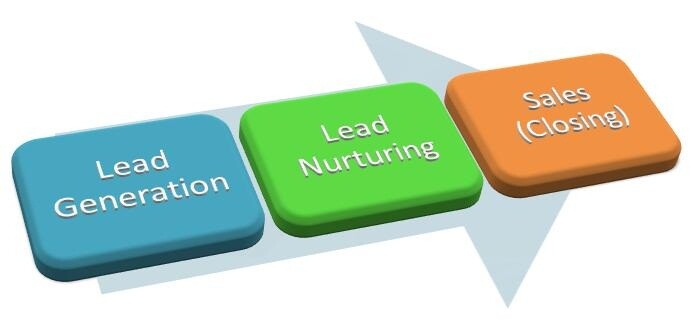
The marketing funnel is a framework that guides potential customers through different stages of their buying journey:

  • Awareness (Prospect): Customers discover your brand and identify their problems.
  • Consideration (Lead): Customers evaluate solutions and compare providers.
  • Decision (Customer): Customers choose your solution and make a purchase.
  • Loyalty (Repeat Buyer): Customers return for repeat purchases and advocate for your brand.

To explore more about marketing funnel strategies and proven methods for success, check out this comprehensive guide on optimizing your marketing funnel.

Marketing Funnel

Content Strategies for Each Funnel Stage

1. Awareness Stage: Attracting Prospects

During the awareness stage, your goal is to draw attention and build trust. SEO-optimized content like blogs, videos, and social media posts help you target customer pain points and spark interest.

  • Example: Blog post titles like “5 Ways to Reduce Energy Bills This Winter” attract users looking for solutions.
  • SEO Tip: Target long-tail keywords to attract relevant traffic to your website.

2. Consideration Stage: Nurturing Leads

At this stage, customers are looking for deeper information. Gated content, such as whitepapers, webinars, and case studies, allows you to capture leads while positioning your brand as an authority.

  • Example: Create a whitepaper titled “How to Save 20% on Your Business’s Electric Costs.”
  • Actionable Insight: Use clear CTAs like “Download Now” to encourage lead capture.

3. Decision Stage: Converting Leads into Customers

Prospects in the decision stage need reassurance. Detailed product guides, customer testimonials, and comparison charts help them choose your solution over competitors.

  • Example: A client testimonial video showcasing how your services solved a real-life challenge.
  • Tip: Offer limited-time promotions to create urgency.

4. Loyalty Stage: Building Repeat Business

Loyalty isn’t automatic—it’s earned. Regular newsletters, personalized offers, and loyalty programs keep customers engaged and coming back.

  • Example: Send exclusive coupons or early access to new products for returning customers.
  • Fact: Existing customers spend up to 67% more than new ones.

Case Study: Real Results with a Targeted Funnel Strategy

A small electrical contractor struggled to generate leads with only a basic website. Webociti developed a strategic funnel, including:

  • Awareness: Blog posts addressing energy efficiency tips.
  • Consideration: Whitepaper download: “How to Lower Energy Costs in Your Home.”
  • Decision: Email campaigns with case studies and customer success stories.

Results? A 35% increase in qualified leads and a 20% boost in revenue within 6 months.

Transform Your Marketing Funnel Today

Optimizing your marketing funnel is the key to sustainable growth. At Webociti, we combine digital marketing, SEO, and targeted content strategies to drive measurable results.

Ready to get started? Contact us today at 678-892-7157 for a free consultation and take the first step toward transforming your business.

Real Estate Marketing Trends

Real Estate marketing changed forever as newspaper advertising shifted to websites and the internet. The availability of multiple listing services gives most real estate firms an equal footing when it comes to having access to homes for sale. But, an equal footing is not good enough – if most real estate firms have the same inventory of homes, prospective buyers need a reason to choose your real estate company to be their realty company too. So, with all the noise in the same marketing space how do you get your firm noticed? – by developing and maintaining a complete online Real Estate marketing campaign.

Digital Marketing For Real Estate Agencies

What is SEO?

Search Engine Optimization is internet marketing jargon for making your website appear as close to the top of page one search results for real estate firms in your real estate firm’s local market.

Search engine optimization depends upon the use of keywords. Skilled SEO operatives use keywords and keyword variants to attract people to your real estate site. Through research, these experts find the most common search terms used by prospects when searching for a real estate firm. Real Estate MarketingArmed with this information, internet marketers use keywords and their variants known as long-tail keywords naturally on your site.

While SEO is an important skill, it is usually part of a writer’s toolset. Keywords are naturally intertwined with content so those who read the content on your site find it flows well and not choppy because of keyword stuffing (i.e.. overuse of keywords so that content appears awkward and unnatural). A well-developed keyword strategy helps turn clicks into leads and leads into customers. But, to get good results from SEO and keywords, your real estate content must be relevant. Up-to-date information, especially from the MLS are a must, that is why your site should be live streaming the multiple listing service(s) for your area.

What is Digital Marketing/Advertising?

SEO and content marketing are the first steps of a successful digital marketing/advertising campaign. Digital marketing is a plan that embraces all the methods used in online advertising. While MLS is needed for successful real estate sites, related content about home buying, home selling, getting a mortgage, staging a home and more help keep a prospect’s interest in your site until they buy a home.

Additional things a successful marketing campaign may include are:

  • Website Design & Development
  • Paid Advertising
  • Pay-Per-Click – PPC
  • Display Advertising
  • Social Media Advertising
  • Re-Targeting
  • Blogging
  • Social Media

Why Do I Need Website Design & Development?

Buying a home is the largest single item a consumer buys – a feeling of professionalism should exude from your real estate firm’s site to aid in earning a prospect’s trust.

Real Estate AdvertisingIf you choose to use a do-it-yourself (DIY) web building site, you lose the ability to be unique. DIY sites have several free templates and some templates you pay for. But, except for color choice and font, the odds are that your site will look very like many other sites on the internet. This familiarity can cheapen your site and give an impression of ‘being tired.”

An experienced website developer like Webociti integrates content, SEO, video, and images into an exciting and unique site that celebrates your available real estate offerings and provides an eye-catching venue for showing your listings. In addition, the best practices for web design and development practiced by Webociti gets your search page results nearer to the top of page 1 of searches.

Why Do I Need Paid Advertising as Part of My Online Marketing Strategy?

For digital marketing to be complete, it needs organic growth (non-paid) and paid advertising. The most efficient way to advertise online is the pay-per-click (PPC) model. This model gives publishers a set amount of money every time a person chooses (clicks) your ad. Successful PPC advertising works when potential and returning customers see your advertisement, read it, and take an action. That action is signing up for a newsletter, downloading an article, or best yet, scheduling a showing of one or more of your properties for sale. Webociti has a network of trusted publishers for placing your digital ads online.

Why Do I Need a Blog?

A blog on your website helps attract potential buyers and keep them returning to your site. Blogging can result in one person sharing a blog entry with their Facebook friends or by tweeting it – either way, a blog helps increase site traffic and put your agency’s name in the minds of people in the area.

To gain the most from blogging, Webociti offers professional blogging at affordable prices. Blogging helps keep your site fresh and relevant. At Webociti we use marketing automation tools to keep internet users engaged with your site.

How Does Social Media Figure into Internet Marketing?

Savvy internet marketers quickly learned that social media is a valuable and integral part of internet marketing/advertising. By maintaining a presence on social media sites such as Facebook, Twitter, and Google+ there is a good chance that engaging and compelling content will be shared more than once. This is organic growth that also leads to people signing up for your newsletter and/or blog. Webociti provides its real estate clients with expert social media copywriters that will help you build a following.

Your online marketing should not be left for a “novice” agent or admin staff to do – this relegates it to an afterthought. Contact Joe Mediate, the founder, of Webociti, an Atlanta-based global internet marketing company. Across the United States, Joe is recognized as an astute internet marketer and is himself a successful serial entrepreneur. Webociti is your one-stop shop for online marketing. Call us TODAY!, at 678-892-7157 or use our online contact form.

One of the best things about internet marketing and advertising is that even if a person is running their business from their garage, they can market and advertise around the world. But with that powerful advantage comes a lot of responsibility. So, my post this time talks about “best practices for internet marketing and advertising” and the Legal Way to Market and Advertise.
Legal Way to Market and Advertise

Failure to adopt these practices can lead to serious fines from the Federal Trade Commission (FTC). Following is a synopsis of the FTC regulations and rules that make your adoption of best practices vital to your business’s growth and financial security.

Rules to Advertise and Market Your Business on the Internet

The purpose of the FTC is to protect the consumer and promote competition. Above all else, your advertising and marketing online must always be truthful and all claims your company makes online must be substantiated. So, what exactly does this mean?

1.    If the intent or effect of your marketing and advertising is consumer deception, you automatically fail any test of best practices for your company’s messaging.

2.    What is consumer deception? It is any practice that misleads consumers and has an affect on the consumers’ purchasing decisions about a product or service. Your claims may be thought as deceitful if you leave out important information about your product or service, or claims, as mentioned earlier cannot be substantiated.

3.    All disclaimers and disclosures should be easy to read and understand.

4.    Product demonstrations, such as a video online, must show how your product performs under ordinary use.

5.    Your company must honor any refund promises that it made in its advertising.

6.    Children present special needs for advertising and marketing online as they may be unable to evaluate the claims you make in your advertising. In fact, the Council of Better Business Bureaus has a special unit known as the Children’s Advertising Review Unit, known by most by its acronym CARU. For those of you who advertise to children, they have developed special guidelines for advertising to children.

The above list is what you need to make your customers and potential customers trust your brand – be it a store, a product, or a service. The last holiday season saw tremendous growth in online buying, so both the number of consumers online and the number of advertisers and marketers online continues spiraling upwards. The FTC has made it clear that the same rules and regulations that cover advertisers and marketers in print, on television, or on the radio will be applied to the internet marketing space.

Webociti is your one stop for all your internet marketing and advertising needs. Call my office today to find out how we provide our clients with responsible, legal, and effective online marketing and advertising the legal way to market and advertise. Call today 678-892-7157 or use our online contact form.

Until next time,

Joe

Disruptive marketing is more of a movement than a marketing strategy. Today, most companies continue using traditional marketing methods, but, they also are beginning to allocate more dollars for internet marketing than ever before. Disruptive Marketing This does not signal an increase in marketing spend as much as it shows companies becoming educated to the benefits of online marketing.

How Disruptive Marketing May Help Your Conversion Rate

Disruptive marketing is a solution to consumers increasing deafness and/or blindness to routine kinds of marketing messages. Marketing departments using disruptive marketing techniques to challenge the conventional thinking in a market that already exists or create a new market using disruptive techniques.

You may think this sounds like gibberish, so let’s discuss market disruption in more depth.

Market Disruption Comes in Two Types

The two most common forms of marketing disruption are New-Market Disruption and Low-End Market Disruption.

New-Market Disruption

This type of marketing targets customers whose needs have not been matched to the services and products of existing companies. A notable example of this is Apple iTunes store. Before there was the iTunes Store, consumers could not buy or legally download one or two songs from an album, they had to buy the entire CD. After Apple launched the iPod, the demand for downloadable music expanded.

But, users would not pay for entire albums when all they wanted was a single or two from the album. Enter the iTunes store where it became possible to do just that, disrupting all other channels of music downloads, by serving this unmet need of iPod customers.

Low-End Disruption

Low-end disruption targets consumers who don’t want or need all the features demanded by buyers at the high-end of a particular market. One example is the manner in which desktop personal computers replaced the mainframe computer. In turn, the desktop computer is being challenged by the laptop computer, which also is undergoing disruptive changes with detachable keyboards and the ability to draw and write on computer screens.

When laptops first came on the computing scene they were less powerful than desktops and had fewer features. People wanted mobility and were willing to sacrifice some features (speed and memory in this case) to get it. Today, laptops are more powerful than ever and continue to make inroads into sales of desktop PCs.

Disruption & Internet Marketing

Desktop PCs and notebooks have a large number of users who installed ad blockers on their computers and laptops. This makes the use of disruptive marketing more of a necessity as some routinely paid internet advertising will be coopted by an ad blocking program. I think that content marketing used on social media and your blogs and sites will be of huge importance as ad blockers will not filter out the content containing your marketing message.

One of the great things about postings on social media is that you can mix new material created by you or by a ghost writer for you with relevant content from other blogs and sites – just be certain to give credit when reusing other people’s content.

Brief Examples of Disruptive Advertising

Disruptive online advertising can be used effectively if:

  1. Your company takes a stand on an issue and fights for it – a great example is when a company contributes to a cause such as Cancer research and promotes the cause on their own sites with social media links.
  2. Be a little outrageous – one example is an advertising plan used by Nissan Motors in cooperation with Amazon. 100 Nissan Versa Note cars were sold online by Nissan on the Amazon site. The Nissan Versa Note page was set up to mimic the regular Amazon pages
  3. Meet changing needs – do you recall the digital camera that was point and shoot? It was all the rage until technology caught up. Today a digital camera for professionals means a digital SLR compact that has all the bells and whistles of a regular professional grade film camera. Everyone else prefers the camera in our smartphone. Point and shoot digital cameras are pretty much extinct. So, if you used to sell accessories for digital cameras, now you need to continue your accessory sales to pros, but also sell smartphone cases to the hordes of potential customers across the nation or across the globe.

Need help with your marketing give us a call at 678-892-7157 or contact us, we can put a strategy together for you that will help grow your business.

Until next time,

Joe

Affordable Online Marketing Program for Small Businesses

In this post: Discover how an affordable online marketing program can help small businesses grow—even on a shoestring budget. Learn where to start, what tools to use, and how to scale.

Webociti Has Solutions if This Is Your Marketing Budget

affordable online marketing program for small businesses

Yes! You Can Afford an Online Marketing Program

Startups and small or medium-sized businesses know they have to advertise if they want to grow—but many hold back, assuming marketing is too expensive. The truth is, an affordable online marketing program can be launched without breaking the bank.

Online advertising—both paid and organic—is one of the most efficient ways to generate awareness, drive engagement, and grow your brand. Even large brands have shifted from traditional advertising toward digital channels because of the measurable return on investment.

To get started, you’ll need a website. While you can use a free template, these often lack originality and polish. A better option? Work with a team like Webociti to create a professional, responsive, and unique website that works on every device and supports your business goals.

What Comes Next?

When we talk about online marketing, we’re referring to a smart mix of content creation, SEO, and low-cost digital ads. Once you establish credibility, you may be able to reduce paid spend and lean more on organic growth. But to start, combining pay-per-click (PPC) ads with strong content marketing is a powerful foundation.

Still wondering whether content marketing is worth it? Check out this guide from the Content Marketing Institute on what content marketing really is and why it matters for small businesses.

Paid Advertising

Google Ads is one of the best platforms for small business PPC. When set up properly, your ad appears next to relevant searches—meaning your business is found by people who are already looking for what you offer.

Before you launch, use the Google Keyword Planner to identify high-intent keywords and stay within budget. If this feels overwhelming, we can help you get started.

Content Advertising

Content builds trust, educates your audience, and drives conversions. Your options include:

  1. Writing it yourself
  2. Hiring a freelancer or agency like Webociti
  3. Curating (and crediting) quality articles that are relevant to your audience

Just remember: if you’re curating someone else’s work, always credit the source. Plagiarism is not only unethical—it can damage your brand and even lead to legal trouble.

Build Your Social Presence

Once your content is created, share it on platforms like Facebook, LinkedIn, and Etsy (if applicable to your products). These channels give your content a second life and help build audience relationships.

That said, content and social media require consistency. If you don’t have the time or internal resources, Webociti can manage your program and drive results for you.

Need Help Getting Started?

Digital marketing doesn’t have to be expensive to be effective. Whether you’re starting from scratch or trying to stretch a limited budget, Webociti offers smart, affordable online marketing programs that work.

Call us at 678-892-7157 or schedule your free consultation below.


📞 Let’s Get Started

Until next time,
Joe

Keep Chaos Away from Your Content and Website.

For many businesses, its website is the first time a potential customer comes into contact with the business. As you already know, more and more folks begin their shopping trip with a visit to the web. People searching for what your company offers, find you easily – yet your metrics don’t look so hot, and your conversions are struggling. It just may be that your content is crappy.
Crappy Content Can Cause Chaos for Your Website

Things That Cause Crappy Content

There are a number of elements that go into content, and they are more than just how words are written. Following are some things that lead to crappy content.

  1. Formatting Problems – If your formatting is messed up, your content becomes difficult to read. Out of alignment lists and varying font styles contribute to formatting issues and may make potential customers afraid that your business lacks the attention to details that are the hallmark of a quality merchant. To combat formatting problems, use a consistent and simple format for all of your website content.
  2. Poor Grammar – Make sure that your website and blog content are free of grammatical mistakes. While you want customers to praise your offerings in the comments section, a major grammar error will earn you plenty of comments from the grammar police and your great offer can be ignored.
  3. No Call to Action – The existence of your website is to sell more of your goods and services to prospective and returning customers. Shepard potential customers to the right path. Ask them to share a page or an item with friends. Ask them to sign up for your newsletter and also ask them to make a purchase. Your call to action should not be a single cry, rather it should be cleverly inserted in the copy on all pages of your site.
  4. Too Promotional – You need to find a balance between no call to action and begging. The careful use of sales copy works super but too much salesmanship makes you out as an unsuccessful merchant. Leave salesy stuff off your home page. Content on your site should be 80% to 90% information with the remainder being sales information.
  5. The Only Focus of Your Content is Optimization – If your content is designed to move you up in Search Engine Results, you may be turning your audience off. Writing for Google robots is not a style most people like – it is rote and leads to keyword stuffing. An excellent copywriter can put keywords in your content using smart writing techniques without offending readers with keywords that are stuffed into the copy. If people find your site but hate it, what do you gain?

At Webociti we have a team of copywriters that can make your website come to life. Don’t forget, make sure you offer your content in a few ways, such as text, video, infographics and narrated slide shows. Call me at 678-892-7157 to find out how we can help you gain more market share. The call is without obligation and we will give you a free quote.

Till Next Time,

Joe