
You are a business owner because you are great at what you do. Your expertise in your specific industry is what makes you so valuable, it’s the reason why your customers rely on you. You spent time and money on becoming great and you continue to invest energy into growing your business. Unfortunately, of your many skills, marketing may not be one of them. More specifically, social media marketing may be something you would rather avoid. For most business owners it may be time to look into why and how to hire a social media marketing consultant.

All business owners are short on one thing…time. You have to attend to clients, employees, financials, and plan and make decisions on how to expand that business. Do you honestly have time to learn the ins and outs of social media marketing? If you took the time, could you really be sure that you were learning the right techniques? And finally, how many hours of watching marketing YouTube videos could be better spent doing the things you do best? For these reasons it may be wise to hire a social media marketing consultant.

Many businesses are blindly navigating their social media pages, with the belief that if you just obtain enough likes and followers that your business will expand. The fact is this simply isn’t the case. Social Media requires the ability to skillfully share content that is informative, entertaining and relevant to your business. The matter also stands that whenever you share a link for another page, you’re promoting their business instead of your own.

Social Media Marketing Consultant

While it may appear that sites are just circulating viral videos, there is a lot of craft and thought that needs to go into the content of posts, how frequently you post, and where those posts link to. Social media marketing consultants are experts in their field, they know the technological and psychological science behind what brings traffic to your page. Times have changed to a point where such a subject is not only a suggestion, but can be studied and majored in at prestigious Universities.

The world is finally waking up to the marketing opportunities that come from intentional social media marketing. The expansion rate with a strong and properly maintained social media campaign, is incredible compared to traditional marketing campaign. It’s an opportunity any business owner can’t afford to ignore.

Social Media Marketing Consultant

A social media marketing consultant will sit down with you to review the specific needs of your business. They will help highlight where your social media campaign is strong and in what areas you are lacking, most importantly they will help you solve the problem. You want to reach an expanded audience, you want to leave them with a positive and long lasting impression of you that encourages them to want to know more. Wouldn’t it be great to meet all of your marketing goals without having to use the limited time you have?

How to hire a social media marketing coordinator is entirely up to you. We recommend going through a marketing site that hires reliable coordinators that know what they’re doing, like Webociti Once you have a professional marketing coordinator as part of your team, the possibilities are endless.

Looking for more information and need a social media marketing consultant contact Webociti for a free social media consultation 678-892-7157.


When it comes to the business world of today, e commercehas become a vital part of businesses big and small.  To succeed and stay ahead of the competition, knowing how to build an e commerce business takes not only innovation and expertise, but commitment as well.   When businesses need help with such aspects of e commerce as website development, search engine optimization and other aspects of the World Wide Web, the e commerce consultants here at Webociti use their years of experience to create something truly special.

Internet Marketing Services

Here at Webociti, we have years of experience working with a variety of e commerce retailers in a variety of businesses.  Using our proven approach of research, analysis, design and execution we develop a plan that is custom-designed for your business.  With our know-how and experience, we strive to help your business meet three main goals, which are:

  • Increased sales
  • Greater profitability
  • Excellent Return on Investment

Website Management

When you use the consulting services of Webociti, your business is working with some of the most well-known e commerce consultants in the industry. As certified SEO professionals, we know what it takes to attract and keep people coming back to your website time after time.   One of the greatest tools we use in helping you beat the competition is our analysis tool that conducts price comparisons to evaluate if products are being offered in a competitive manner.  Along with this, we focus on a number of areas to keep your e commerce business moving full steam ahead, such as:

      • Product description writing
      • Image manipulation
      • Product postings
      • Title, tags and keyword analysis

By working with our consultants, your business can have a local, national and even international online presence that lets your business easily handle the most pressing challenges e commerce businesses face each and every day.
E commerce Consultants

In-Store Sales

What many businesses fail to understand is that when their e commerce sales suffer, so do their in-store sales.  However, when you work with the e commerce consultants here at Webociti, we understand it takes a variety of different strategies working together to keep all facets of a business running smoothly.  To help increase not only e commerce sales but also in-store sales; we use many different tactics such as:

      • E-mail marketing
      • Banner Ads
      • Social Media
      • Retargeting Campaigns

By understanding how these aspects of a business work together, both e commerce and in-store sales can gain momentum.

E commerce Consultants

When you need e commerce consultants that understand what it takes to get your business ahead of the competition and keep it there, contact us at Webociti.  When we combine our ideas together with yours, there is no doubt success will follow.

TL;DR: Physician practice marketing isn’t about tactics — it’s about building a compliant system that increases patient demand, builds trust, and drives consistent appointment growth.

In Summary

The most successful physician practices grow through visibility, credibility, and structured patient acquisition — not random marketing activity. A strategy-first marketing system turns online searches into scheduled appointments.

Why Physician Practices Struggle to Grow — Even With Great Care

You can provide exceptional care and still struggle to grow.

Today’s patients research symptoms, compare providers, read reviews, and evaluate credibility long before they ever call your office.

If your practice isn’t visible, trusted, and easy to choose online — patients move on.

Physician practice marketing is no longer optional. It’s the engine behind sustainable patient acquisition.

Without a clear system, growth becomes unpredictable.

With one, it becomes measurable.


How Patients Actually Find Physicians Today

Search engines now act as the front door to your practice.

Patients look for:

  • Specialists near them
  • Symptoms and treatment options
  • Insurance compatibility
  • Reviews and reputation signals

An effective physician SEO strategy positions your practice at the exact moment patients are actively seeking care — not interrupting them, but meeting them with relevance and authority.

This is high-intent marketing.

And it compounds over time.


Marketing That Supports Compliance and Growth

Healthcare marketing must balance growth with compliance.

A strategy-first physician marketing system integrates:

  • Local SEO for patient visibility
  • Educational content that builds trust
  • Conversion-optimized pages that encourage scheduling
  • Paid campaigns that accelerate demand
  • Automation that improves follow-up and retention

Not isolated tactics.

A coordinated growth engine.

Physician practice marketing growth system

Ready to build predictable patient growth?

See how a structured, compliant physician marketing system turns search traffic into scheduled appointments.


Explore Healthcare Marketing Services →


Marketing Automation: Growth Without Adding Staff

Consistent patient acquisition requires consistent follow-up.

Marketing automation helps your practice:

  • Respond faster to new inquiries
  • Nurture prospective patients
  • Reduce front desk burden
  • Improve long-term retention

It strengthens patient experience — while freeing your team to focus on care.


Social Media: Reinforcing Trust, Not Chasing Trends

Social media should support your authority — not distract from it.

For physicians, this means:

  • Educational content
  • Community credibility
  • Professional presence

Patients often encounter your practice socially before ever visiting your website. Consistency builds familiarity. Familiarity builds trust.


Physician Practice Marketing Is About Trust

Growth doesn’t come from aggressive promotion.

It comes from clarity.

When patients clearly understand:

  • Who you serve
  • What conditions you treat
  • Why you’re qualified
  • How to schedule

They choose with confidence.

And confidence drives action.


Physician Practice Marketing FAQs

What is physician practice marketing?

Physician practice marketing is a strategy-driven approach to attracting,
educating, and converting patients through compliant digital channels such as
SEO, content marketing, and paid search.

How is physician marketing different from general healthcare marketing?

Physician practice marketing focuses on private practices and clinics,
emphasizing patient trust, local visibility, and compliance rather than
large healthcare systems or hospital networks.

How long does physician practice marketing take to work?

Paid campaigns may generate patient inquiries within weeks, while SEO and
authority-building strategies typically compound over three to six months.


Next Step: Build Your Patient Growth System

If your practice depends on referrals alone, growth remains unpredictable.

If your digital presence lacks clarity, patients hesitate.

A strategy-driven physician marketing system creates:

  • Predictable patient flow
  • Stronger online authority
  • Higher-quality inquiries
  • Long-term growth stability


Schedule a Healthcare Marketing Strategy Call →

How Does It Work and Why Should I Use It?

As a business owner or marketing manager, do you have difficulty driving new traffic to your website and converting leads into sales? The vastness of the online marketplace means that many forms of digital advertising get lost in the shuffle, thereby reducing the chance that your company’s website will see results. Thankfully, pay per click (PPC) marketing is a powerful, cost-effective digital advertising tool that can quickly boost brand awareness, generate leads, and increase online sales or bookings. Keep reading to see how pay per click advertising works and why it should be an integral part of your marketing strategy:

How Pay Per Click Advertising Works

Although pay per click advertising is still a relatively new form of online marketing, by now everyone has seen and followed some of the “sponsored” ads or links seen on Google, Bing, Facebook, LinkedIn, and other websites. Unlike other forms of digital advertising, pay per click marketing is unique because it offers both immediate results and targeted promotions. Thanks to its keyword-based bidding system, PPC ads can be approved within hours, driving traffic immediately. Depending on the platform, the options for targeting consumers may include:

  • Age and gender
  • Language
  • Keywords (SEO)
  • Geography (geo-targeting)
  • Interests or Facebook “likes”
  • LinkedIn job titles and skills
  • Type of computer or mobile device
  • Time of day
  • Seasonal advertisements

Two of the most common platforms for PPC advertising are Google AdWords and Bing Ads, which operate similarly. As an advertiser, you will bid on keywords against other advertisers but only pay when someone clicks the advertisement and visits your website. The more competitively you bid, the more often your ad will appear and the less you will pay per click. As a consumer runs a search, the search engine chooses a set of “winning” advertisers from the pool, based on bid amount and keyword and ad text relevancy and quality. Overall, this flexible system means that even entrepreneurs or businesses with small marketing budgets will see results.

Managing Account Activity

Once your PPC ad is in place, analyze early results and keep revising and improving your strategies. Proper pay per click advertising management is key to ensuring you make the most of your marketing dollars. To improve and expand your results, consider adding more relevant keywords, adding negative keywords (any non-converting terms), and review expensive or under-performing keywords.

Since relevant keywords are what drive results, invest heavily in keyword research and design tests. Take the time to determine which keywords are best related to your products or services. This includes obvious or “popular” terms, but also highly relevant low-tail keywords that are less competitive and, therefore, less expensive.

Reasons to Incorporate Pay Per Click Marketing

Here are a few of the reasons PPC advertising should be included among your digital marketing strategies:

  1. Puts Advertisers Where They will be Seen
    Google Ad Words’ bidding system lets you be the boss in terms of who sees your advertisements. The fact that sponsored search engine results involve such targeted marketing means that your business will be seen by those who need it, and keep your name from being buried within pages of web results.
  2. Helps Searchers Find the Content They Want
    As you may know from personal experience, consumers respond better to relevant advertising. PPC advertising in the form of sponsored search engine results takes this a step further by actually helping searchers find the products and services they want.
  3. Rewards Advertisers for Quality Content
    When searchers respond to ads, it means that both your advertisement and the search engine algorithms are on track. Because of this, Google and other ad networks reward good performance. High-quality ads are often rewarded with lower costs and greater click-through rates.
  4. Gives Immediate and Cost-Effective Results
    Pay per click advertising begins working immediately, whether you choose to utilize Google AdWords or create a sponsored ad elsewhere. As soon as your ad or sponsored content goes live, consumers will begin to respond. This results in low-cost leads, because you only pay when a searcher clicks your link, which will be directly related to what they are searching for. This means that unique visitors are more likely to convert from leads into buyers thanks to effective pay per click advertising.

To learn more about Pay Per Click Advertising contact the PPC professionals at Webociti for a free consultation 678-892-7157.

As you know, tracking website page views can be both exciting and frustrating. Although unique visitor counts may increase thanks to various online marketing campaigns, it can be difficult to convert those searchers into buyers on their first visit. Many searchers perform product research and price comparisons across multiple websites, so how can you make them revisit yours?

Re-Targeting Get Prospects Back to Your Website

Re-targeting, also called re-marketing, is a digital advertising strategy designed to convert one-time page visitors by showing them your advertisements as they continue to browse the Internet after viewing your website. Re-targeting is most powerful when used in conjunction with other digital advertising tools, such as search engine optimization through keyword research and lead generation through pay per click (PPC) advertising. Still, re-targeting has
its own distinct advantages, as you will see below:
Retargeting

Continuing the Conversation

Upon visiting a business’ website, viewers will take note of the various products and services offered. Aside from the desire to perform price comparison, consumers may hesitate to make a decision upon their first visit if they are not familiar with the company. Re-targeting allows the advertiser to continue the conversation later, while the consumer is browsing other websites.
The ability to re-engage the consumer makes re-targeting unlike any other marketing strategy. It offers visitors a chance to reverse their earlier snap decision and give your business a second look. Even if they do not make a purchase on their second visit, they may bookmark the page, subscribe to an email newsletter, or forward the link to a friend to ask for advice. If nothing else, you will have increased brand awareness while establishing your company as a figure in the industry market. Ultimately, however, adding re-marketing to your advertising tools will increase page views, site visits, returning visits, and even unique visitors in conjunction with other digital marketing strategies. Re-targeting is particularly useful for e-commerce websites, but can also be used to increase online bookings and in-store traffic.

How Does Re-Targeting Work?

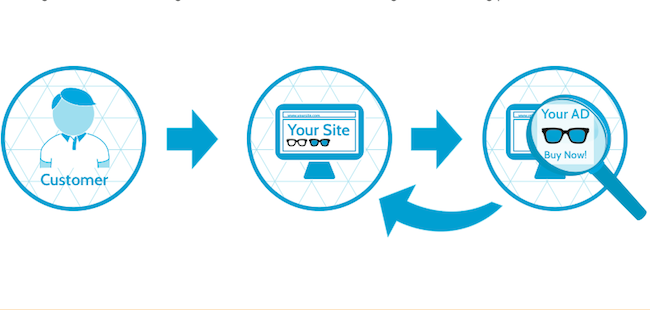
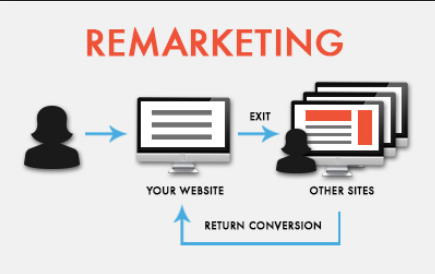
Although re-targeting is an innovative marketing tool, it relies on the web-standard practice of utilizing anonymous browser cookies. The use of cookies is standard policy for most websites, including banks, social media accounts, and mass-market e-commerce retailers. As a visitor views your website, the site will drop unique Javascript code that converts into a cookie and “follows” the viewer around as they browse other websites. With re-targeting, the cookie lets your re-targeting provider know when to serve ads. Consumers who have previously visited your website will begin see on-line advertising featuring your company’s name and website.
Retargeting

The ability to keep your brand name in front of potential customers is what makes re-targeting so effective. In fact, consumers may be more likely to convert simply thanks to increased brand awareness. Still, advertisements can also include information on seasonal sales, special offers, or discount codes as extra incentives. By specifically targeting certain consumers with advertisements, re-marketing offers a higher return on investment (ROI) rate than most other on-line advertising tools.

Developing a Digital Strategy

Ways to Improve Re-Marketing Results

Even in its most basic form, re-targeting is a highly productive and cost-effective form of advertising. Still, you can continue to improve results and generate more leads refining your re-marketing tactics and developing a strong digital marketing strategy. Re-targeting is even more effective with the creation and expansion of re-marketing lists, which tag certain pages and actions. If a consumer visited a particular product page, for example, your re-targeting strategy can be more customized and involved than for a viewer who simply stopped by the front page and left. This process of segmenting visitors increases cost-effectiveness and improves conversion rates by only heavily targeting consumers who were interested in purchasing.

On its own, re-targeting is ideal for conversion optimization but does not generate new leads or drive traffic. Because of this, re-targeting works best as part of a larger digital marketing strategy. Including SEO and PPC marketing, among other tools, will make your advertising much more balanced and effective, resulting in more leads, conversions, and sales.

To implement a Re-targeting, contact Webociti for a free consultation 678-892-7157.

The more eyes on your e-commerce site, the more likely you are to have more conversions. Yet, many website owners find that they get a prospect all the way to the shopping card and they abandon the site and their order. Why this happens is not well understood, but many conversion case studies put forward interesting reasons about what works and what doesn’t work for higher shopping cart conversion rates.

Shopping Cart Abandoned Too Often Too?

Ways to Improve Shopping Cart Conversions

Design and Layout

One thing is for sure, design and layout is the first step in making a shopping cart and check out process that aids conversion rates and lowers shopping cart abandonment. Below are some tips to make the check-out experience easier for customers of your e-commerce site.

Be Visual

Many studies show that the less clicks needed for check-out, the less likely a customer is to abandon the process. So, if you need more than one page to check out at the least give your customers a guide, such as percentage slides as they click-through multiple pages. Even better is to get all your order information on a single check-out page.

Every Page Has a Check-Out Button

Check Out Button
Save you customers time and don’t force them to use navigation buttons. Every page of your site should have a button on top and at the bottom of the page that takes them directly to their shopping cart.

Use Security Seals and Credit Card Logos

Credit Cards Icon
These are a must on your shopping cart page as they make customers aware of your payment options and that you have a secure site. The most common security seals are from Verisign and Bizrate.

Cart Saves

Sometimes a customer realizes that he or she has forgotten something they wanted to buy. If leaving the cart also empties it you may lose the sale. Nothing is more aggravating to a customer than having to complete all their information when they never left the site. Make sure that your cart remembers what information and products the customer entered before he or she completes the buy or leaves the site.

Colors Count

Most websites have pairs of buttons marked checkout and continue shopping. Keeping in mind that the idea is to make the shopping experience as easy as possible, use different colors for the buttons, maybe green to continue shopping and blue to checkout. Keep the two as far apart as possible. Differentiation makes the experience easier for online consumers.

No Account, No Problem

While a good shopping experience may earn a site a bookmark for a return visit, many online consumers are uneasy about leaving personal information with an online merchant. The solution is to allow check outs without an account and ask the customer to open an account after shopping. Most consumers are willing to give the account information after they order so they can track it. Others are happier with just a tracking number. If you have received an email address, offer options such as for use for order notifications only or for all messages about your online store.

Let Buyers Save Items To Their Cart Or To A Wish List

Lots of users use the shopping cart as a place to store things they want to buy later. Make it easier by allowing them to save things in their carts or in a “wish list” folder. This makes it easy for them to return to a site and checkout easily.

Include Important Links

Your shopping cart check-out page needs a highly visible button to link consumers to the site’s privacy policy, shipping policies, and FAQs so they can educate themselves before completing the purchase.

Always Offer a Shopping Cart Review

Savvy site owners offer an opportunity for customers to check their purchase and shipping information before submitting – ideally these are two separate pages so that the review happens before the customer hits submit.

Well, that covers design and layout. Watch this space for more information on shopping cart concerns including optimizing product details, tips on payment, tips on shipping, and rewards and special promotions.

Ways to Improve Shopping Cart Conversions

For more information on ways to improve shopping cart conversions contact Webociti @ 678-892-7157 for a free evaluation.


Why You Must Optimize Your Website for Mobile

Google announced on March 24,2015 that beginning April 21, 2015 the mobile friendliness of your website will become an important element of how Google’s algorithm will rank your existing site. If you haven’t optimized your site for mobile search it will be moved to a lower search engine ranking (SER).


Mobile Web Search

Mobile Web Search

Google is not doing this to mess with your website search results, The coming update that is concerned with mobile optimization is, according to Google, to give users the most relevant, high quality search results. The ease of using a site on a mobile device is going to be a factor in those results.

Finally, Google’s formal definition of “mobile” is only a single word – smartphone.

More Reasons to Optimize For Mobile

Do you know that over 41 percent of Smartphone users have purchased something using their phone? If you have not optimized for mobile search, you are missing nearly half of your potential customer base. Additionally, the growth of Smartphone use for search, has increased 229.08 percent. This is because now, 58 percent of all consumers in the United States own Smartphones. This is a large and growing demographic that you must optimize for or they will never see your site, but a competitor’s will pop up if they have optimized for local search for your type of business.

Other important reasons for optimizing for mobile search include,

Consistent Customer Experience

Studies indicate that over 60 percent of people have increasingly stronger opinions of brands and companies that offer a good mobile experience. But, 90 percent of people surveyed say they had to switch devices to complete a task. When a site is optimized for mobile, your customers are offered a consistent experience that creates the feelings of reliability and trust that will keep them coming back to you. When transactions are easily completed, buyers come back.

Reduce Your Bounce Rate

The content for your website that looks so great on your desktop computer may be completely unreadable when a Smartphone looks for it. What is even worse, visitors will leave your website if they have to zoom or pinch in order to read what maybe an illegible font on a Smartphone. By making your mobile site user friendly, customers will stay on your site longer and potentially click to continue to a purchase.

User Self-Control

Users have little patience, so, if your mobile page does not load within 3 seconds, users leave looking for a quicker loading site – you just lost a potential buyer of your goods and services. If your mobile site has any of these symptoms, get it optimized.

  • Large images
  • Small font
  • Clunky looking layouts

One of these problems is reason enough to optimize, but two or more and once again, you are losing customers to competitors. According to Google, 81 percent of Smartphone purchases were impulse purchases.

Mobile Users are Different Than Desktop or Laptop Users

The reasons mobile users differ from other users is they want the information they are looking for fast, and in little bites that they can easily digest. To increase conversions on a mobile website your “call to action” must be clear and easy to read. Links to other pages must be working and fast – remember these buyer have little or no patience.

Contact Webociti

Need help for mobile optimization in order to get better results from your Internet marketing? Call Webociti at 678-892-7157. For other methods of reaching out visit our contact page.


Save

What Your Digital Marketing Team Isn’t Doing!

Brick and Mortar Stores have a lot of catching up to do on the digital frontier, and that includes more than simply creating a Facebook account. According to a recent study on The State of Retail in a Digital World, brick and mortar retailers not only find themselves at a disadvantage when dealing with the worldwide web, but they may have brought it on themselves.

It appears that the majority of executives from physical stores reported that their senior digital leader isn’t responsible for multichannel integration and was promoted from within (meaning that they are learning as they go), rather than hired for their previous talent from the outside. Therefore, digital progression may not be their specialty. The study also showcased the opinions of the majority of executives questioned which said they didn’t feel their senior leadership teams understand the digital needs of their customers. And, these opinions continue because 81% of the brick and mortar retailers agree that their websites aren’t as effective as they could be nor are they addressing the needs of the new mobile shopper. Therefore, if nearly half of those business owners questioned (47%) do not feel as though their investments in digital media have been adequate, why don’t they fix these underlying digital marketing issues?

Brick and Mortar Digital Marketing

Traditional Brick and Mortar store owners may not possess the knowledge to understand and solve this issue. Digital Marketing requires a totally different mindset and approach; an approach which requires a different type of experience and talent that most people typically don’t develop unless they already have experience. Digital Marketing changes almost as quickly as we know about it. “There are constant updates which seem to materialize out of thin air and demand immediate action at a time when the stores are under enormous margin pressure, are being cautious about budgets generally and have in-store and online inventories to manage (WWD).” Therefore, finding the right executive team to help compete with a business which is always in motion, can be the most difficult thing to grasp and determine for traditional brick and mortar store owners.

The biggest thing that traditional brick and mortar stores may be missing, then, is the fact that they are not necessarily looking for strictly technical engineers to build them a website and then take care of their online presence, but brand ambassadors. Digital marketing and advertising now needs more of a personal PR focus than ever before, which can be hard to accomplish when so many things and people need to be taken care of right in front of you.

This is why so many people have hired Internet Marketing companies like Webociti to not only optimize the website so that more people can find it, but advertise, and personalize the website and the company as well. Today’s consumer is looking for a connection that they just won’t get at a huge store, online presence, or from a strictly salesperson. They need to feel like a special customer. Teams like Webociti can make sure that your customers are targeted through successful search engine optimization and advertising. In this way, the customers who are searching for you can find you, and you can get to know them on a personal level to build even more brand loyalty and keep doing business.

How to Do Keyword Research (The Right Way)

Unlock More Traffic with Smarter SEO

Keyword research is the foundation of every successful SEO strategy. While search engine algorithms have evolved, keywords still play a vital role in helping people discover your content. But how we research and use them has changed — and doing it wrong can hurt your rankings.

Here’s how to do it right.

What Is Keyword Research?

Keyword research is the process of identifying the words and phrases your ideal audience types into search engines like Google, Bing, or Yahoo when they’re looking for information, products, or services. These keywords give insight into what your customers want — and how to show up when they go looking.

  • Search volume – how often a keyword is searched
  • Competition level – how hard it is to rank for that keyword
  • Related terms – variations and long-tail opportunities

Common Keyword Research Mistakes

If you’re new to SEO, it’s easy to make missteps that limit your results. Here are three common mistakes:

  • Only researching once: SEO is dynamic. Keyword lists should be updated regularly.
  • Choosing keywords that are too broad: Generic terms are hard to rank for and unlikely to convert.
  • Ignoring long-tail keywords: Longer, specific phrases drive more qualified traffic and convert better.

Example: Instead of targeting “comforter,” use “hypoallergenic king-size comforter under $100.”

Long-tail keywords are not only more targeted — they’re also cheaper in paid campaigns and easier to rank for organically.

Step-by-Step: How to Do Keyword Research

1. Start with Brainstorming

Make a list of terms your customers might use to find your business. Think like a buyer:

  • What questions are they asking?
  • What location modifiers (like “Atlanta” or “near me”) might they add?
  • What pain points or product types are they searching for?

Include phrases like: “How to…”, “Affordable…”, “Best [product] in [city]”

2. Use a Keyword Research Tool

Use tools like:

These reveal keyword volume, competition, and variations to consider.

3. Analyze Search Intent

Not all keywords are equal. Ask yourself: Is the user looking to buy, learn, or compare? Choose keywords that align with your content goals.

4. Focus on Relevance and Value

Use keywords that accurately reflect your content. Misleading terms won’t convert and can increase bounce rate. Relevance is key.

5. Monitor and Refine Regularly

Keyword research should be ongoing. Update your list monthly or quarterly based on trends and performance. Remove underperformers, find new opportunities, and continue to optimize.

Bonus Tip: Use a Thesaurus for Variation

Thesaurus.com is a quick way to expand your keyword list with synonyms and variations. This prevents overuse and keeps your content fresh.

Need Help with SEO Keyword Research?

Doing keyword research the right way takes time, strategy, and the right tools. If you’re ready to improve your rankings, check out our SEO services or contact Webociti today.

📞 Call us at 678-892-7157 or visit our contact page to get started.