Search Engine Optimization Insights & Strategies

Search engine optimization is more than rankings — it’s about visibility,
relevance, and sustainable growth across every stage of the buyer journey.

This collection of SEO insights explores the strategies businesses use to
improve organic search performance, from technical foundations and content
strategy to authority building and conversion optimization. Each article is
written to help decision-makers understand what actually drives search
results today and how to turn traffic into measurable business outcomes.

If you’re looking to improve your search visibility or build a scalable SEO
foundation, explore the articles below or learn more about our

SEO Services for Small Business
.

Your Internet Marketing Can Land You In a Cell Like This One.

If you run your business as a sole proprietorship and are planning to market using the Internet, speak to your lawyer. Ask him if he agrees that once you start a marketing campaign, you should change the form of your business from a sole proprietorship to a Limited Liability Corporation (LLC). Doing this means that your business, but not you, can be held responsible for any misfortunes with your Internet marketing that leads to a lawsuit – in other words, an LLC lowers your personal liability risks. Jail Cell

Internet marketers have to understand that there are legal boundaries for Internet marketing and advertising, often under Federal Agencies such as the Federal Trade Commission (FTC).

As an Internet marketing firm, Webociti keeps abreast of regulations governing Internet marketing and advertising.

What Kinds of Things Does the FTC Regulate?

All kinds of things and following are information about FTC enforcement.

Fake Reviews

New businesses have little or no track record for ratings or testimonials, leading those new to Internet marketing to buy made up reviews of their company and its goods or services.

Is this practice legal? Not according to the FTC. In past cases, judges hearing cases related to fake reviews said they are “false and misleading.”  The FTC has successfully sued businesses that bought fake reviews as violators of the Federal Trade Commission Act – so far no one has gone to jail and a jail term for buying fake reviews is unlikely.

What Laws Govern Online Marketing and Advertising

The same consumer protection laws that are used for brick and mortar stores apply to businesses that use the Internet for marketing, advertising, and sales. This puts into play the FTC Act’s ban on “unfair and deceptive practices” into play as it applies to Internet marketing.  A summary of the FTC’s regulations for Internet marketing include,

Advertising, including those found on company websites and how a company uses social media must conform to the following three principles of advertising law,

  1. Advertising must not be misleading or untrue
  2. Advertisers must have evidence to back up product claims. This is called “substantiation.”
  3. Advertisements must be fair. Fairness is evaluated by checking if the ad has made or is likely to make a consumer suffer an injury that they could not reasonably escape, is in violation of public policy, or is unethical and/or unscrupulous. One ad that fits this category is the infamous Joe the Camel advertising campaign that the R. J. Reynolds Tobacco Company ran. The FTC allowed the ads to run, despite the proper claims by many non-smoking advocacy groups that the ads were unfair and made smoking appealing to children with the use of a cartoon character – Joe the Camel.

What is a Business’s Responsibility For Consumer Privacy?

One thing that consumers insist upon is respect for their privacy. Some consumers fear the loss of their privacy and do not engage in online commerce. However, the Federal Trade Commission has important guidelines and legislation for consumer privacy protection. There is a specific law for protecting children that is a federal law enforced by the FTC. This law is the Children’s Online Privacy Protection Rule that allows parents and not advertisers have control over the kind of information collected on anyone 13 years old or younger. While it is obvious that this rule applies to sites for kids, it also applies to sites that are general in nature and can be viewed by a general audience that includes kids covered.

While Internet advertising has the best-targeted audience at a lower cost than traditional advertising, it is governed by the same rules and laws that govern radio, TV, and print advertising and marketing. Keeping up with advertising laws,  making sure content creation is current, and safeguarding consumer privacy is hard to do while running a business at the same time. This is why so many companies across the United States work with Webociti  in Atlanta, Georgia. Call me,  at 678-892-7157 for more information about how we can help you with the legalities of your site.

Till Next Time,

Joe


Save

How and Why Videos Increase Conversion Rates

Have you heard the old saying that a picture is worth a thousand words? That got me thinking about the worth of videos on your website. The conversion rate for websites that have informational videos about its products and services see sales increased for products with video soar by 144 percent. At the same time, Average Order Values rise for retailers using product videos.

Facebook recently reported that 100 million hours of video are watched on their platform every day.

One reason this happens is that people prefer a video to reading. How often do you have the time and patience to read the entire New York Times – not so much I bet. But watching the news on television or on an online video is something that better fits your routine.

For sites seeking to engage and convert Do-it-Yourself types, product videos work great, and if coupled with an instructional video, that works
even better.

Video Benefits

Videos are an ideal medium for your landing page(s) as video:

  • Increases the length of time people stay on your landing page allowing more time for your brand messaging to be absorbed by visitors;

Product Video

  • When company officers or employees are featured in website videos the trust factor rises astronomically; and
  • As noted earlier, most people prefer videos to reading. A survey shows that 7 of every 10 millennials watch a video online when shopping online.

According to AOL Platforms 2015, 50 percent of advertisers are shifting budgets from TV advertising to digital video.

Essentials of Effective Videos

Most experts in video advertising, including myself, agree that using the auto play feature is not an ideal method for having your video watched. Compelling copy is needed to get the visitor to press the play button. Auto play is annoying and many people just leave the site – no one likes to give up control, and auto play does just that.

Videos Increase Conversion Rates

  • Make sure your video includes a call to action (CTA). The CTA can be at the beginning, end, or interspersed within the video message at tactical times.
  • Use visual cues such as a finger pointing to the button for visitors to complete the conversion.
  • While YouTube is a wildly successful site, I believe you and your company do better when you host your videos on a video gallery site created and maintained by your company, there is less noise when you host videos yourself than putting it up on YouTube. Also, many YouTube videos are done by amateurs making the site less professional than your own.
  • Keep videos concise – cut long introductions and edit for unneeded information. Following a study of research surveys, LIVECLICKER, an email marketing company claims that 30 seconds is the best length for a product video, except for high-end luxury products or products and services that are difficult to explain.

Setting up and keeping up with using video for online marketing is often hard for retailers as it is far out of your wheelhouse.

But Webociti, located in Atlanta, Georgia, with clients throughout North America can do it for you at a surprisingly affordable price. Call now to get started. The number is 678-892-7157. We will gladly give you a free consultation and a no obligation price quote.  See how Videos Increase Conversion Rates.

Till next time,
Joe


Save

Essentials for Online Advertising

AID

AIDA is Essential to Internet Marketing

Internet copywriters often use a formula known as AIDA. This acronym stands for,

  1. Attention
  2. Interest
  3. Desire
  4. Action

My post today takes a look at AIDA as an Internet Marketing Tool.

Attention

Ads are useless unless they grab an Internet user’s attention. An ad that is never looked at by its target audience is no better than no ad at all. Also, ads that are delivered to the wrong location or beside problematic content, or attracting invalid traffic is of no help either.

With all the digital ads on the Internet, how can you differentiate your company and attract visitors to your website – after all, if you run a pet supply online store why is it different from other pet supply merchants? Grab the attention of Internet users with tactical weapons such as,

  • Illustrations
  • Photos
  • Sound
  • Interesting words
  • Video

As an experienced Internet marketer, I keep all of these in my toolbox. Note, you don’t have to think of a brand to attract attention – just make a point about your product or company that is interesting and unique. Present your products and services as no one else has. Effective techniques for getting attention include

  • The ability to grab attention in 3 seconds or less
  • Be as specific as humanly possible
  • Headlines can be several lines or just a short blurb

Headlines that work include,

  • How-to–How to Be Healthy in Less Than a Week
  • News style – Woman Loses Thirty Pound in Thirty Days
  • Direct Offer – Take 25% Off Now
  • Guarantee – If You Aren’t Happy You Get Your Money Back!
  • Benefit – Get Your Six Pack Abs the Easy Way
  • Testimonial – I Love (your product) So Much!
  • Explanatory – The Never Before Revealed Secrets of Weight Loss

So words like these accompanied by photos or other imagery are proven ways to get the attention you deserve.

Interest

Generating interest in your product or service is limited only by your imagination. In my area of the country, there are ads running on TV for the Duluth Trading Company. One ad pits their brand of underwear against a grizzly bear – of course, the underwear wins. The ad is interesting (at least to me) as I remembered it and cited it here. Use social media along with paid advertising to make your Internet ad campaign more compelling.

Desire

Another challenge is making a product or service desirable. Prompt responses to posts on your website or social media page is important to establish your customer service chops and help make folks want to use your products or services.

Action

Be sure that your calls to action (CTA) are clear and written specifically for the site you are posting on. The CTA on Facebook may be to offer a free download of an article about your products while on your website the CTA might be for a purchase.

Running an online marketing campaign requires unique knowledge and skills. As a long-time Internet marketing firm owner, I have both. If you need help in running your online ad campaign call or contact me at Webociti. Our number is 678-892-7157.

Till Next Time,

Joe

From time to time I have written here about the importance of optimization of your site for mobile device users. If I haven’t convinced you that you need to be mobile optimized, take a look at the following stats.

  1. On May 15, 2015, Google announced that “More Google searches take place on mobile devices than on computers in 10 countries including the US and Japan.” 
  2. Nearly 7 billion people use mobile phones approaching 90 percent of the population of earth.
  3. 80 percent of Internet users own a smart phone
  4. 72 percent of consumers surveyed want mobile-friendly sites
  5. 53 percent of mobile searches are by consumers looking for local goods or services
  6. According to  MediaPost, “Mobile shoppers put ease of use foremost when it comes to mobile shopping sites, with 48% of respondents citing it as the most important quality of a mobile site they visit.”

Together or separately, the above six statistics offer compelling reasons to make sure your website is mobile optimized.
Mobile Optimized

Tips on Mobile Market Optimization

Some of these tips require that you are knowledgeable about how mobile sites work. If you need assistance call me at Webociti. The toll-free number is 888-685-4910. Or, you can schedule a call with us here.

Remember back in April when Google announced that regarding web search rankings mobile-friendliness became a factor in ranking? Well, optimizing for mobile makes Google and its bot army happy with your site – an important factor for your overall Internet marketing campaign.

Tip 1 – Mobile SEO

The design for mobile websites should be responsive website design (RWD). RWD is a particular way of designing a site so that is viewed optimally and delivers a good interactive experience with as little resizing, scrolling, and panning as well as easy navigation. Page speed for loading and navigating have to be quick – mobile users are not necessarily a patient bunch and many will look for a faster site than yours if yours takes too long to load.

Tip 2 – Content

Making things shorter is not a good idea, but making content concise is. Mobile users want content that is both impactful and scannable by the human eye and brain. Get read of clutter and be sure you format in a way your audience appreciates – information should not be removed if it is relevant, but content should be offered in chunks that are bite-size and easy to consume.

Using images is a big draw on mobile devices. I recall a statistic that said conversions were as much as 60 percent higher for mobile sites with images. Caution here though – make sure the images do not slow your load time.

Use video too. Conversion rates are even higher when you do with click-through rates increased by 200 to 300 percent.

Social Media

Did you know that in 2015 there are more than 1.69 billion social media accounts that are accessed exclusively through smartphones? Don’t forget about your social audience when you craft and put up social media content.

Try to find social media platforms that offer mobile-friendly apps and add-ons that you can easily tie your brand into.

Also, be visual as discussed in the tip for Content.

Mobile optimization is the way local marketing is headed. If you need any help give us a call at 678-892-7157 or visit us at Webociti.

Till Next Time,

Joe

Ways the Internet of Things Helps Business Marketing Become Smarter

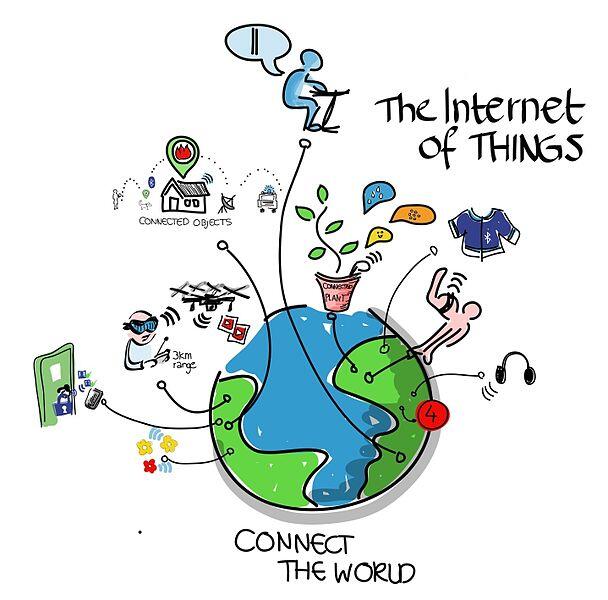
If you are a computer user or use another device to access the Internet it is a good bet that you have heard the term the “Internet of Things” (IoT). Unless you are a bit of a nerd like I am, you might not be sure what IoT means. It’s an actual thing though and IoT means the interconnection of devices that use wireless technology to connect things (buildings, objects, animals and people) to the Internet and can share data. Each device on your network has its own unique identifier.

Examples of how consumers connect to the Internet of Things include,

  • Smart Thermostats
  • Smart Utility Meters
  • Home Alarm Systems
  • Connected Appliances
  • Connected Home Lighting

Businesses also use the Internet of Things to control inventory, help in employee recruitment and retention, monitor and report about the supply chain and much more.

One of the ways businesses use the Internet of Things is to improve their own Internet presence. Here are some of my favorite tips to raise awareness for your company and your brand.

  1. Collect and Analyze Sales Data – Accessing this data gives a company the chance to tailor your marketing message to reach your specific customer personas. Smart devices such as new credit card readers that accept newly equipped credit cards with smart chips collect data at the point of sale. Once installed there is no ongoing IT needs and data is communicated to the sales department and the marketing department where informed marketing strategies and help expand the ROI on future sales.
  2. IoT starts with data collection, but once collected it needs analysis. Collected sales data can stream data as it is collected to new, smarter customer relationship management (CRM) tools. The new system can immediately analyze customer data and give you actionable information regarding your customer/client database. IoT devices make for a faster process by giving you this information on a real-time basis.
  3. Devices that are IoT compatible are smarter than the devices they are replacing. New devices come with embedded sensors that transmit a nearly constant data stream concerning self-diagnosis. When sensors within the device (which is often part of a larger piece of equipment) senses a problem that will cause a breakdown transmit that information to the maintenance system and automatically dispatches a maintenance worker to address the problem.
  4. The Internet of Things is already setup for optimal use with social media. Do you know that 74 percent of marketers say they see a notable increase in web traffic after an investment of only six hours per week in marketing by social media? IoT equipped processes joined with social media lets marketers identify new trends and strategize the best way to use them in the marketing process.
  5. By utilizing the above factors the goal of smarter and more relevant advertising. Increasingly, devices that formerly lacked connectivity are being fitted with sensors. When possible, older devices are retrofitted with sensors.

Internet marketing is easier when harnessing the Internet of Things and many proponents of IoT in marketing believe that the logical next trend in overall advertising is the end of interruptive advertising to consumers. Instead, only prospects screened by IoT and CRM will be advertising targets, as individuals, with marketing strategies uniquely created for an individual target prospect based on advertising that meet the needs of beneficial and relevant advertising.

At Webociti, we help companies create branded connections with their customers. Our IoT experts will help you identify opportunities to become more connected and, therefore, more successful. Just complete the Request Form or Contact us to get started at 678-892-7157.

Till Next Time,

Joe

Save

Lead Management

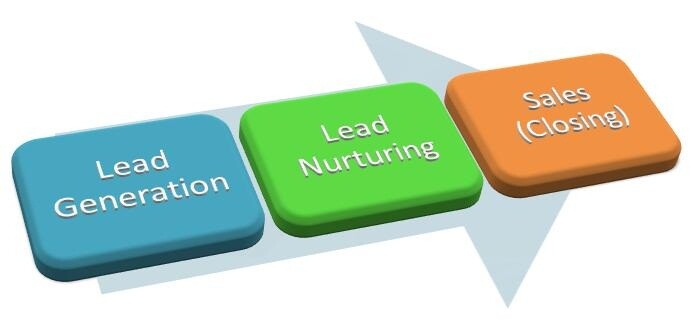
Building Your Own Effective Lead Management Generation Program

Is your boss asking you why your marketing generation isn’t more effective? In my experience helping many companies improve lead generation, I find that most of the time the answers are,

  1. They do not understand their buyer
  2. They lack familiarity with the buying process
  3. There does not exist a content structure for potential client communications

So, where do we start?

Know Your Buyer

In order to know who your buyer is, develop buyer personas. This should be a joint project of marketing and sales. By having both groups working together helps reduce the risk of skewed personas. When sales and marketing people share their unique perspectives about customers the end result is a more holistic view. Only use 1 to 3 personas, more and you will be muddled and your plan less effective.

When developing personas, I recommend that you determine buying groups by function and not a title. Instead of Director of Technology, use ‘technology buyer.” Instead of Chief Operating Officer, use more generic listings such as ‘office supply buyer.” These personas are used as target groups that often affect or decide the buying decision.

Define the information that helps your company nurture leads. These include items such as,

  • Role in the company
  • Personal background
  • Daily activities
  • Industry news sources
  • Challenges

Don’t panic, you are only listing information that helps your firm nourish leads, you do not need to fill the information in now.

Once you have your personas identified and your information categories fixed create a matrix. Buying groups go on the x-axis and information categories on the y-axis.

Complete the matrix by using a bulleted list. For example, if the buying group is technology and the information category is daily activity, a list might look like,

  • Send a response to emergency calls;
  • Check operational efficiency;
  • Manage vendor relationships;
  • Manage staff

Define the Purchasing Process

To begin, schedule a meeting with sales and marketing teams specifically to define the buying process.

Next, create a flowchart that identifies the decisions and steps the buyer must undertake. A good start is to ask, “What triggers a buyer to seek us for a solution?” Followed by another question such as, “what are the buyer’s next steps?” Keep asking the group follow up questions. Write the responses on a whiteboard to create an initial buying process map.

Once you have created your initial buying process map, validate it through research. Use methods like,

  • Interview prospects;
  • Interview buyers;
  • Hold focus group meetings with prospects;
  • Hold focus group meetings with buyers.

Based on your research findings revise your initial draft of the buying process.

Once the revisions are finished, check with internal stakeholders to get their thoughts; choose people from several areas including,

  • Sales;
  • Business development;
  • Marketing

Also get in touch with existing customers, use the phone or arrange for small group meetings.

Develop a Framework for Content

Once again, call a meeting with the sales and marketing staffs. (See the pattern, marketing and sales work together!)

Create a second matrix, on the x-axis list buying process stages and on the y-axis buyer personas. Use bullet points to list the answers to questions for each persona in each stage. Questions should be inquiring such as,

  1. Which questions does the buyer ask at this stage?
  2. How should we answer those questions?
  3. What is the best method or medium to answer questions?
  4. What behavior do we want to see from prospects when we answer their questions?

If you would like to learn more contact us at Our marketing team is ready to help you take your company to the next level We look forward to working with you!

Till next time

Joe Mediate

Save

Boost Your Online Marketing: How Video Drives Engagement and Conversions

The evidence is clear: incorporating video into SEO-optimized content can dramatically improve marketing performance. Dr. James McQuivey from Forrester Research famously states:

“A minute of video is worth 1.8 million words.”

Video is no longer optional—it’s a powerful tool for attracting new customers and retaining existing ones. According to recent studies, video accounts for over 80% of global internet traffic today. Businesses that overlook video marketing risk losing potential customers to competitors who effectively leverage it.

Why Video Works in Online Marketing

  • Engages your audience: Video content captures attention more effectively than text.
  • Improves SEO: Search engines prioritize video-rich content, helping your website rank higher.
  • Builds trust: Video showcases your expertise, building confidence in your brand.
  • Enhances conversion rates: Adding video to landing pages can boost conversions by up to 80%
    (source: HubSpot).
  • Mobile-friendly: With over 75% of video views happening on mobile devices, video caters perfectly to on-the-go consumers.

Getting Started with Video Marketing

Ready to get started? Follow these tips to produce effective videos without breaking the bank.

1. Share Informative Content First

DIY videos should focus on offering value through advice, tips, or recommendations. While professional videos are great for branding, audiences forgive minor production flaws if the content delivers useful information.

Examples of effective content ideas:

  • How-to Videos: Tutorials on using your product or service.
  • FAQs: Address common customer questions through video.
  • Case Studies: Showcase client success stories or transformations.

2. Tailor Video Content for Your Audience

Your industry determines the type of video you should produce:

  • Product-based businesses: Create videos demonstrating how your product works or showcasing its benefits.
  • Service providers: Share customer testimonials, process explanations, or behind-the-scenes content. For example, a home inspection company can highlight inspection tips that save clients money.
  • B2B Marketing: Use explainer videos, thought leadership clips, or webinar recordings to educate decision-makers.

Pro Tip: Keep videos under 2 minutes to maintain viewer interest and encourage repeat engagement.

3. Present with Confidence

Nervous on camera? Relax—your audience values the content, not perfection. Follow these tips:

  • Rehearse naturally without over-memorizing.
  • Use cue cards or notes to stay on track.
  • Speak enthusiastically and practice smiling as you talk.
  • Focus on the value you’re providing to your audience.

4. Leverage Tools to Simplify Video Creation

You don’t need expensive gear to create great videos:

  • Smartphones and Webcams: These work perfectly for most DIY videos.
  • Editing Apps: Free tools like Canva, iMovie, or InShot make editing simple.
  • Stability Tools: Use a tripod or steady surface to avoid shaky footage.

Consider adding text overlays or captions to make videos accessible, especially since many viewers watch without sound.

Advanced Tips: Taking Your Video Marketing to the Next Level

5. Optimize Videos for SEO

Video SEO is essential for discoverability. Here’s how to optimize:

  • Keyword-rich titles: Use phrases your audience is searching for (e.g., “How to Improve SEO with Video”).
  • Descriptions: Add detailed descriptions with relevant keywords.
  • Tags: Use targeted tags to help platforms categorize your video.
  • Thumbnails: Create eye-catching thumbnails to increase clicks.

6. Repurpose Videos Across Platforms

Maximize your video content by sharing it across platforms:

  • Website Landing Pages: Boost conversions by embedding videos.
  • YouTube: Upload for global exposure and organic traffic.
  • Social Media: Share clips on Facebook, Instagram, and LinkedIn to engage your audience.
  • Email Campaigns: Embed videos in newsletters to increase click-through rates.

7. Track and Improve Performance

Use analytics to measure success. Key metrics to watch include:

  • View Count: Total number of views.
  • Watch Time: Average length of time people watch.
  • Engagement: Likes, shares, and comments.
  • Click-Through Rate (CTR): How often people click on your video links.

Adjust future videos based on these insights to continually improve.

Success Stories: Video in Action

Here are two examples of how businesses are winning with video:

  • E-commerce: An online fashion retailer boosted sales by 35% using short styling videos for their products.
  • Local Service Provider: A plumbing company increased inquiries by 50% after uploading simple “how-to” repair videos on YouTube.

Ready to Transform Your Marketing with Video?

Don’t miss out on the power of video marketing. Whether you’re new to video or ready to step up your game, video can take your online marketing to the next level. Start small, stay consistent, and watch the results grow!

Contact Webociti to learn how video marketing can transform your business. Call us today at 678-892-7157 to get started!

What does the Future Hold for Your SEO?

Think about it. Writing for keywords is writing to gain a high search return in user’s search results. But, if your content is not written to keep your reader’s interest, getting folks on your site is all you accomplish. Users flee sites where content is hard to find, irrelevant, or not current.

Already we have seen Google beginning with the 2012 Panda Update that began the process of making a number of changes in their search ranking algorithms with a push towards quality content and less search engine ranking (SER) rewards for using strategies to improve ranking. In addition, the recent update where Google reduced the number of local search returns from 7 to 3 makes the need for great content imperative.

Google, whether deliberately, or by unforeseen consequences of these changes, is pushing search engine optimization (SEO) in a new direction – Topics Instead of Keywords.

Google’s changes supporting high-quality content is not lost on savvy Internet Marketers, who understand that Google’s goal is not just a highlighting of specific keywords but is for the larger view that topics provide. Keywords are a bit confining while topics are broad and provide a great deal of information.

Searching by Users will Change

Google is set on searchers getting results that are more related to a user’s search intent and not the exact search term entered. Content writers should let executives, who generally give content writers a list of keywords for us to build an article or blog post from, that they instead should look at topics that interest website users and not keywords. The Future of SEO

So, while keywords are still to be part of an overall SEO plan, topics are the first concern of searchers, writers, and those executives responsible for giving assignments to content writers. Thanks to Google, Internet Marketers reliance on keywords needs to be rethought, as Google is more interested in users having an incredible search experience. To figure out the searcher’s real question, Google is using the tools offered by Search Engine Watch.

Responding to the Evolution of Search

The changes Google made and will continue to make is for the benefit of searchers. But, changes also offer content writers opportunities that start by understanding our target audience and writing content for the audience and not for SEO. The best response to how Google has evolved starting from Panda and ending with the recent changes in algorithms has always been consistent – to improve the Google user experience. In my opinion, theme based SEO is a good response.

Is the Answer Theme-Based SEO?

Theme based SEO is concerned with topics that entice users and not just stuffing keywords into content with no thought as to readability. This was the normal practice to get high search rankings and was sufficient until the early 2010s.

Theme-based SEO means focusing on content that users want with little regard for keywords. Keywords are often discretely used to support content, but they are no longer the most important item in website design and use. Figuring out what user’s want requires research – these relate to their essentials for content and include,

  • Searcher’s needs;
  • Demographics;
  • Latest trends; and
  • Other metrics

Topics open a new world to content writers for advancing your brand and business to new elevations.

Contact the experts at Webociti to learn more about what does the future hold for your SEO and how Internet Marketing can help your company.  Just call us at 678-892-7157


Save

Webometer The Dynamic Pricing Tool.

Webometer is a cost-effective and easy to use dynamic pricing tool – able to provide inventory pricing and competitive pricing analysis in real time, so you can easily make instant inventory price adjustments that help maintain your competitive advantage. It is the ideal solution for retailers who also advertise and sell products online, and for e-tailers who carry large inventories of over 500 products.

Webometer Dynamic Pricing Engine Facts

Webometer is an innovative, intelligent inventory pricing engine that generates timely knowledge about your competitor’s pricing, especially important for

  • This is the innovative solution that meets your needs for competitive pricing information.
  • No expensive hardware purchases are required.
  • You can access the most current data and information in real time.
  • Webometer facilitates dynamic pricing and inventory control.

How It Works

Webometer replaces time-intensive personal research to determine competitive pricing, allowing you to make faster price changes and inventory decisions. Because it is cloud-based, there is no need for expensive new hardware to use Webometer; everything you need is included in our low monthly fee. Your costs are kept to a minimum, while you gain maximum benefits.

Once you sign up for Webometer, you can put it to work instantly. With this handy cloud-based product, you can quickly make adjustments to pricing and feed updates to all your online sales outlets. Webometer Dynamic Pricing Tool With Webometer, you can feed data changes to a wide variety of popular online shopping engines, including: Google Shopping, Price Grabber, & NexTag. Our e-Commerce Data Integration gives you a simple and fast way to transmit data into major platforms like Asp.net Storefront, Big Commerce, CV3 (Commerce V3), Magento, Shopify and Volusion.

Why Is This Important?

There is plenty of truth in the old adage, Time is Money. You know from experience what a huge job it is to research competition, manage your inventory and make important and timely pricing changes that enhance your sales advantage. With Webometer, you can accomplish all these time-intensive and expensive tasks in a fraction of the effort and cost.

When you use Webometer, you increase your ability to protect your cash flow and make decisions that grow your business faster. Profit margins are typically increased by retailers from 10% to 70% with this active management tool. People who shop online usually browse around to find the very best prices, deals and exceptional values before they purchase. With Webometer, you have an affordable resource to use to maintain your edge for attracting those value-seeking buyers.

Control Price Sensitivity Variations

Pricing varies according to several factors, including popularity, availability and the life cycle of your stock. New items have a different pricing strategy than older items. As you reach the end of a supply, you want to be operating with the most current data when making pricing decisions for adjusting prices. With Webometer, not only can you track the item and pricing at your competition, you can easily and quickly make automatic changes to your own pricing according to your preset rules. Webometer is an innovative solution that provides intelligent inventory pricing management in real-time.

Your retail business needs Webometer the dynamic pricing tool managing its inventory to be price competitive in the market. Contact us online or Call us at Webociti now, at 678-892-7157, and we’ll answer all your questions about Webometer.

Save

Important Changes In Google Local Search

It was just a few weeks ago, in early August 2015 that Google announced a major change in Google local search results. It was made very quietly and seems to have gone almost unnoticed by many in the Internet marketing industry, and DIY marketing folks.

On August 7, 2015 Google changed Local Search Engine Results from a “local pack” of 7 local businesses to only a three pack. The screenshot below only returns three businesses in Roswell, GA for the category auto repair, the map shows scores more, but you have to click on the button below the three businesses that are part of the three pack marked More Auto Repair.

Google Local Search

Look closely above; notice anything else that has changed?

If you see that addresses are no longer listed you are a winner! Or maybe a loser if you were consistently appearing in the seven pack. Now, to get your address searchers either you can click on “directions” or “website” which is found to the right of the listing.

Any other changes that you notice? Not only are addresses no longer available, neither are phone numbers appearing. This means for a searcher to call your business they have to click through to the listing or go to your website for your phone number.

There are more changes – for instance store hours are now listed, but Google+ links are removed. It is paradoxical that Google removed the G+ links as they recently announced an effort to have local businesses claim their page officially and verify it.

Another new innovation for Google is that it rolled out the smaller packs in both the United States and internationally at the same time.

In addition, business hours with both opening and closing times are now displayed in the new 3 packs.

Google also has stopped calling the reviews “Google” reviews and now the search engine simply calls them ‘reviews.’

Remember how when you scrolled over the local listings the local card for a business is revealed? Now, you can foggetaboutit! That’s over, you now must click through to the secondary local page.

Searchers will eventually learn that if you click anyplace other than a SER website they will get more local listings and a map. Each page has 20 local listings and there is no limit on how many pages a user may visit.

On mobile local search the address is gone, but a new option replaced it, a big fat ‘call’ button.

Why the Change?

For now, Google confirms the changes in Google local search but has said nothing else. Some industry analysts believe it has to do with the May 2015 incident where Google maps returned the White House as well as Howard University as racist terms. Google will not confirm or deny that this was the reason for the changes.  (Read more)

What is Next?

With the probability of a business that was in the top seven under the old system, but not in the 3 pack under the new system, the importance of great content combined with great search engine optimization, becomes more important than ever. The competition to make it into a three pack is more than intense, and many companies will engage outside specialists for Google local search optimization.

Webociti is an Atlanta based marketing firm that works with Internet marketers all across the world. Webociti specializes in Internet marketing optimization including local search optimization. Call us, at Webociti to learn more our number is 678-892-7157.