Marketing Consulting Insights & Strategy

Marketing consulting helps businesses make smarter decisions before investing
time, budget, or resources into execution.

This collection of marketing consulting insights covers strategy development,
planning, positioning, and performance analysis to help business owners and
leadership teams clarify what to do next — and why. The focus is on building
sustainable growth through informed decisions, aligned messaging, and measurable
outcomes.

If you’re looking for clarity before execution or need strategic guidance,
explore the articles below or learn more about our

Marketing Consulting Services
.

SEO and Content Go Hand-in-Hand

Some on the periphery of online marketing have declared that search engine optimization (SEO) is dead and that content is king. In my opinion, these folks are dead wrong.

SEO and content marketing are made for each other. Neither works well on its own, but, together they are a powerhouse for internet marketing. Let’s take a quick look at the importance of each and then how they work together.

How SEO and Content Work Together

Following are some simple FAQs for making SEO and content work well together.

  • SEO states what the requirements are for content. Content marketing meets the requirements.
  • SEO needs content. Content marketing provides it.
  • SEO means that keywords are used. Content marketing uses keywords.
  • Quality SEO uses link backs, content marketing includes them
  • SEO requires that output is consistent, content marketing mandates consistency at all times.

SEO Explained

SEO is a way to set up your website so that it ranks highly in online search results. It uses key words, geolocation, and other strategies to help your site rank highly in search engine results (SER). These and other SEO markers are used within the content on a site. However, it has been a long while since keyword stuffing was used as an SEO strategy. Today, Google and other search engines demand that content is of great quality – SER is partly determined by the quality of content.

What is Quality Content?

Content that is focused on the user and engages the user are hallmarks of high-quality content. The following tips help content writers create content:

  • Never use jargon, if your reader is not from the industry they may not understand the jargon and move to another site.
  • Do write in a tone that is targeted to your audience by using the right writing style, tone, and voice.
  • Stimulates a response – it can be a comment on a blog post, a Signup for a newsletter, a download of information, or a purchase. Another welcome action is sharing your content on social media.
  • The importance of proper structure should not be underestimated. Great content lists points you want to make at the beginning of your content with supporting details following either in the content or on another page.

Other Hallmarks of Quality Content

  • Quality content has a business reason for being. Storytelling is currently a popular way to present content. However, the story must have a point that spurs a user to act as described in above.
  • Finding and sharing quality content is easy. It shows up early in SER and on social networks expanding your content’s reach.

There are two ways to optimize content. They are:

  • Content that is SEO optimized is easily found by Google and other search engines.
  • Social optimization helps you get your message out on social media such as Facebook, LinkedIn, Twitter, Instagram, and other social media sites.

You can hire us to provide your professionally written and optimized content or use a writing service or hire a copywriter. I recommend you use a writer experienced in combining SEO with great content. Your content can make or break your website and professional SEO content writers are current on the latest SEO techniques in use.

Takeaways

  • SEO and content marketing do go hand-in-hand. To succeed you must use both when preparing content for your website.
  • Failing to integrate SEO with content marketing dooms your marketing campaign to failure.

Till Next Time,

Joe

Joe Mediate

Optimizing the Marketing Funnel:
How Digital Marketing, SEO, and Content Drive Sales

In the digital age, mastering the marketing funnel with digital marketing, SEO, and strategic content is essential for standout success. At Webociti, we transform prospects into loyal customers by tailoring our approach to each stage of the funnel, backed by success stories and actionable insights.

A well-optimized marketing funnel does more than just guide customers. It builds trust, creates meaningful touchpoints, and aligns your sales and marketing efforts to ensure consistent revenue growth. The result? More engaged leads, higher conversion rates, and long-term customer loyalty.

<

What is a Marketing Funnel and Why Does It Matter?

The marketing funnel is a framework that guides potential customers through different stages of their buying journey:

  • Awareness (Prospect): Customers discover your brand and identify their problems.
  • Consideration (Lead): Customers evaluate solutions and compare providers.
  • Decision (Customer): Customers choose your solution and make a purchase.
  • Loyalty (Repeat Buyer): Customers return for repeat purchases and advocate for your brand.

To explore more about marketing funnel strategies and proven methods for success, check out this comprehensive guide on optimizing your marketing funnel.

Marketing Funnel

Content Strategies for Each Funnel Stage

1. Awareness Stage: Attracting Prospects

During the awareness stage, your goal is to draw attention and build trust. SEO-optimized content like blogs, videos, and social media posts help you target customer pain points and spark interest.

  • Example: Blog post titles like “5 Ways to Reduce Energy Bills This Winter” attract users looking for solutions.
  • SEO Tip: Target long-tail keywords to attract relevant traffic to your website.

2. Consideration Stage: Nurturing Leads

At this stage, customers are looking for deeper information. Gated content, such as whitepapers, webinars, and case studies, allows you to capture leads while positioning your brand as an authority.

  • Example: Create a whitepaper titled “How to Save 20% on Your Business’s Electric Costs.”
  • Actionable Insight: Use clear CTAs like “Download Now” to encourage lead capture.

3. Decision Stage: Converting Leads into Customers

Prospects in the decision stage need reassurance. Detailed product guides, customer testimonials, and comparison charts help them choose your solution over competitors.

  • Example: A client testimonial video showcasing how your services solved a real-life challenge.
  • Tip: Offer limited-time promotions to create urgency.

4. Loyalty Stage: Building Repeat Business

Loyalty isn’t automatic—it’s earned. Regular newsletters, personalized offers, and loyalty programs keep customers engaged and coming back.

  • Example: Send exclusive coupons or early access to new products for returning customers.
  • Fact: Existing customers spend up to 67% more than new ones.

Case Study: Real Results with a Targeted Funnel Strategy

A small electrical contractor struggled to generate leads with only a basic website. Webociti developed a strategic funnel, including:

  • Awareness: Blog posts addressing energy efficiency tips.
  • Consideration: Whitepaper download: “How to Lower Energy Costs in Your Home.”
  • Decision: Email campaigns with case studies and customer success stories.

Results? A 35% increase in qualified leads and a 20% boost in revenue within 6 months.

Transform Your Marketing Funnel Today

Optimizing your marketing funnel is the key to sustainable growth. At Webociti, we combine digital marketing, SEO, and targeted content strategies to drive measurable results.

Ready to get started? Contact us today at 678-892-7157 for a free consultation and take the first step toward transforming your business.

One of the best things about internet marketing and advertising is that even if a person is running their business from their garage, they can market and advertise around the world. But with that powerful advantage comes a lot of responsibility. So, my post this time talks about “best practices for internet marketing and advertising” and the Legal Way to Market and Advertise.
Legal Way to Market and Advertise

Failure to adopt these practices can lead to serious fines from the Federal Trade Commission (FTC). Following is a synopsis of the FTC regulations and rules that make your adoption of best practices vital to your business’s growth and financial security.

Rules to Advertise and Market Your Business on the Internet

The purpose of the FTC is to protect the consumer and promote competition. Above all else, your advertising and marketing online must always be truthful and all claims your company makes online must be substantiated. So, what exactly does this mean?

1.    If the intent or effect of your marketing and advertising is consumer deception, you automatically fail any test of best practices for your company’s messaging.

2.    What is consumer deception? It is any practice that misleads consumers and has an affect on the consumers’ purchasing decisions about a product or service. Your claims may be thought as deceitful if you leave out important information about your product or service, or claims, as mentioned earlier cannot be substantiated.

3.    All disclaimers and disclosures should be easy to read and understand.

4.    Product demonstrations, such as a video online, must show how your product performs under ordinary use.

5.    Your company must honor any refund promises that it made in its advertising.

6.    Children present special needs for advertising and marketing online as they may be unable to evaluate the claims you make in your advertising. In fact, the Council of Better Business Bureaus has a special unit known as the Children’s Advertising Review Unit, known by most by its acronym CARU. For those of you who advertise to children, they have developed special guidelines for advertising to children.

The above list is what you need to make your customers and potential customers trust your brand – be it a store, a product, or a service. The last holiday season saw tremendous growth in online buying, so both the number of consumers online and the number of advertisers and marketers online continues spiraling upwards. The FTC has made it clear that the same rules and regulations that cover advertisers and marketers in print, on television, or on the radio will be applied to the internet marketing space.

Webociti is your one stop for all your internet marketing and advertising needs. Call my office today to find out how we provide our clients with responsible, legal, and effective online marketing and advertising the legal way to market and advertise. Call today 678-892-7157 or use our online contact form.

Until next time,

Joe

Disruptive marketing is more of a movement than a marketing strategy. Today, most companies continue using traditional marketing methods, but, they also are beginning to allocate more dollars for internet marketing than ever before. Disruptive Marketing This does not signal an increase in marketing spend as much as it shows companies becoming educated to the benefits of online marketing.

How Disruptive Marketing May Help Your Conversion Rate

Disruptive marketing is a solution to consumers increasing deafness and/or blindness to routine kinds of marketing messages. Marketing departments using disruptive marketing techniques to challenge the conventional thinking in a market that already exists or create a new market using disruptive techniques.

You may think this sounds like gibberish, so let’s discuss market disruption in more depth.

Market Disruption Comes in Two Types

The two most common forms of marketing disruption are New-Market Disruption and Low-End Market Disruption.

New-Market Disruption

This type of marketing targets customers whose needs have not been matched to the services and products of existing companies. A notable example of this is Apple iTunes store. Before there was the iTunes Store, consumers could not buy or legally download one or two songs from an album, they had to buy the entire CD. After Apple launched the iPod, the demand for downloadable music expanded.

But, users would not pay for entire albums when all they wanted was a single or two from the album. Enter the iTunes store where it became possible to do just that, disrupting all other channels of music downloads, by serving this unmet need of iPod customers.

Low-End Disruption

Low-end disruption targets consumers who don’t want or need all the features demanded by buyers at the high-end of a particular market. One example is the manner in which desktop personal computers replaced the mainframe computer. In turn, the desktop computer is being challenged by the laptop computer, which also is undergoing disruptive changes with detachable keyboards and the ability to draw and write on computer screens.

When laptops first came on the computing scene they were less powerful than desktops and had fewer features. People wanted mobility and were willing to sacrifice some features (speed and memory in this case) to get it. Today, laptops are more powerful than ever and continue to make inroads into sales of desktop PCs.

Disruption & Internet Marketing

Desktop PCs and notebooks have a large number of users who installed ad blockers on their computers and laptops. This makes the use of disruptive marketing more of a necessity as some routinely paid internet advertising will be coopted by an ad blocking program. I think that content marketing used on social media and your blogs and sites will be of huge importance as ad blockers will not filter out the content containing your marketing message.

One of the great things about postings on social media is that you can mix new material created by you or by a ghost writer for you with relevant content from other blogs and sites – just be certain to give credit when reusing other people’s content.

Brief Examples of Disruptive Advertising

Disruptive online advertising can be used effectively if:

  1. Your company takes a stand on an issue and fights for it – a great example is when a company contributes to a cause such as Cancer research and promotes the cause on their own sites with social media links.
  2. Be a little outrageous – one example is an advertising plan used by Nissan Motors in cooperation with Amazon. 100 Nissan Versa Note cars were sold online by Nissan on the Amazon site. The Nissan Versa Note page was set up to mimic the regular Amazon pages
  3. Meet changing needs – do you recall the digital camera that was point and shoot? It was all the rage until technology caught up. Today a digital camera for professionals means a digital SLR compact that has all the bells and whistles of a regular professional grade film camera. Everyone else prefers the camera in our smartphone. Point and shoot digital cameras are pretty much extinct. So, if you used to sell accessories for digital cameras, now you need to continue your accessory sales to pros, but also sell smartphone cases to the hordes of potential customers across the nation or across the globe.

Need help with your marketing give us a call at 678-892-7157 or contact us, we can put a strategy together for you that will help grow your business.

Until next time,

Joe

Affordable Online Marketing Program for Small Businesses

In this post: Discover how an affordable online marketing program can help small businesses grow—even on a shoestring budget. Learn where to start, what tools to use, and how to scale.

Webociti Has Solutions if This Is Your Marketing Budget

affordable online marketing program for small businesses

Yes! You Can Afford an Online Marketing Program

Startups and small or medium-sized businesses know they have to advertise if they want to grow—but many hold back, assuming marketing is too expensive. The truth is, an affordable online marketing program can be launched without breaking the bank.

Online advertising—both paid and organic—is one of the most efficient ways to generate awareness, drive engagement, and grow your brand. Even large brands have shifted from traditional advertising toward digital channels because of the measurable return on investment.

To get started, you’ll need a website. While you can use a free template, these often lack originality and polish. A better option? Work with a team like Webociti to create a professional, responsive, and unique website that works on every device and supports your business goals.

What Comes Next?

When we talk about online marketing, we’re referring to a smart mix of content creation, SEO, and low-cost digital ads. Once you establish credibility, you may be able to reduce paid spend and lean more on organic growth. But to start, combining pay-per-click (PPC) ads with strong content marketing is a powerful foundation.

Still wondering whether content marketing is worth it? Check out this guide from the Content Marketing Institute on what content marketing really is and why it matters for small businesses.

Paid Advertising

Google Ads is one of the best platforms for small business PPC. When set up properly, your ad appears next to relevant searches—meaning your business is found by people who are already looking for what you offer.

Before you launch, use the Google Keyword Planner to identify high-intent keywords and stay within budget. If this feels overwhelming, we can help you get started.

Content Advertising

Content builds trust, educates your audience, and drives conversions. Your options include:

  1. Writing it yourself
  2. Hiring a freelancer or agency like Webociti
  3. Curating (and crediting) quality articles that are relevant to your audience

Just remember: if you’re curating someone else’s work, always credit the source. Plagiarism is not only unethical—it can damage your brand and even lead to legal trouble.

Build Your Social Presence

Once your content is created, share it on platforms like Facebook, LinkedIn, and Etsy (if applicable to your products). These channels give your content a second life and help build audience relationships.

That said, content and social media require consistency. If you don’t have the time or internal resources, Webociti can manage your program and drive results for you.

Need Help Getting Started?

Digital marketing doesn’t have to be expensive to be effective. Whether you’re starting from scratch or trying to stretch a limited budget, Webociti offers smart, affordable online marketing programs that work.

Call us at 678-892-7157 or schedule your free consultation below.


📞 Let’s Get Started

Until next time,
Joe

Keep Chaos Away from Your Content and Website.

For many businesses, its website is the first time a potential customer comes into contact with the business. As you already know, more and more folks begin their shopping trip with a visit to the web. People searching for what your company offers, find you easily – yet your metrics don’t look so hot, and your conversions are struggling. It just may be that your content is crappy.
Crappy Content Can Cause Chaos for Your Website

Things That Cause Crappy Content

There are a number of elements that go into content, and they are more than just how words are written. Following are some things that lead to crappy content.

  1. Formatting Problems – If your formatting is messed up, your content becomes difficult to read. Out of alignment lists and varying font styles contribute to formatting issues and may make potential customers afraid that your business lacks the attention to details that are the hallmark of a quality merchant. To combat formatting problems, use a consistent and simple format for all of your website content.
  2. Poor Grammar – Make sure that your website and blog content are free of grammatical mistakes. While you want customers to praise your offerings in the comments section, a major grammar error will earn you plenty of comments from the grammar police and your great offer can be ignored.
  3. No Call to Action – The existence of your website is to sell more of your goods and services to prospective and returning customers. Shepard potential customers to the right path. Ask them to share a page or an item with friends. Ask them to sign up for your newsletter and also ask them to make a purchase. Your call to action should not be a single cry, rather it should be cleverly inserted in the copy on all pages of your site.
  4. Too Promotional – You need to find a balance between no call to action and begging. The careful use of sales copy works super but too much salesmanship makes you out as an unsuccessful merchant. Leave salesy stuff off your home page. Content on your site should be 80% to 90% information with the remainder being sales information.
  5. The Only Focus of Your Content is Optimization – If your content is designed to move you up in Search Engine Results, you may be turning your audience off. Writing for Google robots is not a style most people like – it is rote and leads to keyword stuffing. An excellent copywriter can put keywords in your content using smart writing techniques without offending readers with keywords that are stuffed into the copy. If people find your site but hate it, what do you gain?

At Webociti we have a team of copywriters that can make your website come to life. Don’t forget, make sure you offer your content in a few ways, such as text, video, infographics and narrated slide shows. Call me at 678-892-7157 to find out how we can help you gain more market share. The call is without obligation and we will give you a free quote.

Till Next Time,

Joe

Your Internet Marketing Can Land You In a Cell Like This One.

If you run your business as a sole proprietorship and are planning to market using the Internet, speak to your lawyer. Ask him if he agrees that once you start a marketing campaign, you should change the form of your business from a sole proprietorship to a Limited Liability Corporation (LLC). Doing this means that your business, but not you, can be held responsible for any misfortunes with your Internet marketing that leads to a lawsuit – in other words, an LLC lowers your personal liability risks. Jail Cell

Internet marketers have to understand that there are legal boundaries for Internet marketing and advertising, often under Federal Agencies such as the Federal Trade Commission (FTC).

As an Internet marketing firm, Webociti keeps abreast of regulations governing Internet marketing and advertising.

What Kinds of Things Does the FTC Regulate?

All kinds of things and following are information about FTC enforcement.

Fake Reviews

New businesses have little or no track record for ratings or testimonials, leading those new to Internet marketing to buy made up reviews of their company and its goods or services.

Is this practice legal? Not according to the FTC. In past cases, judges hearing cases related to fake reviews said they are “false and misleading.”  The FTC has successfully sued businesses that bought fake reviews as violators of the Federal Trade Commission Act – so far no one has gone to jail and a jail term for buying fake reviews is unlikely.

What Laws Govern Online Marketing and Advertising

The same consumer protection laws that are used for brick and mortar stores apply to businesses that use the Internet for marketing, advertising, and sales. This puts into play the FTC Act’s ban on “unfair and deceptive practices” into play as it applies to Internet marketing.  A summary of the FTC’s regulations for Internet marketing include,

Advertising, including those found on company websites and how a company uses social media must conform to the following three principles of advertising law,

  1. Advertising must not be misleading or untrue
  2. Advertisers must have evidence to back up product claims. This is called “substantiation.”
  3. Advertisements must be fair. Fairness is evaluated by checking if the ad has made or is likely to make a consumer suffer an injury that they could not reasonably escape, is in violation of public policy, or is unethical and/or unscrupulous. One ad that fits this category is the infamous Joe the Camel advertising campaign that the R. J. Reynolds Tobacco Company ran. The FTC allowed the ads to run, despite the proper claims by many non-smoking advocacy groups that the ads were unfair and made smoking appealing to children with the use of a cartoon character – Joe the Camel.

What is a Business’s Responsibility For Consumer Privacy?

One thing that consumers insist upon is respect for their privacy. Some consumers fear the loss of their privacy and do not engage in online commerce. However, the Federal Trade Commission has important guidelines and legislation for consumer privacy protection. There is a specific law for protecting children that is a federal law enforced by the FTC. This law is the Children’s Online Privacy Protection Rule that allows parents and not advertisers have control over the kind of information collected on anyone 13 years old or younger. While it is obvious that this rule applies to sites for kids, it also applies to sites that are general in nature and can be viewed by a general audience that includes kids covered.

While Internet advertising has the best-targeted audience at a lower cost than traditional advertising, it is governed by the same rules and laws that govern radio, TV, and print advertising and marketing. Keeping up with advertising laws,  making sure content creation is current, and safeguarding consumer privacy is hard to do while running a business at the same time. This is why so many companies across the United States work with Webociti  in Atlanta, Georgia. Call me,  at 678-892-7157 for more information about how we can help you with the legalities of your site.

Till Next Time,

Joe


Save

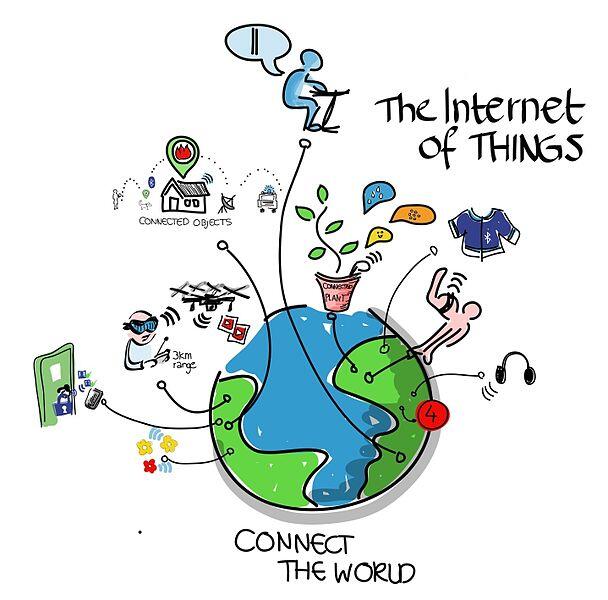
Ways the Internet of Things Helps Business Marketing Become Smarter

If you are a computer user or use another device to access the Internet it is a good bet that you have heard the term the “Internet of Things” (IoT). Unless you are a bit of a nerd like I am, you might not be sure what IoT means. It’s an actual thing though and IoT means the interconnection of devices that use wireless technology to connect things (buildings, objects, animals and people) to the Internet and can share data. Each device on your network has its own unique identifier.

Examples of how consumers connect to the Internet of Things include,

  • Smart Thermostats
  • Smart Utility Meters
  • Home Alarm Systems
  • Connected Appliances
  • Connected Home Lighting

Businesses also use the Internet of Things to control inventory, help in employee recruitment and retention, monitor and report about the supply chain and much more.

One of the ways businesses use the Internet of Things is to improve their own Internet presence. Here are some of my favorite tips to raise awareness for your company and your brand.

  1. Collect and Analyze Sales Data – Accessing this data gives a company the chance to tailor your marketing message to reach your specific customer personas. Smart devices such as new credit card readers that accept newly equipped credit cards with smart chips collect data at the point of sale. Once installed there is no ongoing IT needs and data is communicated to the sales department and the marketing department where informed marketing strategies and help expand the ROI on future sales.
  2. IoT starts with data collection, but once collected it needs analysis. Collected sales data can stream data as it is collected to new, smarter customer relationship management (CRM) tools. The new system can immediately analyze customer data and give you actionable information regarding your customer/client database. IoT devices make for a faster process by giving you this information on a real-time basis.
  3. Devices that are IoT compatible are smarter than the devices they are replacing. New devices come with embedded sensors that transmit a nearly constant data stream concerning self-diagnosis. When sensors within the device (which is often part of a larger piece of equipment) senses a problem that will cause a breakdown transmit that information to the maintenance system and automatically dispatches a maintenance worker to address the problem.
  4. The Internet of Things is already setup for optimal use with social media. Do you know that 74 percent of marketers say they see a notable increase in web traffic after an investment of only six hours per week in marketing by social media? IoT equipped processes joined with social media lets marketers identify new trends and strategize the best way to use them in the marketing process.
  5. By utilizing the above factors the goal of smarter and more relevant advertising. Increasingly, devices that formerly lacked connectivity are being fitted with sensors. When possible, older devices are retrofitted with sensors.

Internet marketing is easier when harnessing the Internet of Things and many proponents of IoT in marketing believe that the logical next trend in overall advertising is the end of interruptive advertising to consumers. Instead, only prospects screened by IoT and CRM will be advertising targets, as individuals, with marketing strategies uniquely created for an individual target prospect based on advertising that meet the needs of beneficial and relevant advertising.

At Webociti, we help companies create branded connections with their customers. Our IoT experts will help you identify opportunities to become more connected and, therefore, more successful. Just complete the Request Form or Contact us to get started at 678-892-7157.

Till Next Time,

Joe

Save

Lead Management

Building Your Own Effective Lead Management Generation Program

Is your boss asking you why your marketing generation isn’t more effective? In my experience helping many companies improve lead generation, I find that most of the time the answers are,

  1. They do not understand their buyer
  2. They lack familiarity with the buying process
  3. There does not exist a content structure for potential client communications

So, where do we start?

Know Your Buyer

In order to know who your buyer is, develop buyer personas. This should be a joint project of marketing and sales. By having both groups working together helps reduce the risk of skewed personas. When sales and marketing people share their unique perspectives about customers the end result is a more holistic view. Only use 1 to 3 personas, more and you will be muddled and your plan less effective.

When developing personas, I recommend that you determine buying groups by function and not a title. Instead of Director of Technology, use ‘technology buyer.” Instead of Chief Operating Officer, use more generic listings such as ‘office supply buyer.” These personas are used as target groups that often affect or decide the buying decision.

Define the information that helps your company nurture leads. These include items such as,

  • Role in the company
  • Personal background
  • Daily activities
  • Industry news sources
  • Challenges

Don’t panic, you are only listing information that helps your firm nourish leads, you do not need to fill the information in now.

Once you have your personas identified and your information categories fixed create a matrix. Buying groups go on the x-axis and information categories on the y-axis.

Complete the matrix by using a bulleted list. For example, if the buying group is technology and the information category is daily activity, a list might look like,

  • Send a response to emergency calls;
  • Check operational efficiency;
  • Manage vendor relationships;
  • Manage staff

Define the Purchasing Process

To begin, schedule a meeting with sales and marketing teams specifically to define the buying process.

Next, create a flowchart that identifies the decisions and steps the buyer must undertake. A good start is to ask, “What triggers a buyer to seek us for a solution?” Followed by another question such as, “what are the buyer’s next steps?” Keep asking the group follow up questions. Write the responses on a whiteboard to create an initial buying process map.

Once you have created your initial buying process map, validate it through research. Use methods like,

  • Interview prospects;
  • Interview buyers;
  • Hold focus group meetings with prospects;
  • Hold focus group meetings with buyers.

Based on your research findings revise your initial draft of the buying process.

Once the revisions are finished, check with internal stakeholders to get their thoughts; choose people from several areas including,

  • Sales;
  • Business development;
  • Marketing

Also get in touch with existing customers, use the phone or arrange for small group meetings.

Develop a Framework for Content

Once again, call a meeting with the sales and marketing staffs. (See the pattern, marketing and sales work together!)

Create a second matrix, on the x-axis list buying process stages and on the y-axis buyer personas. Use bullet points to list the answers to questions for each persona in each stage. Questions should be inquiring such as,

  1. Which questions does the buyer ask at this stage?
  2. How should we answer those questions?
  3. What is the best method or medium to answer questions?
  4. What behavior do we want to see from prospects when we answer their questions?

If you would like to learn more contact us at Our marketing team is ready to help you take your company to the next level We look forward to working with you!

Till next time

Joe Mediate

Save